Belt Technologies Logo

Customized Printing Process Sparks Growth for Global Company

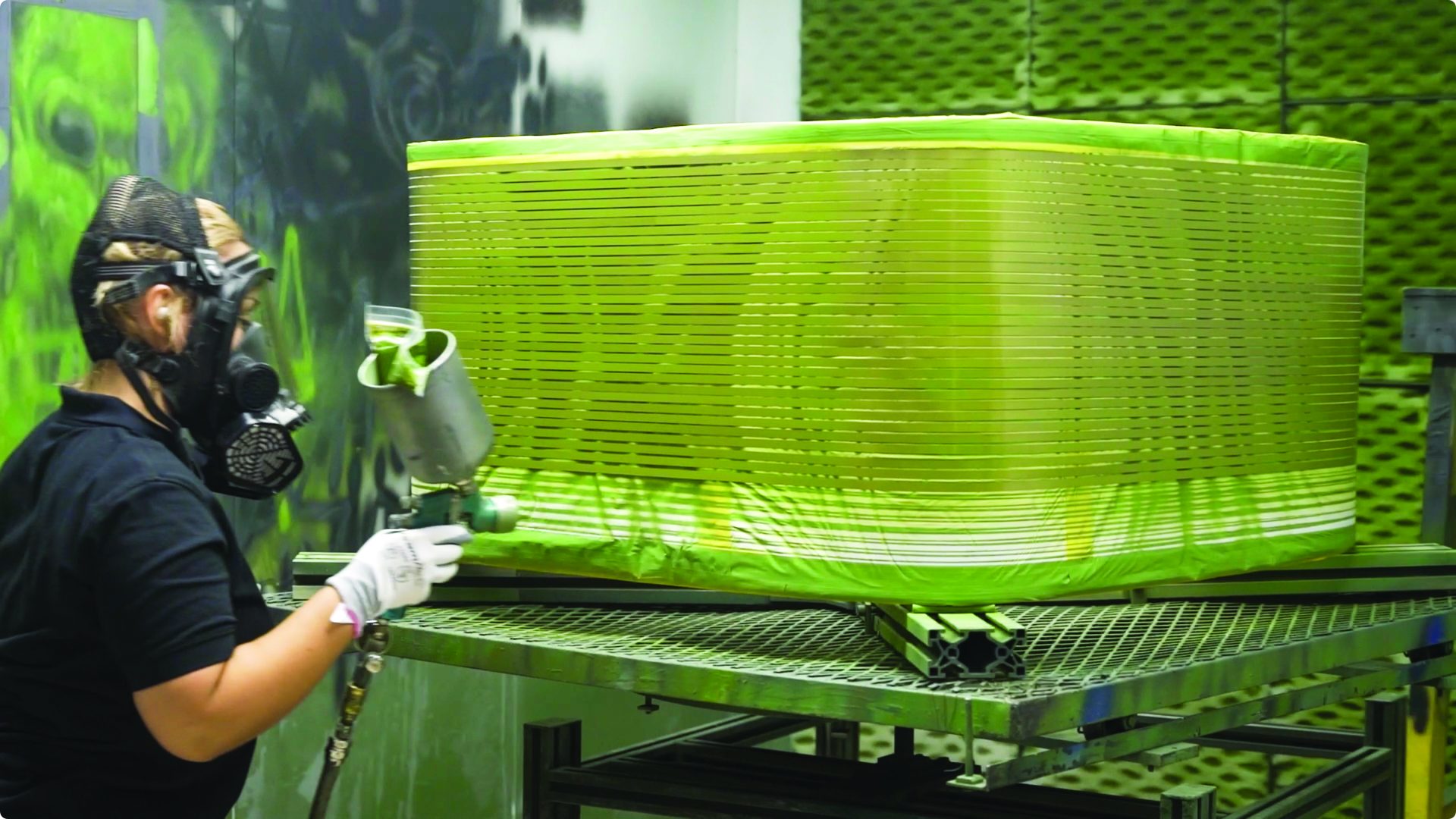
When a producer of health and personal care products needed to make changes to their printing process due to the inaccurate and inconsistent results they were seeing with their embossing and silicone printing, they turned to Belt Technologies.

The solution? A customized printing process with increased precision and adhesion. Not only did the solution resolve the printing issues, but it also allowed the customer to open production in new markets.

Read more in this Manufacturing.net article.

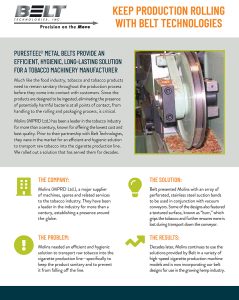
Puresteel® Metal Belts Provide An Efficient, Hygienic, Long-Lasting Solution For A Tobacco Machinery Manufacturer

tobacco belt

Much like the food industry, tobacco and tobacco products need to remain sanitary throughout the production process before they come into contact with customers. Since the products are designed to be ingested, eliminating the presence of potentially harmful bacteria at all points of contact, from handling to the rolling and packaging process, is critical. Molins (MPRD Ltd.) has been a leader in the tobacco industry for more than a century, known for offering the lowest cost and best quality. Prior to their partnership with Belt Technologies, they were in the market for an efficient and hygienic solution to transport raw tobacco into the cigarette production line. We rolled out a solution that has served them for decades.

The Company

Molins (MPRD Ltd.), a major supplier of machines, spares and related services to the tobacco industry. They have been a leader in the industry for more than a century, establishing a presence around the globe.

The Problem

The number one cause for concern with tobacco production machinery is hygiene, with product efficiency as an important secondary factor. Molins found that the belts used in their machinery did not offer a tailored, hygienic solution capable of transporting tobacco at high speeds. At the time, traditional conveyor belts were made of linen, which could easily degrade and wear down, halting production and introducing contaminants into the production process. Molins required a conveyor that was both hygienic and capable of keeping the tobacco on the line, and turned to Belt Technologies for assistance.

The Solution

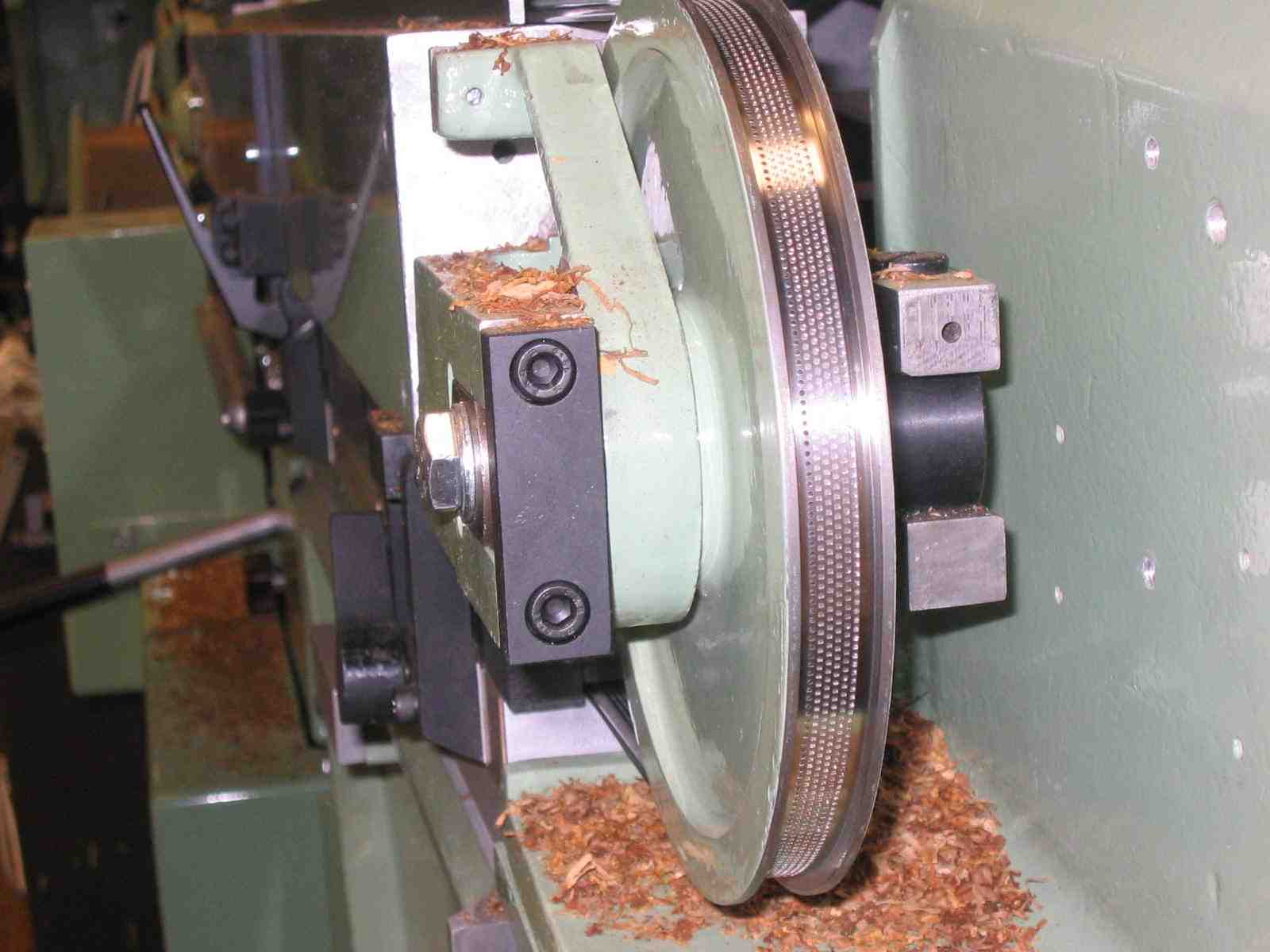
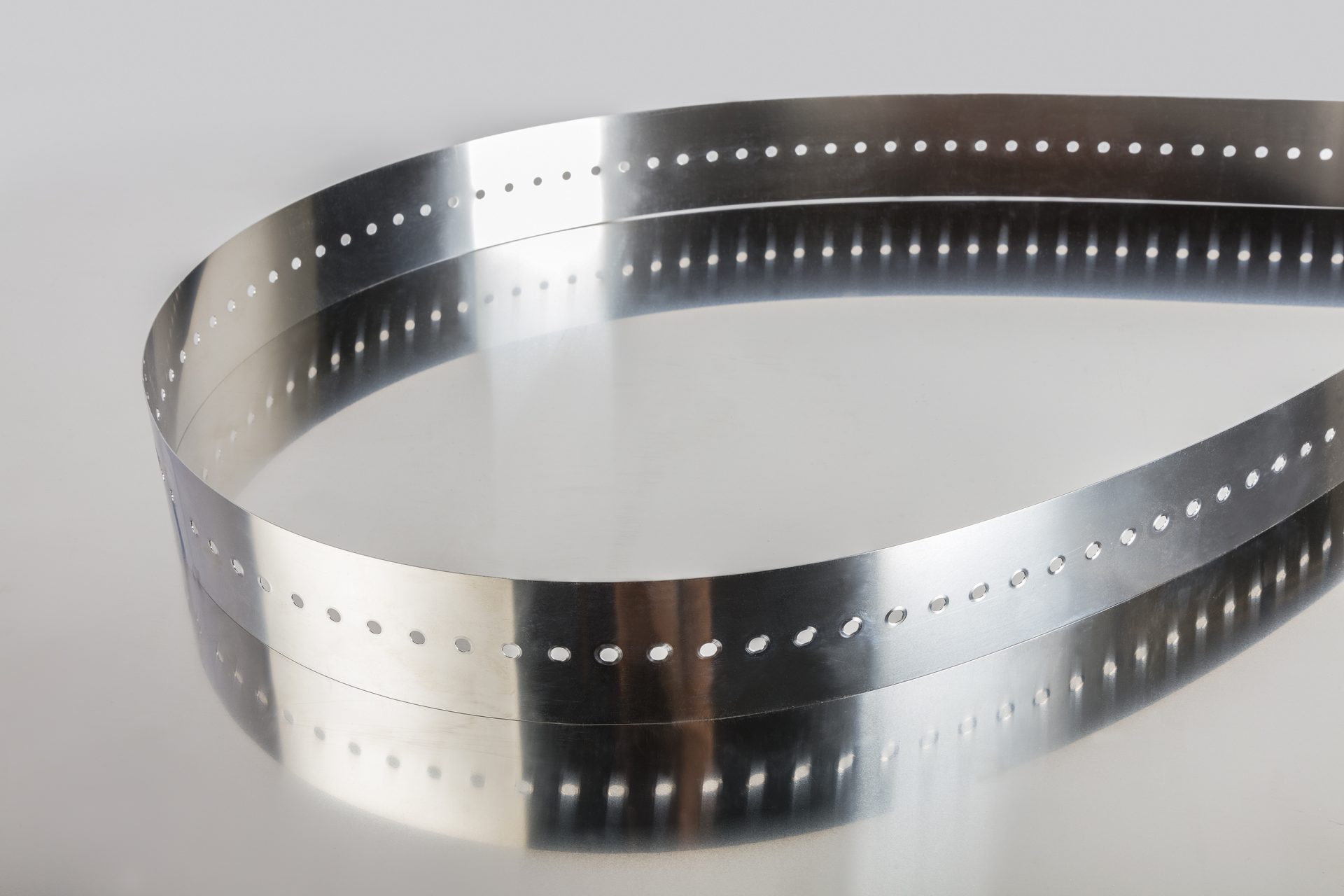
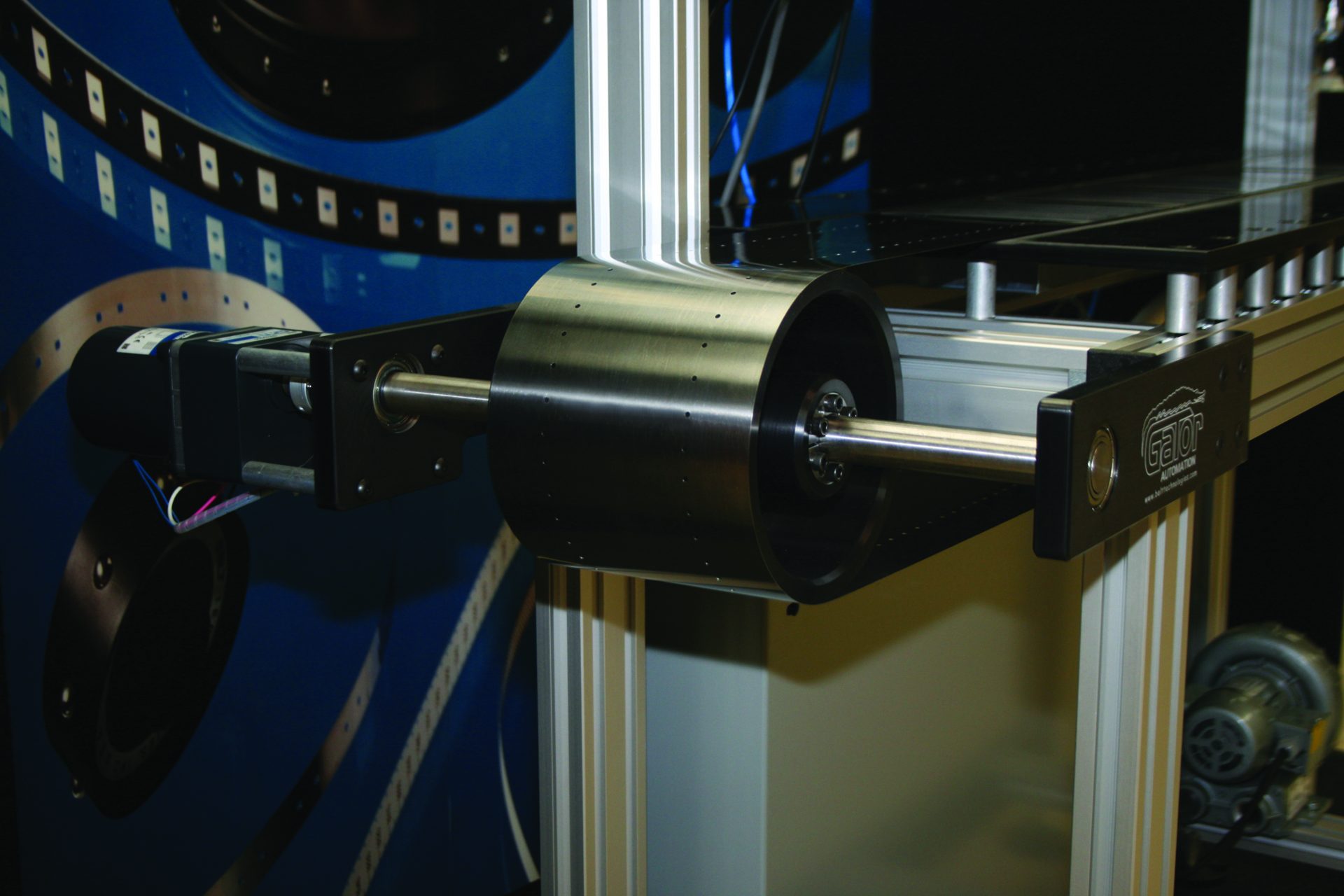
We presented Molins with an array of perforated, stainless steel suction bands to be used in conjunction with vacuum conveyors. The holes in the recommended belts would allow the tobacco to be transported under vacuum, retaining it on the line. Some of the provided designs also had a textured surface, known as “burr,” which gripped the tobacco and further ensured none was lost during transport down the conveyor. This “gripper” belt was unique as it required steel with a softer temper to allow the belt to be easily manipulated, perforated and texturized with the burr surface. Molins was greatly impressed, especially with the hygienic benefits of the stainless steel conveyors. Unlike alternatives, PureSteel® conveyor belts are resistant to bacteria, easy to clean and compliant with even the strictest USDA requirements. Additionally, they don’t generate component friction and therefore do not need lubrication, reducing the amount of maintenance required and keeping the conveyor system clean.

The Result

We provided Molins with an array of stainless steel suction bands with 15 unique perforation patterns (some with burr, others without). This range of products accommodated the conveying of loose tobacco as well as the range of other tobacco products made by Molins. Today, Molins continues to use the solutions provided by Belt in a variety of high-speed cigarette production machine models, producing up to 5,000 filter tip items per minute. We continue to work on the spare parts market with Molins, and they have recently sold new machinery, incorporating our original belt design for use in the growing hemp cigarette industry.

A Perfect Fit for Sterilized Equipment Production

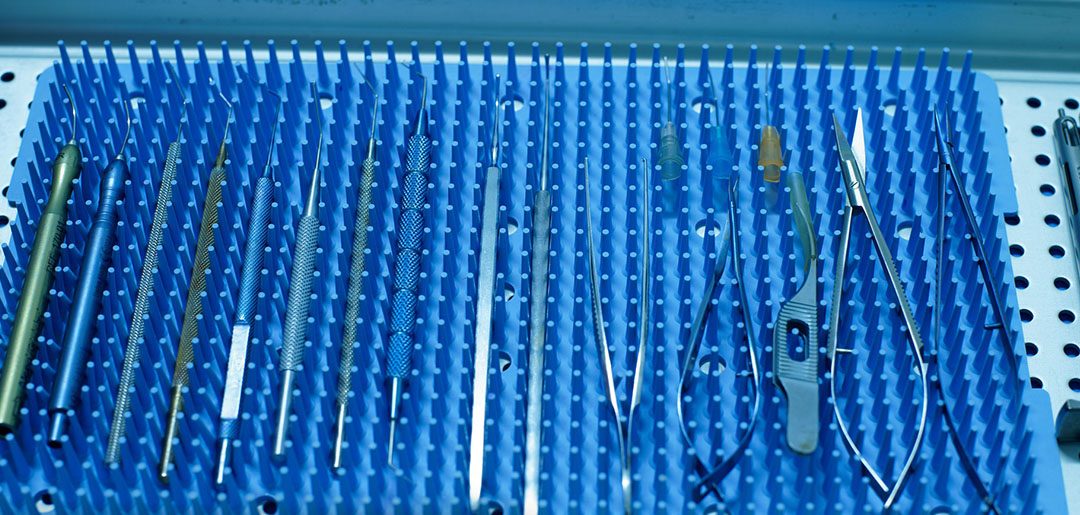
It’s impossible to overstate the importance of sterilized equipment in a medical setting. Surgical instruments such as scalpels, forceps or scissors need to be regularly sterilized to protect patients from infection. In this regard, surgical technologists are unsung heroes—responsible for preparing operating rooms, sterilizing equipment and helping surgeons and patients before, during and after procedures.

We want to recognize this work during Surgical Technologists Week, which is observed each year during the third week of September. It’s a perfect time not only to highlight the importance of these workers, but to demonstrate Belt Technologies’ own role in supporting sterilized equipment production.

The Sterilization Process

To put it simply, sterilization is the process of making something free from bacteria or other living organisms. Surgical technologists can accomplish this in a variety of ways including the use of steam, dry heat, radiation, ethylene oxide gas or other methods. No matter the technique, these workers provide the medical cleaning and disinfecting measures needed to keep every person in a given facility safe. Without them, doctors, surgeons, nurses and others wouldn’t be able to safely perform their critical functions.

But what keeps these instruments hygienic before they can even make it to the surgery center? They need to be produced in a cleanroom environment, which means the surfaces that these instruments come into contact with during their creation also need to be hygienic. Stainless steel is the ideal material for this purpose, as it is known for its smooth and impermeable surface that does not hang on to microbes and bacteria.

The Sterile Benefits of Stainless Steel

Compared to other belt materials such as flat neoprene or HTD, our PureSteel® stainless steel belts do not require dust-generating lubricant that could introduce foreign substances into cleanroom environments. Not only is stainless steel cleaner than other conveying materials to begin with, but it’s easier to keep that way—which is just as important. Stainless steel’s corrosion resistance allows it to be sanitized by high-pressure steam, high-pressure wash or chemical cleaning. The metal belt sterilization process can be performed in an autoclave; so, unlike materials that call for the belt to be removed from the conveyor for regular cleaning (which interrupts production), our belts can be cleaned in place.

Ready to Learn More?

Combined with a protective chromium oxide surface layer, our belts provide the longest-lasting and most hygienic surface for transporting surgical instruments during production. If you’re interested in learning more about how our products can help you, we’d welcome the opportunity to speak with you. Contact us today to learn more about how we can implement our belts in your facility.