
Belt Technologies Logo

A Real Hot Tamale: PureSteel® Belts Adaptable for Any Automated Food Processing System

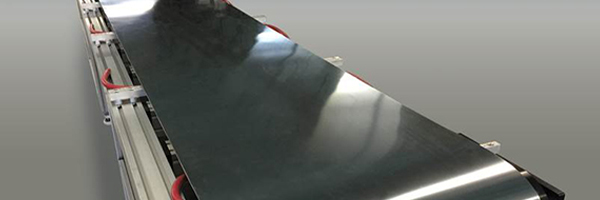
Stainless steel conveyor belt systems are ideal for the cooking, freezing and handling of edible products because their versatility allows customization for any automated food processing system with exceptional results. And when we say “any,” we mean it, as a special request we received in 2021 proved.

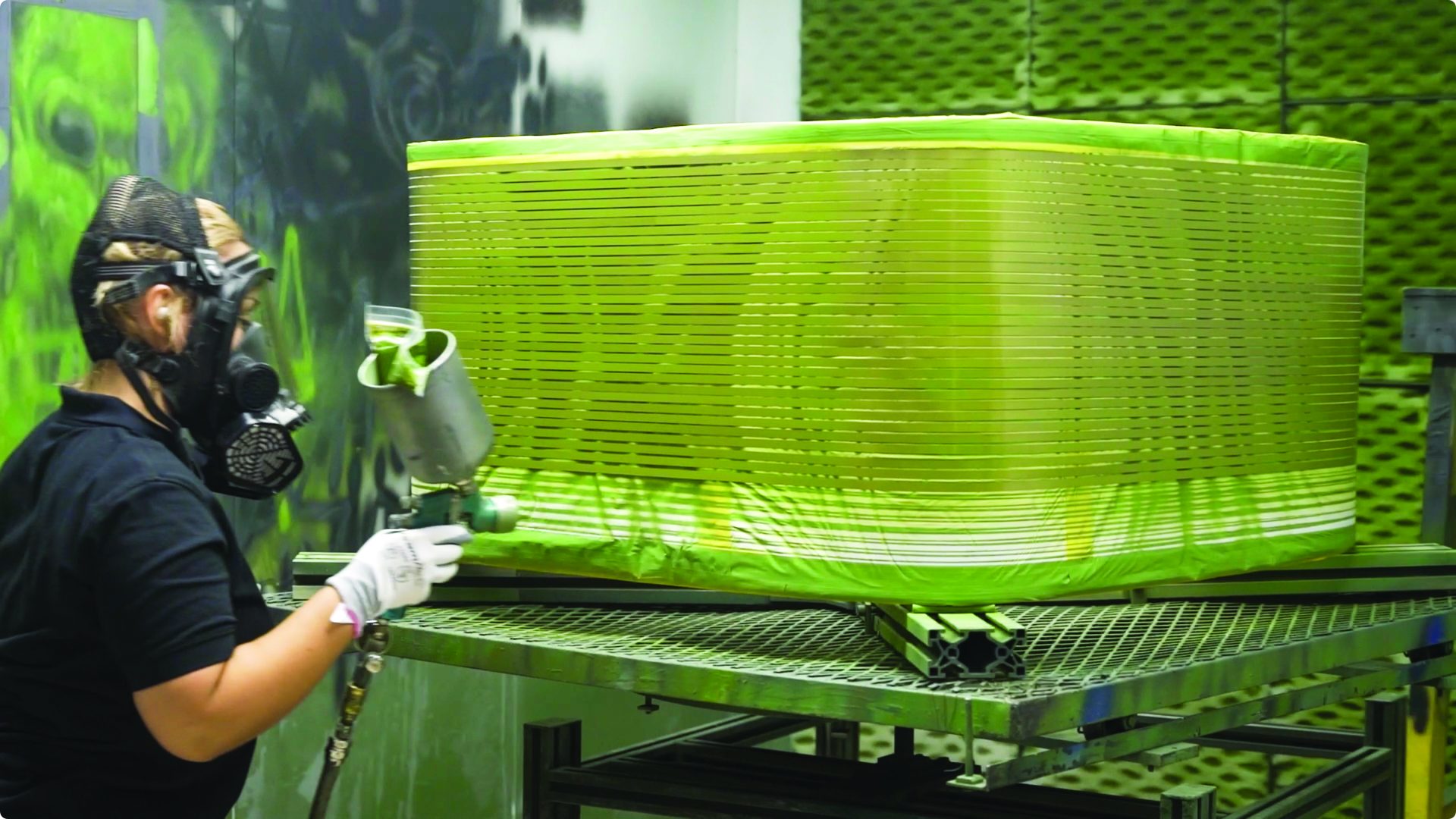
An engineering student, Alejandra Marroquin, working on her senior design project at California State University Long Beach reached out to us with an interesting challenge. She was seeking to improve upon the time-consuming process that originated as early as 8000 BC for making tamales.

The project required her and her partners to plan, design and produce a working prototype as their final project. The team decided to develop a hand-crank tamale maker, with the goal of reducing the amount of time necessary to produce each tamale, as well as the tedious manual stretching and rolling required.

Food Grade Parts an Essential Ingredient

From the beginning of the project, the students recognized the need for food grade parts including gears, a crank and conveyor belt. Within the food and beverage industry, meeting the safe food handling recommendations of the Food and Drug Administration is essential. Approximately 48 million people become sick from contaminated food each year, with about 3,000 of those cases ending in death.

Major food recalls—like this one issued this summer in the U.S. due to Listeria-contaminated frozen fruit or the recent E. coli outbreak in Norway likely stemming from hamburger products —have become all too common. These are far from isolated incidents; there are actually more than 250 diseases that are spread through food alone, which makes hygiene a top priority with industrial automation for the food and beverage industry.

Fortunately, contamination is almost entirely avoidable with the right precautionary measures and sanitary cleanroom production elements. There are many facets to consider within the realm of hygienic food preparation—understanding the inherent microbial risks in certain foods, using the proper materials for the design and infrastructure of a facility, and following best practices for cleaning and disinfecting equipment, to name a few.

One key element to consider is the material used for conveyor belts and systems. Although they are popular, polymer, plastic and metal mesh conveyors are limited in their hygienic capabilities and may actually increase the risk of food contamination. Conversely, the unique attributes of stainless-steel belts and conveyor belt systems make food processing safer, more efficient and far more sanitary.

PureSteel® Belts Bring Inherent Hygienic Advantages to the Table

Food contamination can be broken down into two separate categories: bacterial/microbial and particulate based. Stainless steel belts are adept at prevention in both areas for numerous inherent reasons:

  • Due to their flat and nonporous surface, PureSteel® belts are resistant to bacteria, making them easy to clean and compliant with even the strictest United States Department of Agriculture (USDA) requirements.
  • Stainless steel is a derivative of steel with an elevated level of chromium, which creates an oxide layer on the surface to prevent further oxidation. If the metal belt’s surface is at all damaged or scratched, the newly exposed metal oxidizes almost immediately, in a self-healing capacity.
  • PureSteel® belts don’t generate particulate like flat neoprene or polymeric alternatives, so they won’t create dust that could attach to food products and impact production.
  • Metal belts made up of a single element don’t generate friction between component parts. By contrast, mesh belts (made up of miniscule chain links) may require lubrication, putting the flavor or quality of the foods being processed at risk.
  • PureSteel® coated belts are FDA approved and ideal for use in multiple food applications including heat sealing bands for food packaging and high-temperature environments.

In researching sanitary conveyor belts through an online search, the Cal State students learned about the many advantages our PureSteel® metal belts offer for automated food processing systems. That’s when they knew they’d found the solution they were seeking.

Quick, Effective Cleaning

The advantages of PureSteel® belts go beyond their inherent hygienic nature. Regardless of how bacteria resistant they are, all belts need to be cleaned and cleared of food debris to prevent contamination—and no material is easier to clean than stainless steel because of its complete lack of gaps, recesses and crevices.

Due to their resistance to chemical corrosion, stainless steel belts can be cleaned-in-place (CIP) with almost any cleaning or sterilization method—such as high-powered steam, chemical cleaning solutions and high-pressure wash. Plastic and mesh conveyors require more intensive cleaning measures beyond CIP: either periodic removal from the production equipment to immerse in chemical solutions, which results in downtime, or the installation of complex cleaning systems and brushes.

The superior cleanability of metal belts was confirmed by Finnish food laboratory VTT Expert Services Limited. Their research found that stainless steel belts are not only easier to clean than plastic alternatives, but their advantages were compounded over time as the plastic belts became worn or damaged.

Another study found higher levels of formation of Listeria biofilm on polymeric materials than on stainless steel, with the authors noting, “plastic conveyor belts exhibited stronger bacterial adhesion compared with stainless steel.”

Serving Solutions Both Hot and Cold

One of the major aspects of automated food processing systems is the heating or cooling of products as they make their way down the conveying line—through ovens for drying, baking or cooking, and through cooled zones for solidification or freezing.

This is a difficult hurdle for most materials; most plastic conveying materials can’t withstand temperatures above 100°C, and metal mesh conveyors may become fatigued and fracture, possibly resulting in metal particles within the food. At the other end of the spectrum, freezing temperatures can cause serious wear and tear to traditional materials, which may shrink or become brittle, leading to the eventual failure of the belt. (See how we helped this food processor convey their breaded meat products through a spiral drum freezer on a solid metal belt with operating conditions below -40°F.)

PureSteel® belts and conveyor systems serve up the perfect solution. Due to their low coefficient of thermal expansion (CTE), stainless steel alloys can resist a wide range of temperature extremes in ovens or freezers without warping or breaking. In addition, single-surface, solid, stainless steel products transmit energy in the form of heat, cold and electricity; this superior thermal conductivity results in a more uniform heating and cooling process.

Our engineers can help you choose the specific grade of stainless steel most effective for your application, just as we did for the Cal State students. For instance, Invar will remain flat when operating in environments up to 400°F, compared to 300 series stainless steel, which can start to see distortion at temperatures below 400°F. For extremely elevated temperatures, our engineers typically recommend Inconel 625 and 718, which can operate in environments with temperatures up to 1,600°F.

Cooking Up Custom Solutions

When Alejandra reached out to us to discuss her project, we were so impressed with her entrepreneurial spirit and design sense, we provided a perforated endless PureSteel® belt for her project at no cost.  Not only did the belt meet her team’s design specs, but it was also a durable and sanitary addition to their newly devised kitchen equipment.

Beyond the key benefits we’ve highlighted, metal belts possess many other unique properties that are advantageous for everyone in the food industry, offering superior precision, control, longevity and cost effectiveness.

Our engineers are up for every challenge, combining their exceptional experience with customization options that include:

Reach out today to learn how you can leverage our capabilities to meet your industrial food and beverage automation challenges.
It’s in Our DNA: Industrial Automation for the Medical and Pharmaceutical Industries

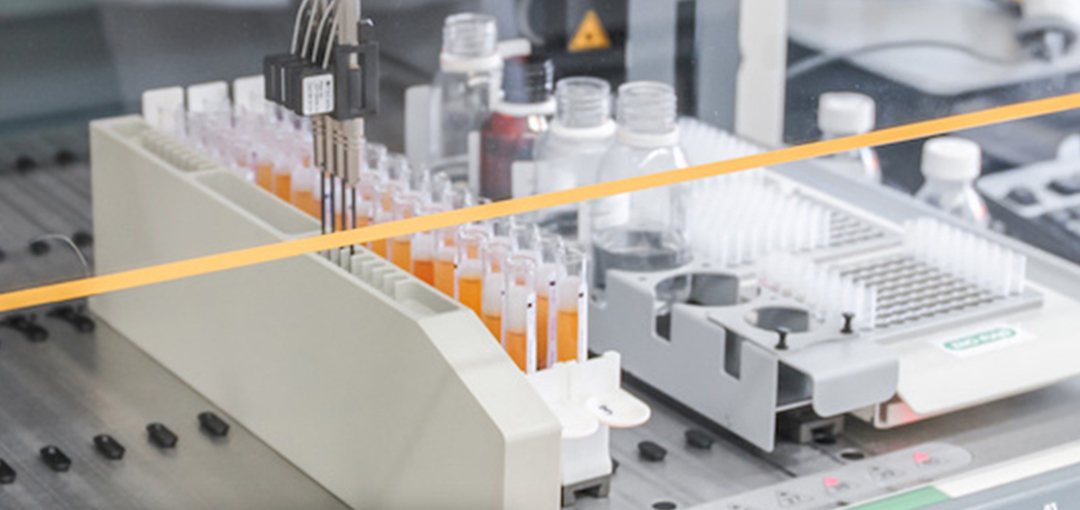
For many obvious reasons, industrial automation for the medical and pharmaceutical industries is heavily regulated for safety and hygiene. This means any automated conveyor system used in these operations must be completely sanitary, easy to clean and resistant to corrosion. Forget rubber or plastic—stainless steel conveyor belts fit the bill for all these requirements.

Our PureSteel® metal conveyor belts play a significant role in medical and pharmaceutical manufacturing, offering superior precision control, hygiene and customization options.

Applications are myriad, including the:

Hygiene Is a Given

It’s no coincidence that equipment that comes in contact with medical products is often made with austenitic stainless steel 304L or 316L. Our belts are available in these and a variety of other alloys with smooth, impermeable surfaces that offer no opportunity for the invasion of microbes or bacteria.

Although popular, polymer, plastic and metal mesh conveyors can generate particulates, making them limited in their hygienic capabilities and possibly increasing the risk of contamination. (See how we helped a UK-based conveyor manufacturer overcome the hygiene and strength limitations of plastic-tooth belts to facilitate a 17-fold increase in vaccine production at the height of the COVID-19 pandemic.)

The complete lack of gaps, recesses and crevices also makes stainless steel easier to clean. Due to its corrosion resistance, it can even be sanitized by high-pressure steam, high-pressure wash or chemical cleaning.

In addition, our belts do not require any lubricants that could introduce foreign substances into cleanroom environments. Their sterilization process can be performed in an autoclave, so they can be cleaned in place and don’t need to be removed from the conveyor for regular cleaning, which interrupts production.

Because Precision Matters

When compared with other power transmission or motion control components (linear actuators, lead screws, chains), metal belts are superior because of their high strength-to-weight ratio, durability and precise positioning. And unlike other belt types (such as rubber and fiberglass), metal belts will not stretch, so variations in surface speed are minimized.

Additionally, metal belts can be “stacked” in a multilayer configuration, consisting of several bands ranging in thickness from 0.003 to 0.005 inches [0.12 to 0.20 mm]. This configuration provides the combined strength of all layers while retaining the reduced bending stress of each individual layer, increasing the modulus of elasticity and helping to resist backlash.

The stacked configuration improves the strength of the belt without sacrificing precision or flexibility in tight spaces—an ideal scenario for robotic surgery applications (like this one, which required a solution that was small and strong with zero risk of backlash).

Customized to Your Exact Needs

When it comes to customization, the most important element is a belt’s pitch profile—the space between individual perforations, timing pins or other such features on a conveyor. Perforations are created by mechanical presses, chemical etching or laser cutting.

While custom pitch profiles vary by manufacturer, we can create countless perforation patterns in stainless steel belts as thin as 0.002 inches [0.08 mm], and as wide as 36 inches [900 mm]. This capability was “just what the doctor ordered” for this manufacturer of custom medical device machinery who had a need for very specific pitches.

Other customization options include a large array of metal alloys, unique belt width and thickness combinations, numerous surface coatings and textures, custom attachments and unlimited travel lengths.

Critical Solutions

For more than 50 years, we have produced PureSteel® metal conveyor belts, timing belts and pulleys ideally designed for industrial automation for the medical and pharmaceutical industries. Put us to the test. Bring us your challenge and see how our innovative team addresses it head on while maintaining standards for the most stringent levels of safety and hygiene.

The Power of Precision: Selecting the Right Conveyor Belt Pulley for Your Application

Pulleys play a vital role in conveyor systems used in various applications, including automated assembly, food processing, and medical manufacturing. Selecting the pulley best suited for your system, especially when using PureSteel® or other metal belts, is crucial to extending the belt’s lifespan and maximizing the system’s overall efficiency.

In any conveyor system, conveyor belt pulleys are the driving force behind the belt’s motion, generating torque and speed. Precision becomes paramount in pulley selection, as the performance of the entire belt system relies on it.

At Belt Technologies, we understand the importance of precision and offer a range of high-quality pulleys designed to optimize your conveyor system, including friction drive, timing and independently steerable designs. In addition, we have recently introduced the TruPulleysTM line of TruTrack, TruTension,and TruPace pulleys.  All of our pulleys are designed by our engineering team and manufactured in the United States of America.

We craft our pulleys from anodized aluminum for its ideal friction coefficient, ensuring optimized belt propulsion. If a high degree of corrosion resistance is required or the pulley will be exposed to temperatures greater than 150 °F, stainless steel would be recommended as a suitable pulley material.

Friction Drive Pulleys

Friction drive pulleys are typically flat-faced without timing elements. A flat-faced pulley surface is typically recommended when steering of the idler pulley can be deployed in the application. If steering or other traditional methods of tracking cannot be utilized, then a crown-faced pulley or narrow-bodied pulley may be an adequate design alternative.

A crowned pulley is an alternative for belt thicknesses less than 0.010” thick. The crowned surface can induce high stresses on the stiff steel belt, causing the belt to fatigue sooner than if the pulley surface was flat. A narrow-bodied roll can be an effective method of tracking a steel belt when alternative tracking methods are unavailable. This pulley type is flat-faced and the overall width is narrower than the steel belt. This method can be utilized on a wider range of belt thicknesses than a crowned pulley.

To maximize belt life, metal belts should be used with friction drive pulleys whenever possible. This type of pulley is widely used in various applications where a reliable and efficient power transmission system is required.

Friction drive pulleys have been employed in conveyor systems, packaging machinery, food processing units, material handling systems, printing presses, textile machinery, papermaking machines and pulp processing equipment, packaging and labeling devices, and industrial automation equipment.

Timing Pulleys

In a standard friction drive belt system in motion, there is a tight side and a loose side of tension as it transitions around the drive pulley.  The differential force that occurs in the transition results in a loss of position in a standard friction drive system. Timing pulleys feature teeth or pockets encircling the outer diameter, engaging with corresponding holes in the metal belt or drive lugs on the belt’s inner circumference to achieve synchronization. Generally, a timed pulley/belt system can achieve a positional accuracy of 0.001” and be repeatable to within 0.002”.

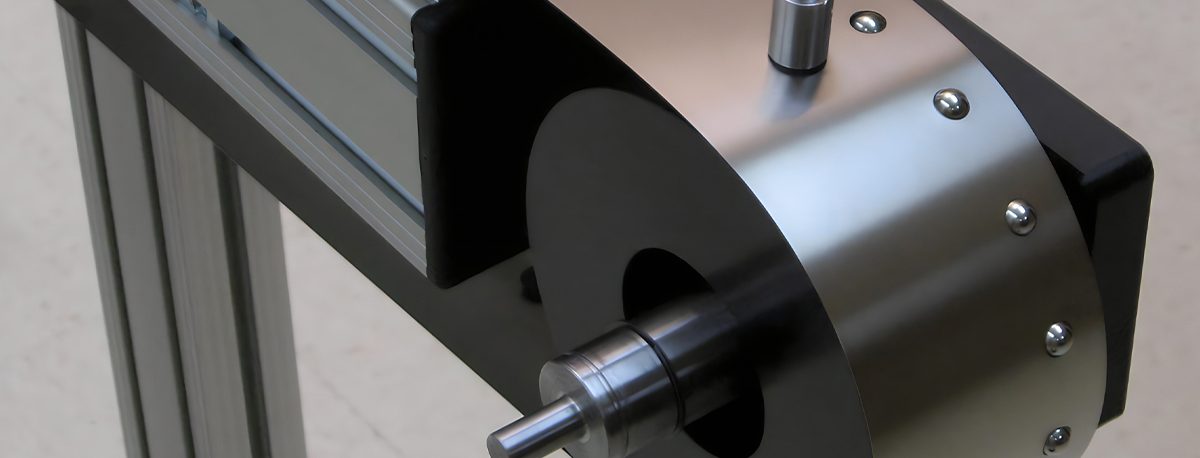
The resilience of the pulley’s timing teeth is of utmost importance to withstand continuous belt and pulley engagements. At Belt Technologies, our patented timing pulley employs hardened ball bearings as teeth, offering enhanced resistance to continuous wear and smooth engagement and disengagement of the steel belt.

When precision and timing are crucial in an application, timing pulleys are employed at the driving end of the system. Typical applications for this pulley type include robotics, industrial automation and manufacturing, computer numerical control machines, packaging machinery, cleanroom operations, 3D printers, and material handling equipment. Among these end uses, our timing pulleys have been used in animatronics and robotics for the entertainment industry, and in robotic arm actuators for industrial automation purposes.

Independently Steerable Pulleys

We introduced the innovative Independently Steerable Pulley (ISP) to enhance the precision and speed of flat belt tracking. The ISP allows you to fine-tune the position of the metal belt by adjusting a steering collar. Exclusively available from Belt Technologies, the ISP steering technology can seamlessly integrate with traditional belt tracking designs.

The ISP can be used as a friction drive or timing pulley in various system designs. This pulley proves valuable for metal belt systems with long center distances between pulleys and in applications where the belt’s tracking is affected by particulate accumulation. The ISP can be conveniently retrofitted to existing idler pulleys with minimal system modifications, making it a practical and adaptable solution for various applications.

TruPulleys™

TruPulleys™ are available as standalone products or as components of a complete conveyor system designed by our engineers. These pulleys monitor or regulate the tension, pace or tracking of a metal belt in many different applications.

TruTension™ Pulley

The TruTension™ pulley is a proprietary device that precisely measures steel belt tension on conveyor systems. The pulley is connected to a small, enclosed controller that uses sensors to measure belt tension and displays this information digitally. This allows users to optimize the belt’s performance and maximize its lifespan.

The TruTension™ pulley has applications in all industries and is compatible with any conveyor as long as both sides of the pulley are supported. For example, in mechanically timed systems, this pulley design continuously monitors belt tension to maximize system performance and extend belt life.

TruPace™ Pulley

Our TruPace™ pulley offers lower inertia compared to standard pulleys of equivalent size, enabling the use of smaller motors and gearboxes. It features a thin-walled tube with end caps, providing rigidity and multiple mounting options. Its ability to accelerate rapidly with low power gives engineers more design options for rapid part placement. The TruPace pulley can be used as either a drive or idler pulley.

TruTrack™ Pulley

With its frictionless segmented roller design and edge guides, the TruTrack™ pulley optimizes belt tracking automation while enhancing belt durability. This innovative design significantly reduces side loads on the belt, preventing edge damage and extending its lifespan beyond the capabilities of standard edge guides or flanges.  This design will maintain lateral position of the belt to within 0.008”.

Ready to Assist with Your Application

When selecting the appropriate pulley size and setup, it’s essential to consider both the conveyor belt’s durability and overall effectiveness. Our experienced engineers have the knowledge and skills to assist you in choosing the ideal pulley style, diameter and material, to perfectly match your metal belt. Contact our sales engineers today to learn how you can get started.


Signed, Sealed, Delivered: A Solution for Packaging Applications

The specialty packaging industry frequently includes applications that require handling medicine and food products, so businesses in this sphere must adhere to strict health and safety standards. That’s why we develop and deliver durable, non-stretchable and clean PureSteel® conveyor belts that meet these exacting requirements. In this blog, we highlight our ability to maximize product throughput while ensuring optimal sanitary conditions across multiple packaging applications.

The Benefits of PureSteel® Products

Whether you work with accumulators, heat sealers, cardboard packers, film wrappers or conveyors, our products are designed to meet your specific standards.

PureSteel® belts:

  • Require no lubrication
  • Have a high resistance to chemical corrosion and extreme temperatures
  • Are customizable with surface coatings, attachments and perforations
  • Do not generate dust, debris or particulates

They also offer greater precision control, longevity and cost-effectiveness than other options.

Medical and Pharmaceutical Applications

Automated conveyor systems used to process, handle and transport pharmaceutical products must be flawlessly sanitary, easy to clean and resistant to corrosion. Since stainless steel fits this description, our belts are often used in processing diabetes home test kits, as well as manufacturing blister packs for pills and tablets.

Additionally, at the height of the COVID-19 pandemic in 2021, our team successfully developed a critical solution for vaccine processing and packaging conveyors. With a short turnaround, we provided a UK-based conveyor manufacturer with a solution that increased vaccine production and distribution 17-fold.

Food Packaging Applications

The durability and accuracy of PureSteel® stainless steel belts also make them ideal for a wide range of food packaging applications, most notably heat sealers used to seal plastic and paper bags.

We play a crucial role in the food processing sector by supplying heat-sealing bands for sustainable paper packaging. Previous models used Teflon sealing bands, but they were unable to withstand the temperatures required for the adhesive on paper products. Using our belts, food processing companies successfully seal their packages while enhancing their sustainability efforts.

Ready to Assist with Your Application

With extensive experience across the medical, pharmaceutical and food packaging industries, our team delivers customized solutions that meet the highest health and safety standards.

Our belts can also be customized with coatings and textures and/or perforations to further enhance their functionality and meet specific requirements. Contact our sales engineers today to learn how you can benefit from our PureSteel® products or engineering expertise.

ETH Zurich: A Success Story in Engineering and Battery Production

At Belt Technologies, we’re more than the top-of-the-line products we create; we’re an engineering partner, working with customers to develop custom solutions. For instance, our team recently helped researchers at ETH Zurich in Switzerland, one of the world’s preeminent universities in the field of technical science, develop a faster and more cost-effective way to apply liquid coatings during battery production. In this blog, we explain how we helped bring their “curtain coating” system to life.

The Challenge

When it comes to manufacturing processes for the liquid coating of surfaces, curtain coating has the potential to surpass the production speed of the currently used slot-die coating method in battery production. The customer’s issue was finding a conveyor system that could successfully manage this new method.

Due to the nature of the coatings, our challenge was to provide a conveyor that was not only hygienic and easy to clean, but could also withstand aggressive chemicals and high temperatures for drying. The customer also required a low-vibration method to transport the battery components safely and accurately while applying a uniform coating. Conventional flat belts were out of the question due to their decomposability through chemicals and particle generation. The researchers turned to us for a stainless steel belt conveyor that could meet these conditions.

The Solution

At the onset, we extensively examined their setup and determined that a PureSteel® endless metal belt would be the optimal transport solution for the curtain coating system. Our team not only worked alongside ETH Zurich to deliver the perfect belt and deflection rollers, but to also help adapt the fluid-dynamic properties of the applied paste for a proof of concept.

Due to our flat and robust steel belt, the customer was able to select thinner and less stable current collectors (foils) for the coating. This allowed for a reduction of “dead weight” in the battery. Read more about this successful solution and its results in our full case study.

A Successful Partnership

This successful partnership isn’t an anomaly; we’re ready to help you tackle your engineering challenges. Our team has perfected the engineering of every aspect of our PureSteel® belts, so you can trust us to design a unique belt to meet your exact needs. If you think you could benefit from one of our PureSteel® products or our engineering expertise, contact our sales engineers today.

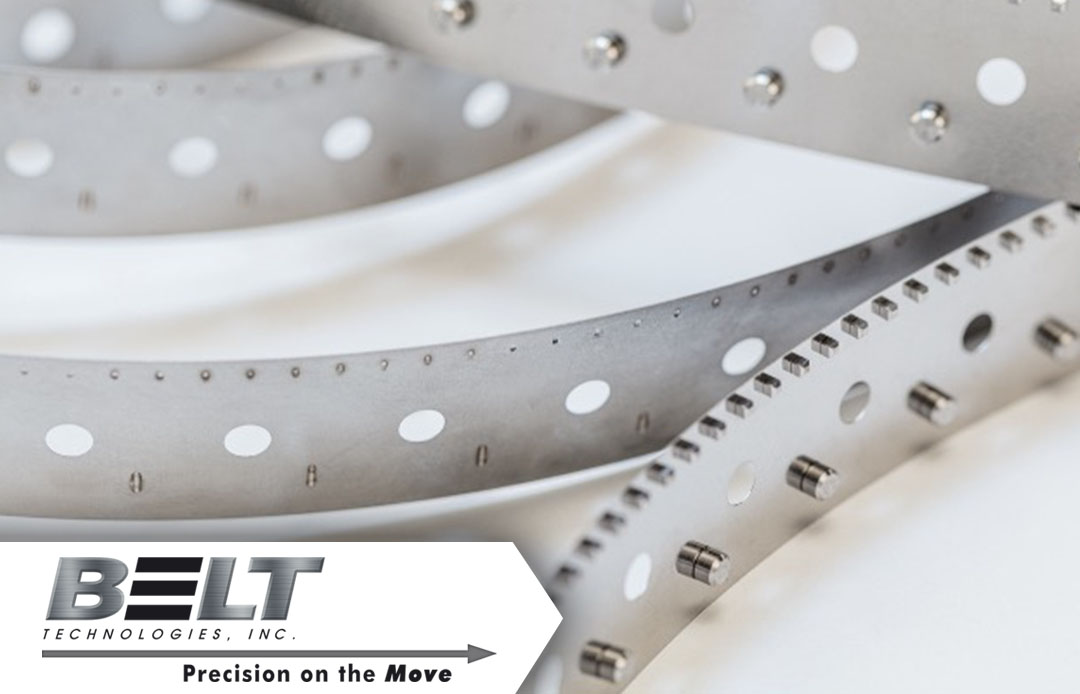
A Virtually Unlimited Number of Custom Perforation Patterns

When you hear the word “unlimited,” what comes to mind? It’s a word that gets used a lot, but when you really think about what it means, it can be difficult to conceptualize.

According to the Oxford Dictionary, the definition of unlimited is “not limited or restricted in terms of number, quantity or extent.” A tall order, to be sure, but one that Belt Technologies can fulfill when it comes to our perforated PureSteel® belts. By implementing a variety of methods to perforate metal, we are capable of creating belts with virtually unlimited number of custom perforations, in a virtually unlimited number of shapes and sizes, providing our customers with boundless precision and customization options. In this blog, we explain how these customization options can help you achieve your production goals.

Why Perforated Belts?

Due to their advantages in vacuum conveying (to securely hold products in place), perforated belts are often leveraged by companies requiring precision indexing. This need isn’t limited to a single industry, so we don’t limit the perforations to a particular product or product line.

We have successfully implemented design cut-outs into both timing belts and vacuum conveyors. Whether these perforations are needed for indexing, machine automation, positional accuracy or other requirements, we can deliver solutions for the following applications:

Perforation Methods and Techniques

Our team understands the many factors that must be considered when selecting a perforated metal conveyor belt to optimize its performance and durability for a specific application. For this reason, we employ three separate methods to create the perforations in our PureSteel® belts, including stamping, laser cutting, and chemical etching.

Our in-house laser cutting services and perforation techniques produce consistent, accurate and precise perforations with no burr. We can perforate belts as thin as 0.002” (0.051 mm) or as thick as 0.031” (0.78 mm), and belts narrow as 0.125” (3.175 mm) or as wide as 36” (900 mm).

A Pitch-Perfect Example in the Medical Field

Let’s look at a real-world example. Two of the most important factors in medical manufacturing are accuracy and cleanroom capability. When the Arthur G. Russell Company (AGR), a medical equipment manufacturer based in Connecticut, required a metal belt with a pitch profile (perforation pattern) that didn’t currently exist, they turned to us.

AGR required a conveying solution for a new medical device assembly machine that moves small needles for automated assembly, so a precisely designed custom belt was necessary. Our product had to excel in a cleanroom environment while offering repeatability and the personalization of a custom pitch. We worked alongside their team to create a custom belt that met their exact specifications. This solution, which was created for the machine in 1998, is still in use today.

Develop Your Custom Solution Today

Our virtually unlimited array of perforations is just one of many reasons to partner with Belt Technologies. Our team has perfected the engineering of every aspect of our PureSteel® belts, so you can trust us to design a unique belt to meet your exact needs. Contact us to learn more.

Why Is PureSteel® the Premium Conveyor Belt Material?

When it comes to selecting the right conveyor belt material for your operation, there is no shortage of options. Belts have traditionally been made from PVC, nylon, cotton, polyester and metal, among other materials. The number of choices may be overwhelming, but we can help narrow it down by explaining how our PureSteel® metal belts provide many unique benefits and advantages to overcome any manufacturing challenge.

The Downsides to Cloth, Plastic and Metal Mesh

Fabric and plastic belts—including those made of nylon, cotton, polyester or polymer—have several major drawbacks, including inconsistent tracking and inadequate hygiene. Like PureSteel®, most fabric belts rely on friction for forward driving, but tracking can become an issue for these lesser materials as the belt slowly moves off the center of the track. Additionally, both fabric and polymer belts are easily frayed and allow for bacterial buildup in crevices and small holes. This requires that they be regularly removed for cleaning, negatively impacting productivity.

Another belt option combines minuscule metal chain links in a mesh pattern. While this concept affords the inherent benefits of stainless steel, it presents another drawback. These belts consist of many connected parts, so lubrication is required to avoid generating friction between the elements. This introduces another contaminant into your operation and presents a risk to the cleanliness of the products in your facility.

The Many Benefits of PureSteel

No matter your manufacturing challenge, our single-element, stainless steel belts are up to the challenge. These are just a few of the ways they outperform the competition:

  • Accuracy. To ensure the most accurate and reliable motion possible, PureSteel® metal belts are manufactured to dimensions with very tight tolerances. This focus allows us to fabricate metal belts with a pitch accuracy of ±0.0005”.
  • Customization. Metal belts can be customized with perforation patterns, attachments and surface coatings. This variety of options means we can design a specific belt to meet your needs, even for the most unique projects.
  • Durability. The metal’s nonporous surface resists damage, a benefit for applications where food bacteria or other germs could proliferate in grooves, marks or scratches.
  • Hygiene. Other conveyors can be very difficult to clean, requiring either periodic removal from the production equipment to immerse in chemical solutions or the installation of complex cleaning systems and brushes. In comparison, stainless steel belts can be cleaned-in-place with almost any cleaning or sterilization method.
  • High strength-to-weight ratio. Stainless steel has a tensile strength ranging from 180 to 300 KPSI, depending on the alloy and temper chosen. Relatively thin and lightweight belts can be designed to handle the stresses of almost any application.
  • Non-stretchable materials. Compared to belts made with other materials, metal belts made with spring steels have a high modulus of elasticity, so they don’t stretch.
  • Thermal conductivity. Metal belts are better at absorbing and transmitting energy in the form of heat, cold and electricity, which are often used in the manufacturing process.

The Perfect Solution for Your Facility

Our team has perfected the engineering of our PureSteel® belts, so you can trust us to design a unique belt to meet your exact needs. This includes a broad array of metal alloys, belt width and thickness combinations, perforations, patterns, coatings and attachments.

Our engineers will work with you to find the right belt for the job and create a custom solution tailored to your facility. Contact us to learn more.

National STEM Day and the Future of Robotic Coworkers

In addition to producing top-of-the-line stainless steel conveyors and belts, we aim to inspire students to explore fields related to science, technology, engineering and mathematics—collectively known as STEM. We know the future of manufacturing lies in the next generation’s ability to operate alongside robotic coworkers, so it’s never been more important to instill an interest in STEM careers. On National STEM Day, we’re highlighting the industry’s need for two facets to work in conjunction: automated robots and the young, talented workforce that will work alongside them.

Changing Trends

Since 2020, supply chain issues and a nationwide labor shortage have directly led to a major upheaval in the manufacturing and warehouse industries. To offset the hiring struggles, many manufacturers have turned to robots to keep their operations moving. While COVID-19 was the impetus, this trend is expected to continue for the long term.

Some critics say robots are replacing human workers, but according to a recent study, 57 percent of global manufacturers said the robots in their facilities are supplementing employees’ work—not displacing them. Adapting to a robot/human hybrid work environment has provided many manufacturers the opportunity to expand their output, train workers for new positions with higher skill levels and attract a younger labor force interested in working with technology.

The ongoing digital transformation is changing the face of how workers will do their jobs. Another study projected that the U.S. manufacturing industry could have 2.1 million unfilled jobs by 2030. Fortunately, the study also found that attracting a younger workforce through diversity, equity and inclusion (DEI) and STEM-related initiatives could help to fill these empty positions.

Metal Belts to Bridge the Gap

Our stainless steel belts and drive tapes are integral parts used within many robotic workers, and the assembly lines they work on, to increase their productivity and longevity. As these belts are virtually non-stretchable and able to execute the same motion over and over without failing or outgassing, they are the optimal choice when it comes to manufacturing sensitive electronics, medical equipment and other products that require absolute precision.

Metal belts are also easier to clean, do not require any lubrication and do not generate particulates. This not only makes them easy to maintain but also ideal for sterile environments like clean rooms and vacuum spaces.

Working Together for a Better Future

While our metal belts and drive tapes will continue to help automated robots push the industry forward, we know it wouldn’t be possible without the interest of a young, inspired and technologically knowledgeable workforce. With that in mind, we wish all aspiring engineers and manufacturers a happy National STEM Day!

We’re always looking for talented individuals to join our team. For anyone interested in a rewarding career with terrific growth potential, competitive compensation and an excellent benefits package: you can check out our current openings and career opportunities on our website. And for those already in the industry, don’t hesitate to contact us if you’re to learn more about how our products can help your facility today.

3 Considerations for Choosing the Right Conveyor

Do you need help choosing the right conveyor solution for your application? Having produced metal conveyors, timing belts and pulleys for more than 50 years, it’s safe to say we know our stuff. Rugged, resilient and easy to install, all of our automated systems are made from high-quality materials, such as stainless steel for the belts and extruded aluminum or stainless steel for the frames.

In this blog, we explain how our superior PureSteel® products are used in a wide variety of industries and trusted to consistently outperform the competition with superior precision, durability and cleanliness.

1) Precision

Allowing for highly accurate and repeatable results, at improved speeds and throughputs, PureSteel® metal belt conveyor systems are the preferred solution in applications such as robotics, food processing, printing, solar panel production and more. To ensure the most accurate and reliable motion possible, PureSteel® metal belts are manufactured to dimensions with very tight tolerances. This focus allows us to fabricate metal belts with a pitch accuracy of ±0.0005”, which is valuable in designing, indexing, positioning and processing precision products.

2) Durability

Stainless steel conveyors and belts withstand sustained exposure to extreme temperatures, hostile environments and vacuum environments. The material’s nonporous surface resists damage, a benefit for applications where food bacteria or other germs could proliferate in grooves, marks or scratches. Additionally, due to its resistance to overheating and extreme temperatures, a metal belt won’t melt or break during high-temperature processes.

The type of alloy used in the metal belt will determine the range of high temperatures it can withstand. One heat-treated stainless steel alloy, for example, can withstand up to 800°F, while a type of Inconel® can withstand up to 1,000°F.

3) Cleanliness

Unlike competing materials, our Puresteel® belts do not generate particulates or require lubricant. Other conveyors can be very difficult to clean, requiring either periodic removal from the production equipment to immerse in chemical solutions or the installation of complex cleaning systems and brushes. In comparison, because of their resistance to chemical corrosion, stainless steel belts can be cleaned-in-place with almost any cleaning or sterilization method—such as high-powered steam, chemical cleaning solutions and high-pressure wash.

Stainless Steel: The Right Choice

Other conveyor types—including Dorner and QC Conveyors—incorporate stainless steel into their frames, but still use inferior materials like plastic or fabric for their belts. Additionally, both companies are reliant on modular, flexible-chain belts for certain applications, which generate component friction and require lubrication to operate. Our PureSteel® belts are the clear choice for almost every conveyor system application. Our experienced engineers will collaborate with you on an application-specific endless loop metal belt conveyor system design that is easy to install and maintain, and will meet and exceed your production needs.

Whether it is your goal to upgrade an existing system or to incorporate a new, easy-to-use one—our team is ready to assist. To learn more about how our products can help you, we’d welcome the opportunity to speak with you. Contact us today to learn more about how we can implement our conveyors in your facility.

Customized Printing Process Sparks Growth for Global Company

When a producer of health and personal care products needed to make changes to their printing process due to the inaccurate and inconsistent results they were seeing with their embossing and silicone printing, they turned to Belt Technologies.

The solution? A customized printing process with increased precision and adhesion. Not only did the solution resolve the printing issues, but it also allowed the customer to open production in new markets.

Read more in this Manufacturing.net article.