Belt Technologies Logo

Belt Provides Onsite Support to Help a Recent Customer with Belt Installation and Tracking Solutions

Recently, a customer from a previous project contacted Belt Technologies with a problem. Our engineers had provided them with a conveyor belt for the production of electrical connectors. Unfortunately, they were experiencing issues with the belt after it was installed in their system and they needed help identifying the source of the problem. Members of our team traveled to their location in Mexico to help their team troubleshoot the belt and provide them with a lasting solution.

Troubleshooting a Short Belt Lifespan
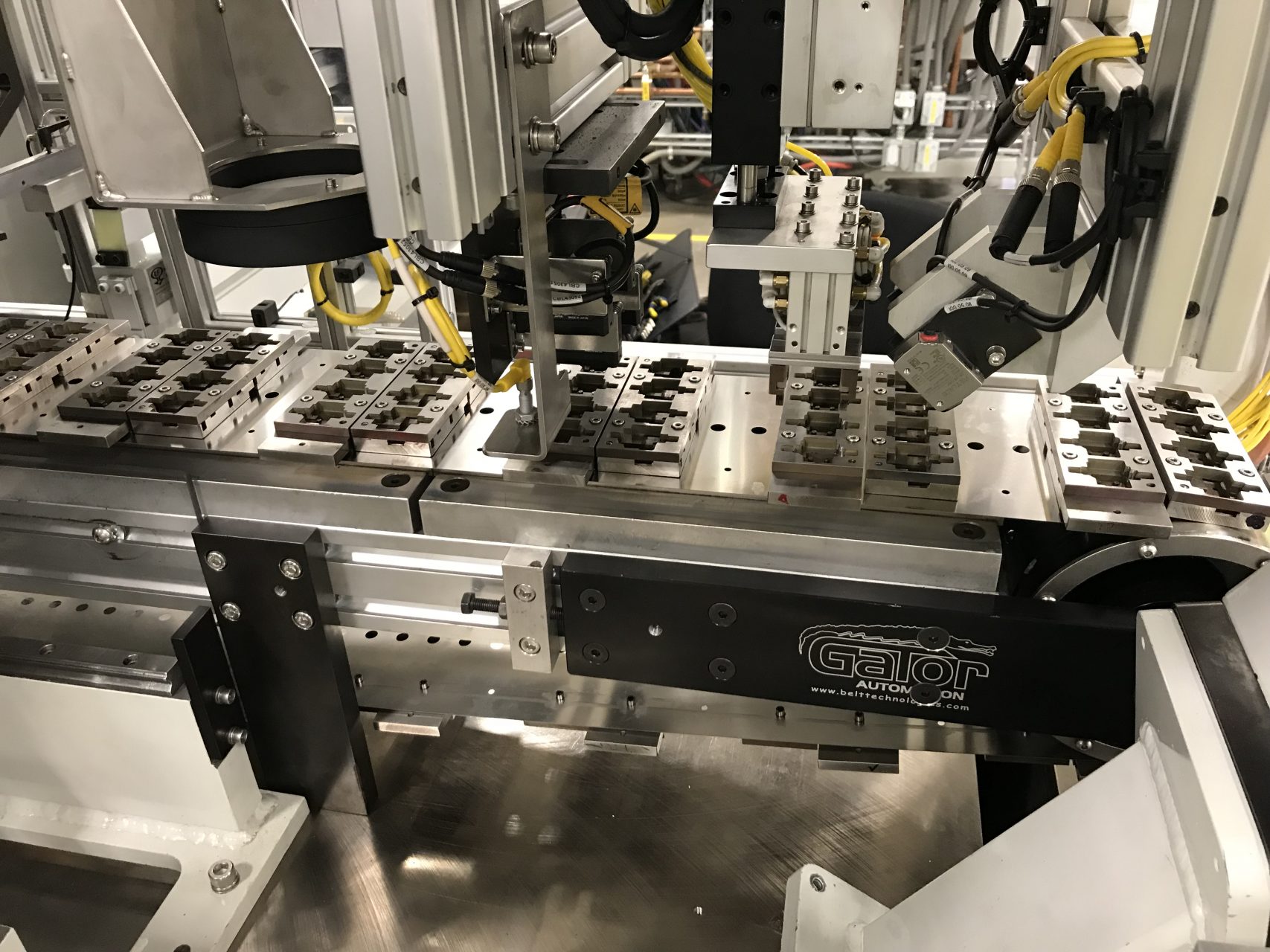
Metal conveyor belt and conveyor system with custom attachments by Belt Technologies.Originally, Belt Technologies produced a custom stainless steel conveyor belt that would support unique nesting attachments designed to hold electrical connectors in place as they were assembled. The belt was sent to a secondary builder, who then attached the custom fixtures. The individual fixtures were very heavy, weighing 1.45 pounds each; there were 48 fixtures in total. Because of the pulley dimensions, the belt was relatively thin. However, due to the high strength-to-weight ratio of stainless steel, the significant weight of the fixtures should not have caused the belt to fail so early in its operating lifespan.

Belt engineers traveled onsite to the customer plant to assist the end user with the setup and see if there was a solution for extending the belt life. After examining the system in operation, our engineers were able to determine that there was not enough clearance left between the fixtures on the belt and the legs of the system. As the fixtures traveled around the pulleys, they were striking the legs. Combined with minor alignment issues from incorrect installation, the repeated impacts contributed to chordal vibrations; these added stressors lead to fractures along the perforations of the belt and ultimately cause it to fail.

Proper Tensioning and Tracking Solutions

Our engineers were able to troubleshoot the issue and made small onsite adjustments to enhance productivity and save costs by reducing downtime and maintenance. They also helped train some of the end user’s employees on proper tracking and tensioning of the belt. Properly tensioning the belt fixed the underlying alignment issues with the pulleys that were contributing to the belt failure. The legs of the system were adjusted to provide enough clearance for the fixtures and prevent the repeated collisions that were damaging the belt.

Your System’s Success Is Our Priority

Our team was more than willing to work with the end user onsite to evaluate the machine as it ran, assess each element, and identify the cause of the issue. At Belt Technologies, the success of your automated system is our priority. We will always go the extra mile to ensure customers get the maximum possible lifespan from their conveyor belts.

For more information about custom stainless steel belts for your conveyor system, contact us today.

ベルトの取り付けとトラッキングソリューションを提供する訪問サポート

最近、以前のプロジェクトのお客様が問題についてご相談されました。 当社のエンジニアはこのお客様に
生産と電気コネクター用のコンベヤベルトをお届けしました。
. しかしベルトのシステム取り付け後に問題が発生したため、お客様は原因調査に支援が必要になりました。 当社のチームはベルトの故障点検を行い、恒久ソリューションを提供するためにこのお客様のメキシコの施設を訪問しました。

寿命が短くなったベルトの故障点検


Belt Technologiesによる金属コンベヤベルトとカスタム付属品付きコンベヤシステム。当初、Belt Technologiesは組み立て中に電気コネクターを固定する独自のネスト型付属品をサポートするカスタムのステンレススチールコンベヤベルトを製作しました。 ベルトはその後他の業者に送られ、カスタム冶具が取り付けられました。 個々の冶具にはかなりの重量があり、各冶具が1.45ポンド(約658グラム)の重量があり、合計48個ありました。 プーリーの寸法のため、相対的に薄いベルトでした。 しかしステンレススチールの高い比強度のため、寿命初期の段階で冶具の重量によりベルトが故障することはありません。


Belt Technologiesのエンジニアは、設置のセットアップを補助するとともに、ベルトの寿命を延長するソリューションを検討するためにお客様の施設を訪れました。 当社のエンジニアがシステム作動を観察したところ、ベルト上の冶具とシステム脚部のクリアランスが不足していることに気づきました。 冶具はプーリー付近を移動する際、脚部と接触していました。 誤った設置から生じたマイナーな整列問題と反復接触が弦振動を起こし、これがストレスになりベルトのパーフォレーションに添って破断を生じ、究極的に故障に至りました。

適切な張力とトラッキングソリューション


当社のエンジニアはダウンタイムとメンテナンスを削減し、生産性を高め、コストを節約するためにこの問題を調査し、調整を実施しました。 またお客様の従業員が
適切なトラッキングとベルト張力を確認できるようにトレーニングを行いました。
. ベルトに適切な張力を設定することで、ベルトの故障を起こしたプーリーとの整列問題を修正しました。 冶具とのクリアランスを十分とるためにシステムの脚部が調整され、ベルトに損害を与える反復接触を防止しました。

お客様のシステムの成功が当社の優先事項です


当社チームはお客様の施設で設備の作動を評価し、各要素を点検し、問題の原因を特定します。 Belt Technologiesにとって、お客様の自動化システムの成功が当社の優先事項です。 私たちはお客様のコンベヤベルトの寿命を延長するために 常に全力を尽くします。


お客様のコンベヤシステム用のカスタムステンレススチールベルトに関する詳しい情報については、 本日当社にお問い合わせください

Belt liefert Vor-Ort-Support, um Kunden bei Lösungen zu Band-Installation und Tracking zu helfen

Kürzlich kontaktierte uns ein Kunde, der bereits ein früheres Projekt abgewickelt hatte, wegen eines Problems. Unsere Techniker hatten für ihn ein
Transportband für die Produktion von elektrischen Steckverbindern geliefert
. Leider traten am Band nach der Installation in ihrem System Probleme auf, und der Kunde benötigte Hilfe beim Finden der Problemursache. Mitglieder unseres Teams reisten an den Kundenstandort nach Mexiko, um bei der Fehlersuche zu helfen und eine dauerhafte Lösung bereitzustellen.

Fehlersuche bei kurzer Bandlebensdauer


Metall-Transportbänder und Transportbandsysteme mit kundenspezifischen Anbauten von Belt Technologies.Ursprünglich fertigte Belt Technologies ein kundenspezifisches Edelstahl-Transportband, das die Installation einzigartiger, schachtelförmiger Halterungen unterstützen würde, die dazu dienen sollten, die elektrischen Steckverbinder während der Montage am Platz zu halten. Das Band wurde an einen zweiten Hersteller gesandt, der die kundenspezifischen Halterungen anbrachte. Diese individuellen Halterungen, insgesamt 48, waren mit jeweils 1,45 Pfund vergleichsweise schwer. Aufgrund der Abmessungen der Riemenscheibe war das Band relativ dünn. Allerdings sollte, dank des hohen Stärke-Gewichtsverhältnisses von Edelstahl, das signifikante Gewicht der Halterungen nicht dazu führen, dass das Band so früh im Betriebslebenszyklus ausfällt.


Die Techniker von Belt Technologies fuhren zur Anlage des Kunden, um den Endnutzer bei der Einrichtung zu helfen und zu prüfen, ob es eine Lösung zur Verlängerung der Betriebslebensdauer des Bandes gäbe. Bei einer Prüfung des Systems im Betrieb konnten unsere Techniker feststellen, dass der Abstand zwischen den Halterungen auf dem Band und den Systemträgern nicht ausreichend bemessen war. Da sich die Halterungen um die Riemenscheiben herumbewegten, streiften sie die Träger. Zusammen mit kleineren Ausrichtungsproblemen aufgrund einer fehlerhaften Installation verstärkten die wiederholten Einschläge die Schwingungen. Dieser zusätzliche Stressfaktor führte zu Brüchen entlang der Perforationen des Bandes und letztendlich zum Ausfall.

Passende Spannungs- und Tracking-Lösungen


Unsere Techniker konnten den Fehler beheben und vor Ort kleinere Anpassungen vornehmen, um die Produktivität zu verbessern und Stillstands- und Wartezeiten zu verringern. Außerdem schulten sie einige Angestellte des Endnutzers in punkto
ordnungsgemäßes Tracking und Spannen des Bandes.
. Ein ordnungsgemäßes Spannen des Bandes beseitigte die zugrundeliegenden Ausrichtungsprobleme mit den Riemenscheiben, die zum Ausfall des Bandes beigetragen hatten. Die Träger des Systems wurden ebenfalls ausgerichtet, sodass nun ausreichend Raum für die Halterungen zur Verfügung steht und wiederholte Kollisionen, die das Band beschädigen, vermieden werden.

Der Erfolg Ihres Systems hat für uns Priorität


Unser Team arbeitete sehr gern vor Ort mit dem Endnutzer zusammen, um die Anlage im Betrieb zu bewerten, jedes Element zu beurteilen und Fehlerursachen zu finden. Bei uns, bei Belt Technologies, hat der Erfolg Ihres automatisierten Systems für uns Priorität. Wir werden immer noch einen Schritt weitergehen, um sicherzustellen, dass der Kunde die maximal mögliche Betriebslebensdauer seiner Transportbänder erhält.


Für weitere Informationen zu kundenspezifischen Edelstahlbänder für Ihr Transportbandsystem kontaktieren Sie uns bitte noch heute.

Belt apporte une assistance sur site afin d’aider un nouveau client avec des solutions d’installation et de suivi de tapis

Récemment, un client d’un projet précédent à contacté Belt Technologies pour faire part d’un problème. Nos ingénieurs lui avaient fourni un
tapis roulant pour la production de connecteurs électriques
. Ils eurent malheureusement des problèmes avec le tapis après son installation dans le système et ils devaient identifier la source du problème. Des membres de notre équipe se rendirent au Mexique pour aider leur équipe à trouver le problème touchant le tapis et leur fournir une solution durable.

Régler le problème de durée d’existence d’un tapis


Tapis roulant métallique et système de convoyeur avec pièces jointes personnalisées de Belt Technologies.Belt Technologies avait produit à l’origine un tapis roulant personnalisé en acier inoxydable qui prendrait en charge les pièces jointes uniques d’emboîtement conçues pour maintenir en place des connecteurs électriques pendant leur assemblage. Le tapis fut envoyé à un fabriquant secondaire qui mit en place les pièces personnalisées. Ces pièces individuelles étaient très lourdes, pesant 657 grammes chacune, et il y avait un total de 48 pièces. A cause des dimensions des poulies, le tapis était relativement mince. Toutefois, à cause du rapport force-poids élevé de l’acier inoxydable, le poids important des pièces ne pouvait avoir causé si tôt dans sa durée d’existence la panne du tapis.


Les ingénieurs de Belt allèrent sur le site de l’usine du client pour l’aider avec l’installation et voir s’il existait une solution pour prolonger la durée d’existence du tapis. Après avoir examiné le système en fonctionnement, nos ingénieurs purent déterminer qu’il n’y avait pas d’espace entre les pièces jointes sur le tapis et les pieds du système. Lorsque ces pièces se déplaçaient autour des poulies, elles frappaient les pieds. Combinés à des problèmes mineurs d’alignement à cause d’une installation incorrecte, les impacts répétés contribuaient à des vibrations à la corde. Ces tensions ajoutées conduisaient à des fractures le long des perforations du tapis, et finalement à sa panne.

Serrage correct et solutions de suivi


Nos ingénieurs purent diagnostiquer le problème et firent de petits réglages sur site afin d’améliorer la productivité et faire des économies en diminuant les temps d’immobilisation et de maintenance. Ils aidèrent aussi à former des employés de l’utilisateur final au
au suivi et au serrage correct du tapis
. Tendre correctement le tapis régla les problèmes d’alignement sous-jacents avec les poulies qui contribuaiet à la panne du tapis. Les pieds du système furent réglés pour fournir suffisamment d’espace pour les pièces jointes et empêcher les collisions répétées qui endommageaient le tapis.

Le succès de votre système est notre priorité


Notre équipe était plus que désireuse de collaborer avec l’utilisateur final afin d’évaluer la machine pendant qu’elle fonctionnait, d’évaluer chaque élément et d’identifier la cause du problème. Chez Belt Technologies, le succès de votre système automatisé est notre priorité. Nous effectuerons toujours un effort supplémentaire pour garantir que les clients obtiennent la durée d’existence maximale possible de leurs tapis roulants.


Pour toute information complémentaire concernant les tapis en acier inoxydable personnalisés pour votre système de tapis, contactez-nous dès aujourd’hui.

Stainless Steel Belts for Secure Automated Pill Dispenser Cabinets

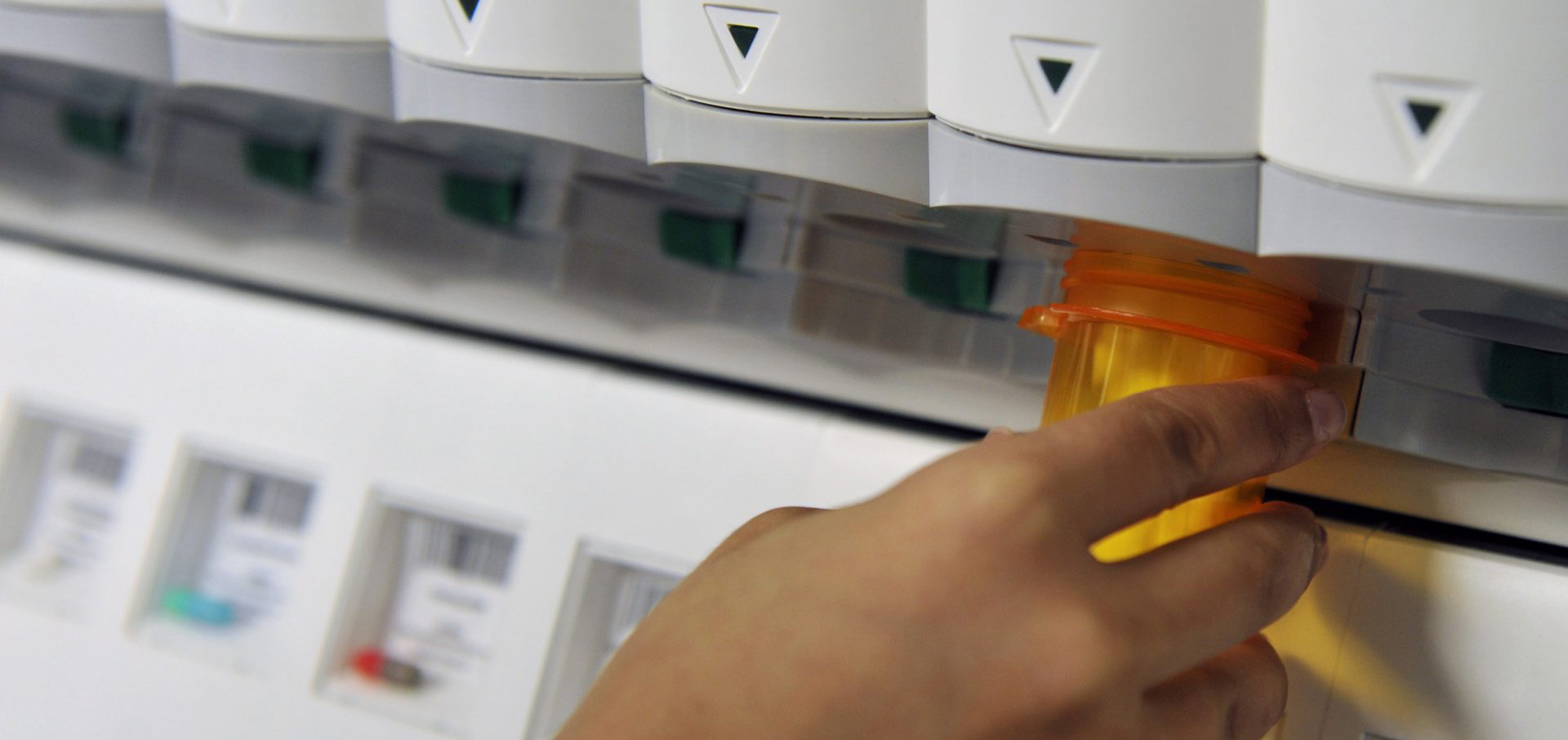
Filling a prescription using the Pharmacist Automated Medication DispenserBelt Technologies has the capability to produce custom stainless steel belts for a variety of unique applications beyond conveyor belt systems. One such application includes an automated pill dispenser cabinet for a large, medical device OEM. The dispenser for these projects is designed with a series of drawers that house medications for secure storage. To ensure the prescription pills cannot be dispensed without proper authorization, each drawer is built with a unique metal belt made with specialized window perforations. These window perforations limit access to the medications in the drawer. Only the necessary dosage is reachable through the window.
Stainless Steel Is Ideal for Medical Applications

Stainless steel is a great material choice for almost any automated medical application. Medical devices and materials are heavily regulated to maintain health and safety standards. They must be easy to clean and resistant to corrosion.

Stainless steel has a smooth, impermeable surface that offers no opportunity for microbes or bacteria to attach. Studies have shown that bacteria does not attach to the surface of stainless steel as readily as it does to other belt materials, such as rubber or plastic. This attribute is particularly valuable in clean room environments. Because it is highly resistant to corrosion, stainless steel can be cleaned via any method that best serves the application, from high-pressure steam washing to chemical cleaning. In addition, stainless steel belts do not generate particulates or require lubrication, which makes them an excellent choice for applications where prevention of contamination is a priority.

Achieve Precise Custom Perforations

Each drawer of these automated pill dispensers includes a metal belt with custom perforation patterns that are chemically etched. The larger “window” perforations are designed to enable access to the exact dosage required. They are then sent to a secondary operation that “folds” the outer edges of the window, which ensures a rounded surface that won’t scrape or cut attendant’s hands. A smaller perforation pattern on the edge of the belt is used as a part of the advanced optical positioning system. This allows the automated system to track which drawers are opened, who opened them, and how many times they were opened throughout the day.

Belt Technologies Can Produce Metal Belts for Unique Applications

The limited space within each drawer initially made these belts challenging to design and produce. The pulleys are very small, necessitating the use of thin belts. Despite these restrictions, our engineers were more than capable of producing belts that fit the customer’s design. The end result was a belt that is 3.770” wide x 0.005” thick x 43.946” long. We produce the belts in a variety of stainless steel grades for the customer, including 301, 302, 304, or 316 Full Hard Stainless Steel. We produce each automated pill dispenser according to the needs of the hospitals that purchase them; they can be built in a variety of configurations. On average, Belt Technologies produces up to 200 of these belts at a time.

At Belt Technologies, our engineers have the knowledge and experience to produce stainless steel belts for a wide variety of applications. Do you have a unique automated design that would benefit from the properties of stainless steel? Contact us today to learn more.

自動錠剤ディスペンサーキャビネット用のステンレススチールベルト

処方箋を薬剤師用自動錠剤ディスペンサーで調合Belt Technologiesは単なるコンベヤベルトシステムのみならず、多様で特殊な用途に ステンレススチールベルトをカスタム化する能力を備えています。 その1つの用途に医療機器大手のOEM用に製作した自動錠剤ディスペンサーキャビネットがあります。 これらの製品のディスペンサーは、錠剤を安全に保管する容器を収納するように設計されています。 適切な権限をもたない者により処方箋の錠剤が払い出されることを防ぐために、各容器は特殊な窓穴を持つ独自の金属ベルトで作られています。 これらの窓穴が容器内の錠剤へのアクセスを制限します。 窓を通して必要な投与量のみにアクセスできます。

ステンレススチールは医療用途に理想的です。


ステンレススチールはほとんどすべての 自動医療用途に最適な材質です 。医療機器と材質は衛生安全標準を保つために厳格に規制されるため、簡単に清掃し、腐食に耐えるものでなければなりません。


ステンレススチールの滑らかで不浸透性の表面は微生物や細菌の付着を予防します。
研究によると、
細菌はゴムやプラスチックの他のベルト材質ほどステンレススチールの表面に付着しません。 この性質はクリーンルーム環境に特に大切です。 ステンレススチールは高度な腐食耐性のため、高圧蒸気洗浄から化学洗浄など、それぞれの用途に適切な洗浄方法で清掃可能です。 またステンレススチールべルトは微粒子を生じたり、潤滑を必要としないため、汚染予防が重要な用途に最適です。

正確なカスタムパーフォレーション(穴あけ)を実行


これらの自動錠剤ディスペンサーの容器は、化学的にエッチングされたカスタムのパーフォレーションのパターンを持つ金属ベルトを装備しています。 大型の「窓」穴は、正確な投与量にアクセスできるように設計されています。 これらは操作する人の手を傷付けない曲面を確保するために、窓の外縁を「曲げる」2番目のプロセスに送られます。 ベルト末端の小穴パターンは、光学位置決めシステムの一部として使用されます。 自動システムはこれにより開かれた容器、開いた人、1日に開かれた回数を追跡します。

Belt Technologies は特殊用途の金属ベルトを生産します。


当初、容器内の限られたスペースのためにベルトの設計と生産が困難でした。 プーリーも非常に小型で、薄型のベルトが必要でした。 当社のエンジニアはこれらの問題を乗り越えて、顧客の設計を十分満足するベルトを製作しました。 結果、幅 3.770” (9.58 cm ) x 厚さ 0.005”( 0.013 cm)、長さ(112.62 cm ) のベルトが出来上がりました。 このベルトは硬質ステンレススチール301、302、304、316など様々な等級のステンレススチールで製作されました。 当社は購入病院のニーズに従って、多様な形態の自動錠剤ディスペンサーを製作します。 Belt Technologiesは1度に平均200枚のベルトを生産します。


Belt Technologiesのエンジニアは多岐にわたる用途にステンレススチールベルトを製作する知識と経験を有しています。お客様はステンレススチールのメリットを利用できる独自の自動化システムをお持ちですか? 詳細に関しては本日弊社にお問い合わせください。

Edelstahlbänder für sichere automatisierte Tablettenverteilerschränke

Einlösen von Rezepten mithilfe automatischer MedikamentenverteilerBelt Technologies kann kundenspezifische Edelstahlbänder für eine Reihe einzigartiger Anwendungen anfertigen, die weit über Transportbänder hinausreichen. Solch eine Anwendung ist ein automatisierter Tablettenverteilerschrank, der für einen wichtigen Medizingeräte-Erstausrüster gefertigt wurde. Der Verteilerschrank für diese Projekte wurde mit einer Reihe von Schubladen entworfen, die die Medikamente sicher aufbewahren. Zur Sicherstellung, dass die verschriebenen Medikamente nicht ohne ordnungsgemäße Autorisierung verteilt werden, verfügt jede Schublade über ein eindeutiges Metallband, das über spezielle Fensteröffnungen verfügt. Diese Fensteröffnungen beschränken den Zugriff auf die Medikamente in der Schublade. Durch das Fenster ist nur die notwendige Dosis erreichbar.

Edelstahl ist für medizinische Anwendungen sehr gut geeignet


Edelstahl ist die perfekte Materialwahl für die meisten automatisierten medizinischen Anwendungen. Medizinische Geräte und Materialien werden streng reguliert, um Gesundheits- und Sicherheitsstandards aufrechtzuerhalten. Sie müssen einfach zu reinigen und korrosionsbeständig sein.


Edelstahl weist eine glatte, undurchlässige Oberfläche auf, die keine Angriffsfläche für Mikroben oder Bakterien bietet.
Studien haben gezeigt,
dass sich Bakterien nicht so leicht an Edelstahl-Oberflächen ansiedeln können, wie an anderen Bandmaterialien, z. B. Gummi oder Kunststoff. Diese Eigenschaft ist besonders in Reinraum-Umgebungen von großer Bedeutung. Aufgrund der hohen Widerstandsfähigkeit gegenüber Korrosion kann Edelstahl immer mit der Methode gereinigt werden, die am besten zur Anwendung passt, von Hochdruck-Dampfwäschen bis hin zu chemischer Reinigung. Außerdem erzeugt Edelstahl keinen Feinstaub und erfordert keine Schmierung, wodurch er zur perfekten Wahl für Anwendungen wird, bei denen die Vermeidung von Verunreinigungen höchste Priorität hat.

Erzielen präziser kundenspezifischer Perforationen


Jede Schublade dieses automatisierten Tablettenverteilerschranks beinhaltet ein Metallband mit einem kundenspezifischen Perforationsmuster, das chemisch geätzt wurde. Die größeren “Fenster”-Öffnungen wurde entwickelt, um den Zugriff auf genau die benötigte Dosis zu ermöglichen. Sie werden zu einer Sekundärbearbeitung weitergeleitet, bei der die äußeren Kanten der Fenster “gefaltet” werden, wodurch eine abgerundete Oberfläche entsteht, die keine Kratzer am Arm des Angestellten verursacht. Ein kleineres Perforationsmuster an der Bandkante wird als Teil des fortschrittlichen optischen Positioniersystems verwendet. Das ermöglicht dem automatisierten System die Nachverfolgung, welche Schubladen geöffnet werden, wer sie geöffnet hat, und wie oft sie pro Tag geöffnet wurden.

Belt Technologies kann Metallbänder für einzigartige Anwendungen herstellen


Der eingeschränkte Raum in jeder Schublade ließ diese Bänder zu einer Herausforderung in punkto Design- und Fertigung werden. Die Riemenscheiben sind sehr klein, weshalb nur dünne Bänder eingesetzt werden können. Trotz dieser Einschränkungen konnten unsere Techniker Bänder herstellen, die zum Design des Kunden passten. Das Endergebnis war ein Band mit einer Breite von 3,770 Zoll, einer Dicke von 0,005 Zoll und einer Länge von 43,946 Zoll. Wir fertigten die Bänder in einer Reihe von Edelstahl-Graden, einschließlich 301, 302, 304 oder hochfestem 316 Edelstahl. Wir fertigten jeden automatisierten Tablettenverteiler entsprechend den Bedürfnissen des Krankenhauses, das ihn kaufen würde, denn er kann in einer Reihe von Konfigurationen bereitgestellt werden. Im Durchschnitt stellt Belt Technologies jeweils 200 dieser Bänder her.


Unsere Techniker bei Belt Technologies verfügen über die Kenntnisse und die Erfahrung, um Edelstahlbänder für eine breite Palette an Anwendungen zu fertigen. Haben Sie ein einzigartiges automatisiertes Design, das von den Eigenschaften von Edelstahl profitieren würde?Kontaktieren Sie uns noch heute, um mehr zu erfahren.

Tapis en acier inoxydable pour distributeurs de cachets automatisés et sécurisés

Préparer une ordonnance en utilisant le Distributeur de médicaments automatisé de pharmacieBelt Technologies a la capacité de produire des tapis en acier inoxydable personnalisés pour une variété d’applications uniques allant au-delà des systèmes de tapis roulants. Une telle application inclut un distributeur de cachets automatisé pour un grand FEO d’appareils médicaux. Le distributeur pour ces projets est conçu avec une série de tiroirs abritant les médicaments, pour un stockage sécurisé. Pour garantir que les cachets prescrits ne puissent être distribués sans une autorisation adéquate, chaque tiroir est construit avec un tapis métallique unique fabriqué avec des perforations spécialisées de fenêtre. Ces perforations de fenêtre limitent l’accès aux médicaments dans le tiroir. Seul le dosage nécessaire peut être obtenu par la fenêtre.

L’acier inoxydable est idéal pour les applications médicales


L’acier inoxydable est un excellent choix de matériau pour quasiment toute application médicale automatisée . Les appareils et produits médicaux sont très réglementés afin de maintenir des critères de santé et de sécurité. Ils doivent être faciles à nettoyer et résister à la corrosion.


L’acier inoxydable possède une surface lisse et imperméable empêchant les microbes ou les bactéries de s’y implanter.
Des études ont montré
que les bactéries ne s’implantent pas à la surface de l’acier inoxydable aussi facilement qu’elles le font sur d’autres matières de tapis telles que le caoutchouc ou le plastique. Cet attribut est particulièrement valable dans des environnements de pièce blanche. Comme il est extrêmement résistant à la corrosion, l’acier inoxydable peut être nettoyé par toute méthode correspondant le mieux à son utilisation, depuis la vapeur à haute pression jusqu’aux produits chimiques. De plus, les tapis en acier inoxydable ne génèrent pas de particules et ne nécessitent pas de lubrification, ce qui en fait un excellent choix pour les applications où la prévention de la contamination est une priorité.

Obtention de perforations précises et personnalisées


Chaque tiroir de ces distributeurs automatisés de cachets inclut un tapis métallique doté de motifs de perforation personnalisés gravés de manière chimique. Les perforations de “fenêtres” plus grandes sont conçues pour permettre l’accès au dosage précis demandé. Elles sont envoyées à une opération secondaire qui “plie” les extrémités extérieures de la fenêtre, ce qui garantit une surface arrondie qui n’écorchera ni ne coupera les mains du préposé. Un motif de perforations plus petit à l’extrémité du tapis est utilisé dans le cadre du système optique avancé de positionnement. Cela permet au système automatisé de suivre quels tiroirs sont ouverts, qui les a ouvert, et le nombre de fois où ils ont été ouverts durant la journée.

Belt Technologies peut produire des tapis métalliques pour des applications uniques


L’espace limité au sein de chaque tiroir a rendu initialement ces tapis difficiles à concevoir et à produire. Les poulies sont très petites, nécessitant l’utilisation de tapis étroits. Malgré ces contraintes, nos ingénieurs ont été plus que capables de fabriquer des tapis correspondant à la conception du client. Le résultat final a été un tapis mesurant 9,57 cm de large, 0,012 cm d’épaisseur et 111,62 cm de long. Nous fabriquons des tapis dans toute une gamme de qualités d’acier inoxydable pour les clients, notamment les types 301, 302, 304 ou l’acier inoxydable d’une extrême dureté 316. Nous fabriquons chaque distributeur automatisé de cachets en fonction des besoins des hôpitaux qui les achètent, ils peuvent être construits en toute une gamme de configurations. Belt Technologies fabrique en moyenne jusqu’à 200 de ces tapis à la fois.


Chez Belt Technologies, nos ingénieurs ont les compétences et l’expérience pour fabriquer des tapis en acier inoxydable pour une large gamme d’applications. Avez-vous un design automatisé unique qui tirerait parti des propriétés de l’acier inoxydable ?Contactez-nous dès aujourd’hui pour en savoir plus.

Wide Stainless Steel Conveyor Belt for Automated Manufacturing of Plastic Zip Ties

A stainless steel belt is considered “wide” when it is between 22 to 35 inches in width. Wide belts require particular consideration to produce and are traditionally made with thicknesses of 1 millimeter or greater to preserve belt integrity. At Belt Technologies, one of our core strengths is our ability to produce wide metal belts from thinner materials.

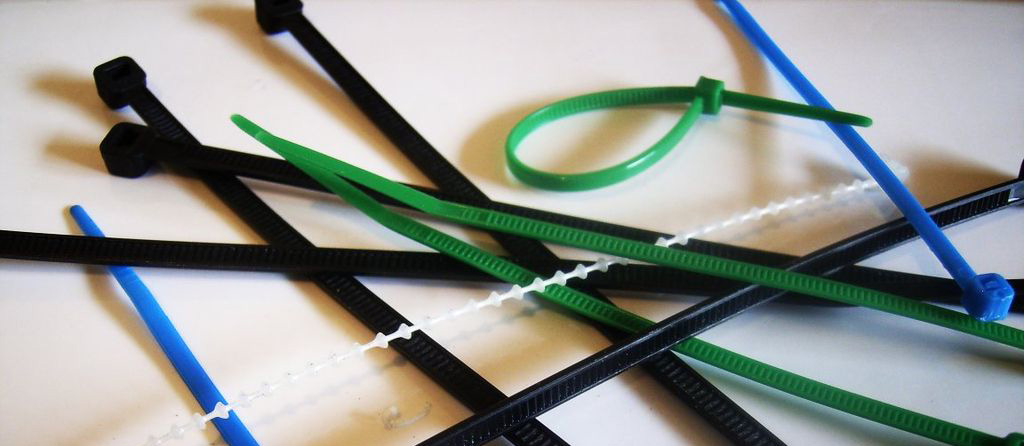
Recently, our engineers were challenged to provide a returning customer with an enlarged version of a belt we produced for them on another project. The belt was to be used to transport large groupings of zip ties. Because these zip ties would be larger than the products made in the previous system, the customer needed to scale up the size of the conveyor belt as well.

Zip Tie Production Challenges

The customer’s conveyor system needed to transport clusters of zip ties through a laser cutting process to be separated. The belt had to have a series of perforations to allow the laser to cut the zip ties without damaging the belt; after cutting, any unnecessary zip tie parts had to fall through to be discarded. This made proper positioning of the product an important factor.

Wider belts tend to be more sensitive to negative tracking forces. Stainless steel belts are virtually non-stretchable and do not yield under tension, which can make belt tracking more challenging.

Wide Metal Belts Are Easily Customized for Your Application

Our engineers provided the customer with a stainless steel conveyor belt that was 30 inches wide and 0.381 mm thick. While most manufacturers can only produce wide metal belts with a thickness of 1 mm or greater, Belt Technologies has the capability to produce wide metal belts with thicknesses ranging as low as 0.076 mm and up. Using a thinner material makes it possible to reduce the system pulley diameter, thereby saving space, reducing inertia, minimizing cost, and achieving a smaller overall system footprint.

We also provided the customer a V-Guided tracking system. This system would prevent the belt from gradually moving off track and would reduce the downtime required for routine axis adjustments. Our V-Guided Metrak© belt tracking system ensures even distribution of tracking stress on the V-beltrather than the conveyorand guarantees maximum belt lifespan.

Using our in-house laser perforation services, our engineers added long, rectangular perforation slots to this particular belt. The slots created spaces where the laser could cut through the zip ties without damaging the belt. They also created room for the discarded zip tie materials to fall through.

An optical positioning system that includes additional perforations along the edges of the belt helps to ensure proper indexing of the belt. Our engineers helped the customer determine the proper placement for the perforations to ensure the integrity of the belt.

The customer successfully installed the new belt in the existing system and was very satisfied with the results. To find out more about how we can customize wide metal conveyor belts for your automation application, contact us today.

プラスチックジップタイ生産自動化用のワイド型ステンレススチールコンベヤ

ステンレススチールベルトが「ワイド」とみなされるには、22~35インチ(約56~89 cm)の幅が必要です。
ワイド型(幅広)ベルト
の製作には特別な配慮が必要で、通常ベルト強度を保持するために1ミリメートル以上の厚さを必要とします。 Belt Technologiesの特色の一つに幅広の金属ベルトを薄い材質で製作できる能力があります。


最近、弊社のエンジニアは、あるお客様から以前弊社が製作したベルトのワイド版を製作してほしいと
依頼されました。
. このベルトはグループ化されたジップタイの搬送に使用されるものでした。 これらのジップタイは以前のシステムで製造されたものより大型のため、コンベヤベルトのサイズを拡大する必要がありました。

ジップタイ生産のチャレンジ


お客様のコンベヤシステムは、ジップタイの塊を分離するレーザー切断プロセスを通す必要がありました。 ベルトを傷つけずにジップタイを切断するために、幾つかのパーフォレーション(穴あけ)加工が必要でした。切断後の余ったジップタイはベルトから落され、廃棄されます。 このため製品の正確な位置決めが重要でした。


ワイド型ベルトはネガティブトラッキング力に敏感です。 ステンレススチールベルトは非伸縮性のため、張力下でも伸びることがなくベルトのトラッキングを困難にすることがあります。

お客様の用途に簡単にカスタマイズできるワイド型金属ベルト


Belt Technologiesは、幅30インチ(76.2 cm)、厚さ0.381mmのステンレススチールコンベヤを製作します。 ほとんどのメーカーのワイド型金属ベルトは厚さが1 mm以上ですが、Belt Technologiesは0.076 mm の厚さからワイド型金属ベルトを製造する能力を持っています。 薄い材質の使用は、システムプーリー径の削減、スペース節約、慣性の減少、コストの最小化を実現し、総合的な接地面積を節約します。


またベルトには、Vガイドトラッキングシステムも搭載されます。 このシステムはベルトが徐々にトラックから逸脱することを予防するため、軸調整に必要なダウンタイムを短縮します。 当社の
V-Guided Metrak© ベルトトラッキングシステム
コンベヤの代りにVベルト上でトラッキング応力を均等に分配し、寿命を最大に延長します。


当社のレーザーパーフォレーションサービスがベルトに細長い長方形のスロットを加工します。 このスロットは、レーザーがベルトを傷つけずにジップを切断するスペースを与えます。 そして廃棄するジップタイ材質をスロットから落とします。


追加のパーフォレーションを持つベルト末端の光学位置決めシステムが、ベルトの適切な割り出しを確実にします。 このプロジェクトで当社のエンジニアはベルト強度を確実にするパーフォレーションの配置についてお客様を支援しました。


お客様は既存システムに新しいベルトを取り付けることに成功し、その結果に大変満足されました。自動化生産に使用するワイド型金属コンベヤベルトのカスタマイズについては、 本日、弊社にお問い合わせください