Belt Technologies Logo

High-Speed Stainless Steel Indexing Belt for Lithium Battery Manufacturing

A machine-building firm recently approached Belt Technologies with a project to design and produce a highly specialized automated conveyor system. The customer, who had many years of engineering experience, had been tasked with developing new capital equipment for an OEM producing lithium batteries for the international market.

Difficult Operating Conditions Present Unique Challenges

The automated conveyor system was to be designed to transport battery components through processing. It would carry 8” x 10” calendered paper cardslined with a thin metallic lithium foilthrough a series of stages, each of which presented a unique challenge.

Maintaining Positional Accuracy and Precision

The first challenge was precision. The calendered cards had to be precisely indexed at each stage of production. The indexing belt was to be run at one foot per second, which is a high rate of speed for a precision application. Stainless steel was an excellent material choice for this application because it is virtually non-stretchable and is highly accurate. Timing and indexing belts by Belt Technologies can be fabricated with a very high pitch accuracy of ±0.0005 inches station to station.

Delicate Material Handling

The second challenge was handling. To maintain positional accuracy, the delicate cards needed to be kept reliably in place on the belt. At the end of the lithium battery manufacturing system, there was to be a cold roller that exerts upward of 100 pounds of force. While belt attachments can sometimes be used to hold products in position, they would interfere with the cold roller in this particular application. To avoid this interference, keep the positioning of the cards as accurate as possible, and prevent movement on the belt, we decided to hold the products in place with vacuum suction.

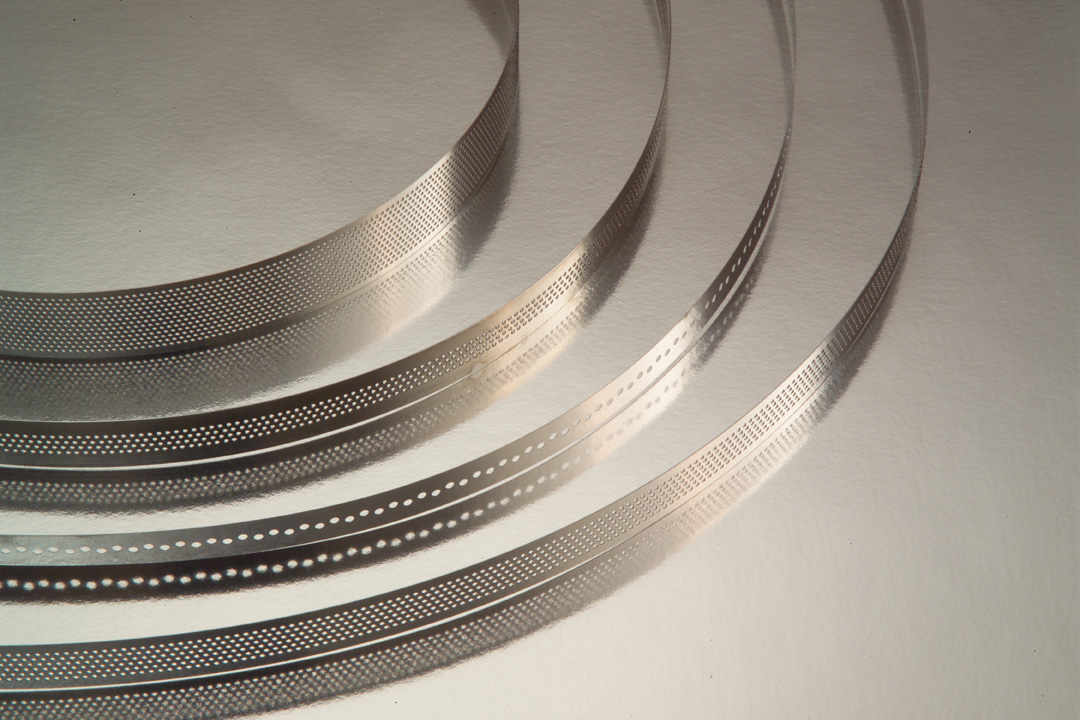
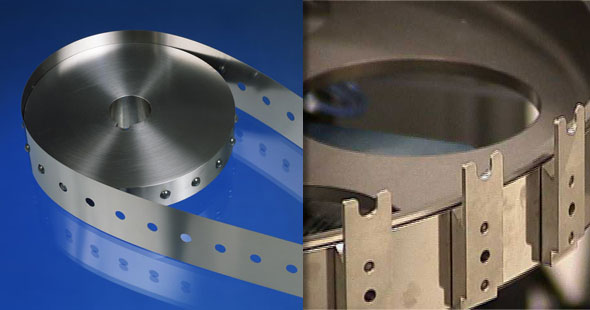
The stainless steel belts for this system were chemically perforated with customized patterns specified by the customer; these perforations created the exact amount of suction required to hold the cards in place as they moved through processing.

Potentially Caustic Environment and Temperature Changes

The third challenge was the environment. Lithium battery production takes place in a “dry room,” which is an area with specialized dehumidifying systems that maintain ambient humidity between 1% and 10%. When exposed to moisture, lithium reacts to create a highly corrosive chemical byproduct that presents a danger to both the equipment and machine operators. In addition, a section of the processing line included chilled rollers, which could cause condensation if any moisture is introduced to the system.

Stainless steel does not require lubrication and does not generate particulates, making it an ideal material choice for this application. It is also highly resistant to corrosion and extremes in temperature. Should any moisture contamination occur, a stainless steel conveyor belt would be the most likely option to resist the resulting corrosive chemicals from the product.

Belt Engineers Provide Solutions to Any Automation Challenge

Belt Technologies engineers were able to provide the customer a high-quality, automated conveyor system with a perforated, stainless steel indexing belt to keep each calendered paper card reliably in place. The high corrosion resistance, accuracy, and clean operation of stainless steel made this process an automatic success. For more information about stainless steel conveyor belts for your automated application, contact the experts at Belt Technologies today.
 

Hochgeschwindigkeits-Edelstahl-Taktband für die Fertigung von Lithiumzellen


Eine Maschinenbaufirma wandte sich kürzlich mit einem Projekt an Belt Technologies, das die Entwicklung und Fertigung eines hoch spezialisierten, automatisierten Transportbandsystems beinhaltete. Der Kunde, der über eine jahrelange ingenieurtechnische Erfahrung verfügt, war mit der Entwicklung neuer Betriebsanlagen für einen Erstausrüster, der Lithiumzellen für den internationalen Markt herstellt, beauftragt worden.

Schwierige Betriebsbedingungen stellen eine einzigartige Herausforderung dar


Das automatisierte Transportbandsystem sollte für den Transport der Zellenkomponenten durch die Verarbeitung entwickelt werden. Es würde kalandrierte


8” x 10


Papierkarten
,


die mit einer dünnen Lithiumfolie beschichtet sind,


durch eine Reihe von Stufen transportieren. Jede dieser Stufen stellte eine einzigartige Herausforderung dar.

Aufrechterhaltung von Positionsgenauigkeit und Präzision


Die erste Herausforderung stellte die Präzision dar. Die kalandrierten Karten müssen in jeder Produktionsstufe präzise getaktet werden. Das Taktband sollte mit einer Geschwindigkeit von 1 Fuß pro Sekunde laufen, einer eher hohen Geschwindigkeit für eine Präzisionsanwendung. Für diese Anwendung ist Edelstahl eine hervorragende Materialwahl, da es praktisch dehnsteif und hoch präzise ist.


Zahnriemen und Taktbänder von Belt Technologies


können mit einer sehr hohen Steigungsgenauigkeit von ±0,0005 Zoll von Station zu Station hergestellt werden.

Handhabung empfindlicher Materialien


Die zweite Herausforderung war die Handhabung. Um die Positionsgenauigkeit aufrechtzuerhalten, müssen die empfindlichen Karten zuverlässig auf dem Band am Platz gehalten werden. Am Ende des Lithiumzellen-Fertigungssystems gibt es eine Kaltwalze, die eine Kraft ab etwa 100 Pfund ausübt.


.


Band-Anbauten, die manchmal genutzt werden können, um Produkte in Position zu halten, würden in dieser speziellen Anwendung mit der Kaltwalze interferieren. Um diese Interferenz zu vermeiden, die Positionierung der Karten so genau wie möglich zu halten und eine Bewegung auf dem Band zu vermeiden, entschieden wir uns,


die Produkte mittels Vakuumansaugung am Platz zu halten.


.


Die Edelstahlbänder für dieses System wurden chemisch mit maßgeschneiderten Mustern nach Kundenangabe perforiert. Diese Perforationen erzeugen genau die Ansaugung, die benötigt wird, um die Karten am Platz zu halten, während sie durch die Verarbeitung bewegt werden.

Potenziell ätzende Umgebung und Temperaturänderungen


Die dritte Herausforderung war die Umgebung.


Die Produktion der Lithiumzellen findet in einem “Trockenraum” statt, wobei es sich um einen Bereich mit speziellen Luftentfeuchtungssystemen handelt, in dem die Umgebungsluftfeuchtigkeit zwischen 1% und 10% gehalten wird. Bei Aussetzung gegenüber Feuchtigkeit reagiert Lithium und erzeugt ein stark korrodierendes Nebenprodukt, das eine Gefahr für die Ausrüstung und die Maschinenbediener darstellt.


Außerdem schließt ein Teil der Verarbeitungslinie gekühlte Rollen ein, die Kondensation verursachten könnten, wenn Feuchtigkeit ins System eindringen würde.


Edelstahl benötigt keine Schmierung und erzeugt keinen Feinstaub, wodurch es zur idealen Materialwahl für diese Anwendung wurde. Es ist außerdem sehr widerstandsfähig gegenüber Korrosion und extremen Temperaturen. Sollte eine Verunreinigung durch Feuchtigkeit auftreten, wäre ein Edelstahl-Transportband die Option, die den entstehenden korrodierenden Chemikalien vom Produkt am besten widerstehen könnte.

Die Techniker von Belt stellen Lösungen für jede Automatisierungs-Herausforderung bereit


Die Techniker von Belt Technologies konnten für den Kunden ein qualitativ hochwertiges, automatisiertes Transportbandsystem mit einem perforierten Edelstahl-Taktband bereitstellen, dass jede kalandrierte Papierkarte zuverlässig am Platz hält. Der hohe Widerstand gegenüber Korrosion, die Präzision und der saubere Betrieb von Edelstahl ließ dieses Verfahren zu einem automatischen Erfolg werden. Für weitere Informationen zu Edelstahl-Transportbändern für Ihre Automatisierungsanwendung


kontaktieren Sie bitte die Fachkräfte bei Belt Technologies noch heute
.

.


リチウムバッテリー製造用の高速ステンレススチールインデックスベルト


最近、機械製造会社が高速自動コンベヤシステムの設計と製造についてBelt Technologies にお問い合わせされました。 長年のエンジニアリング経験を有するこのお客様は、国際市場用リチウムバッテリーを製造するOEMのために新しい設備を開発していました。

困難な運用条件が独自の問題を提示する


自動コンベヤシステムはバッテリーの構成部品を工程に搬送するために設計される予定でした。 8 x 10インチの


カレンダー処理された


ペーパーカードを


リチウムフォイルと整列させた状態で


それぞれ独自の問題を抱える一連の工程に搬送される予定でした。

位置精度と正確さの維持


最初の問題は精度でした。 カレンダー処理されたカードは各製造ステージに正確に割出しされる必要がありました。 インデックスベルトは高精度アプリケーションでは高スピードである1秒当たり1フットで移動しなければなりませんでした。 実質的に非伸縮性で精度の高いステンレススチールはこのアプリケーションに最適な材質でした。


Belt Technologiesのタイミングとインデックスベルト


はステーションからステーションまでのピッチ、±0.0005 インチという高精度で製造が可能です。

繊細な材質の取扱い


2番目の問題は取扱いでした。 位置精度を維持するには、繊細なカードをベルト上で正確に配置しなければなりません。 リチウムバッテリーの製造システムの末端には、100ポンド以上の力を出す冷間ローラーがありました。


.


製品を固定するためにベルト付属品を使用することがありますが、この場合、冷間ローラーに干渉するという問題がありました。 この干渉を避け、ベルト上での動きを予防してカードをなるべく正確な位置に保つために、当社は


製品を真空吸引で固定することにしました。


.


本システムのステンレススチールベルトは化学的に穿孔され、お客様が指定したパターンにカスタマイズされます。工程中を移動する間にカードを固定するために、正確な真空吸引に必要な数の孔が製作されました。

潜在的な腐食環境と温度変化


3番目の問題は環境でした。


リチウムバッテリー製造は湿度を1%から10%で維持する特殊な除湿システムを持つ「ドライルーム」で行われます。リチウムが水分に露出されると反応により設備と作業者の両方に有害な腐食した化学副産物が生じます。


さらにシステムに水分が侵入すると、工程の1部分にある冷間ローラーに結露が生じます。


ステンレススチールは潤滑を必要とせず、微粒子を発生しないため、この用途に理想的な材質です。 また腐食や極端な温度に高い抵抗性があります。 水分汚染が発生する場合、ステンレススチールコンベヤベルトは腐食性薬品から製品を守ります。

ベルトエンジニアがいかなるオートメーション問題も解決します


Belt Technologiesエンジニアはカレンダー処理されたカードを固定するために、穿孔されたステンレススチールインデックスベルトで構成される高品質のオートメーションシステムをお客様にお届けしました。 ステンレススチールの高い腐食抵抗性、精度、およびクリーンな運用により、このプロセスは大成功を収めました。 オートメーションシステムにステンレススチールコンベヤベルトの使用をご検討中、または詳しい情報が必要なお客様は


本日、Belt Technologies の専門家お問い合わせください


.


Tapis d’indexation en acier inoxydable à grande vitesse pour la fabrication de batteries au lithium


Une société de construction de machines a récemment contacté Belt Technologies avec un projet de conception et de production d’un système convoyeur automatisé hautement spécialisé. Le client qui avait de nombreuses années d’expérience d’ingénierie, avait été chargé de développer le nouvel équipement essentiel pour un FEO produisant des batteries au lithium pour le marché international.

Des conditions d’opération difficiles présentent des défis uniques


Le système convoyeur automatisé devait être conçu pour transporter des composants de batteries pour traitement. Il porterait des cartes de papier de 20 x 25 cm


calandrées


doublées d’une fine feuille de lithium métallique


à travers une série d’étapes présentant chacune un défi unique.

Maintenir l’exactitude et la précision de la position


Le premier défi était la précision. Les cartes calandrées devaient être précisément indexées à chaque étape de la production. Le tapis d’indexation devait fonctionner à 30,4 cm par seconde, ce qui est une vitesse élevée pour une application de précision. L’acier inoxydable était un excellent choix de matériau pour cette application parce qu’il est pratiquement non étirable et extrêmement précis.


Les tapis synchrones et d’indexation de Belt Technologies


peuvent être fabriqués avec un très haut degré de précision de ±0,0012 cm station à station.

Manutention de matériaux délicats


Le deuxième défi était la manutention. Pour maintenir l’exactitude de leur position, les cartes délicates devaient être conservées en place de manière fiable sur le tapis. A la fin du système de fabrication des batteries au lithium se trouvait un laminoir à froid pouvant exercer jusqu’à 45,3 kg de force


.


Si des accessoires de tapis peuvent parfois être utilisés pour maintenir en position les produits, ils auraient ici interféré avec le laminoir à froid. Pour éviter cette interférence, conserver le positionnement des cartes aussi exact que possible et empêcher leur mouvement sur le tapis, nous avons décidé de


maintenir les produits en place par succion à vide


.


Les tapis d’acier inoxydable pour ce système furent perforés de manière chimique par des motifs personnalisés spécifiés par le client. Ces perforations créaient le volume exact de succion requis pour maintenir en place les cartes tandis qu’elles se déplaçaient dans le processus de traitement.

Les environnements potentiellement caustiques et les modifications de températures


Le troisième défi était l’environnement.


La production de batteries au lithium se passe dans une “chambre sèche”, une zone dotée de systèmes déshumidificateurs spécialisés maintenant l’humidité ambiante entre 1 et 10 %. Lorsqu’il est exposé à l’humidité, le lithium réagit pour créer un produit chimique dérivé extrêmement corrosif et présentant un danger à la fois pour l’équipement et les opérateurs de machines.


En outre, une partie de la chaîne de traitement incluait des laminoirs à froid, ce qui pouvait provoquer de la condensation si de l’humidité pénétrait dans le système.


L’acier inoxydable ne nécessite pas de lubrification et ne génère pas de particules, ce qui en fait un choix de matériau idéal pour cette application. Il est aussi extrêmement résistant à la corrosion et aux extrêmes de températures. Si une contamination par l’humidité se produisait, un tapis convoyeur en acier inoxydable serait la meilleure option pour résister aux produits chimiques résultants émis par le produit.

Les ingénieurs de Belt fournissent des solutions à tout défi d’automatisation


Les ingénieurs de Belt Technologies ont pu fournir au client un système convoyeur de haute qualité, automatisé, doté d’un tapis d’indexation perforé en acier inoxydable pour garder en place de manière fiable chaque carte de papier calandrée. Le fonctionnement précis, propre et la haute résistance à la corrosion de l’acier inoxydable ont fait de ce processus un succès de l’automatisation. Pour d’autres informations concernant les tapis convoyeurs d’acier inoxydable pour votre application automatisée,


contactez dès aujourd’hui les experts de Belt Technologies


.


Metal Timing Belts for Extreme Temperature Environments

A customer recently came to Belt Technologies for help with an automated system. The system used a timing belt with specific, built-in compartments to transport vials of medical biopsies. The timing belt carried the vials to a refrigerated storage system. Because the samples needed to be kept at low temperatures to remain usable, the original belt material lasted a very limited number of cycles and required frequent replacement and maintenance.

When designing timing belts for applications involving extreme temperatures, the specific properties of the belt material must be considered to achieve optimal performance. Belt Technologies can help you choose the right material for your timing belt with expert advice based on years of experience dealing with challenging high and low temperature automation applications requiring precise timing.

Overcome the Challenges of Intense Hot and Cold Operating Conditions with the Unique Properties of Stainless Steel

Extreme temperatures can shorten the lifespan of your automated equipment, causing damage that results in frequent and costly adjustment, replacement, and repair. Inferior materials such as plastic, rubber, or cloth will warp, burn, or fall apart when exposed to high temperatures. In extremely cold temperatures, belt materials will shrink or become brittle, leading to the eventual failure of the belt. Choosing a material that is able to withstand the continuous stress of an extreme temperature environment will help maintain operational efficiency by preventing unnecessary damage.

Stainless steel has many beneficial properties for automated manufacturing. One of these benefits is its low thermal coefficient of expansion, which enables stainless steel alloys to resist a wide range of temperature extremes without warping or breaking. Our engineers can help you choose the specific grade of stainless steel that will be the most effective for your application. For extremely elevated temperatures, our engineers typically recommend Inconel, which has the ability to resist temperatures as high as 1,600°F. Other options include Invar, which will resist distortion in temperatures up to 400°F.

Timing belts require additional consideration during the design phase to compensate for the material effects of extreme temperatures and ensure accurate indexing and positioning is preserved. Our engineers can ensure your timing belt will maintain proper tensioning and product position, even in conditions where the temperature may cause the belt material to shrink or expand.

Expert Material and Design Advice from Experienced Engineers

Belt Technologies has experience with engineering challenges that deal with precise timing applications operating within extreme temperature environments, such as:

  • Indexed cooking/freezing applications
  • Semiconductor production
  • Cleanroom environments and vacuum chambers
  • Cooking ovens for food processing
  • Annealing ovens for glass, such as those used to produce light bulbs
  • CNC cutting tables (plasma, laser, water jet, etc.)

For the medical manufacturer seeking a more temperature-resistant timing belt for their medical biopsy transportation system, ensuring the accuracy of the belt was the main priority. The medical biopsies would be transported long distances and the belt needed to return precisely to its starting position. The expert team at Belt Technologies recommended replacing the belt with a standard 300-series stainless steel timing belt. Our engineers were able to provide the client with a 300-series stainless steel timing belt with accurate tensioning for the temperature conditions of the customer’s automated system so that the belt positioning would remain precise and constant.

Belt Technologies can provide expert design and engineering advice for timing belt applications involving extreme temperatures. With advanced material expertise and experience, our engineers can help you choose the right grade of stainless steel to ensure your automated system will continue to function smoothly and efficiently. For more information about stainless steel timing belts for high or low temperature applications, contact Belt Technologies today.

極端な温度環境用の金属製タイミングべルト


最近、あるお客様がオートメーションシステムについて支援を求めるためにBelt Technologiesにいらっしゃいました。 このシステムは生検用のバイアル瓶搬送コンパートメントが内蔵されたタイミングベルトを使用していました。 タイミングベルトはバイアル瓶を冷凍倉庫システムに搬送します。 試料を使用可能な状態にするには低温を保つ必要があるため、ベルト材質は


寿命が短く、頻繁な交換と保守が必要でした。


タイミングベルトの


設計時、


特に極端な温度が関わる場合、最適なパフォーマンスを達成するには、ベルト材質の性質を考慮しなくてはなりません。 Belt Technologies は、正確なタイミングを必要とする高温/低温オートメーション用途における長年の経験と専門知識に基づいて、お客様のタイミングベルトに適切な材質をお薦めします。

ステンレススチールの独特な性質で極端な高温/低温問題を克服


極端な温度はオートメーション設備の寿命を短縮し、損害を与え、頻繁でコストの高い調整や交換、または修理を必要とすることがあります。 プラスチック、ゴム、布などの材料は高温に露出されると歪みや燃焼が生じ、崩壊することがあります。 極端な低温下では、ベルト材質が縮小、または脆弱化し、最終的にはベルトが破損します。 極端な温度環境の継続的なストレスに耐える材質を選ぶことで、損害を予防し、運用効率を維持することができます。


ステンレススチールにはオートメーション生産に有益な性質が多々あります。


有益な性質の一つに、ステンレススチール合金には極端な温度下でも歪みまたは破損を生じない低い熱膨張率があります。 当社のエンジニアはお客様の用途に最も効果的なステンレススチール等級を選択します。 極端な高温には、1,600度まで抵抗性があるInconelという材質をお薦めしています。


°


F. その他のオプションとして、400度の温度まで歪みに抵抗性を持つInvar 等をお薦めしています。


°


F.


タイミングベルトを設計する時、温度の材質への影響を補償し、正確な割り出しや位置決めを確保するために考慮することが幾つかあります。 当社のエンジニアは材質が温度により縮小または拡大する時にも、ベルトが適切な張力や製品位置を保持することを確認します。

経験豊富なエンジニアが提供する材質と設計アドバイス


Belt Technologies は極端な温度環境で以下のような正確なタイミングを必要とする用途に対応する豊富な経験があります。


  • 割り出し機構による調理/冷凍用途

  • 半導体生産

  • クリーンルーム環境と真空チェンバー

  • 食品加工用の調理オーブン

  • 電球生産などに使用されるガラス用アニールオーブン

  • CNC 切断テーブル (プラズマ、レーザー、ウォータージェットなど)


医療品メーカーは生検用の搬送システムに精度の高い、耐熱性のあるタイミングベルトを求めていました。 生検試料は長距離搬送され、正確に開始地点に戻る必要がありました。 Belt Technologiesの専門家チームは300シリーズ標準ステンレススチールタイミングベルトにベルトを交換することをお薦めしました。 300シリーズステンレススチールタイミングベルトは、お客様のオートメーションシステムの温度条件下でも精度の高い張力を保つために、ベルト位置は常に一定で正確です。


Belt Technologies は極端な温度下で作動するタイミングベルトに専門的な設計と技術アドバイスを提供いたします。


当社のエンジニアは豊富な経験により、質の高い材質と適正なステンレススチール等級を推奨し、お客様のオートメーションシステムが円滑で効率よく機能し続けることを確認いたします。 高温・低温用途のステンレススチールタイミングベルトに関する詳細については


本日、Belt Technologies にお問い合わせください。

Metallzahnriemen für Umgebungen mit extremen Temperaturen


Kürzlich besuchte ein Kunde Belt Technologies und bat um Hilfe bei einem automatisierten System. Das System nutzte einen Zahnriemen mit spezifischen, eingebauten Fächern, um Ampullen für medizinische Biopsien zu transportieren. Der Zahnriemen transportiert die Ampullen zu einem gekühlten Lagersystem. Da die Proben bei niedriger Temperatur gehalten werden müssen, um nutzbar zu bleiben, überdauerte das ursprüngliche Bandmaterial


nur eine geringe Anzahl von Zyklen und musste häufig gewartet und ersetzt werden.


Bei der Entwicklung von


Zahnriemen


für Anwendungen mit extremen Temperaturen müssen die spezifischen Eigenschaften des Bandmaterials berücksichtigt werden, um eine optimale Leistung zu erreichen. Belt Technologies kann Ihnen bei der Auswahl der richtigen Materialien für Ihren Zahnriemen mit fachmännischem Rat helfen, der auf jahrelanger Erfahrung basiert, die wir durch herausfordernde Automatisierungsanwendungen in Umgebungen mit hohen und niedrigen Temperaturen, die eine präzise Taktung erfordern, gesammelt haben.

Überwindung von Herausforderungen, die Betriebsbedingungen mit intensiver Hitze oder Kälte darstellen – dank der einzigartigen Eigenschaften von Edelstahl


Extreme Temperaturen können die Betriebslebensdauer Ihrer automatisierten Ausrüstung verkürzen und Schäden verursachen, die zu häufigen und teuren Anpassungen, zum Austausch und zur Reparatur führen. Minderwertige Materialien wie Kunststoff, Gummi oder Tuch verziehen sich, verbrennen oder zerfallen, wenn sie hohen Temperaturen ausgesetzt werden. Unter extrem kalten Temperaturen können Bandmaterialien schrumpfen oder brüchig werden, was letztendlich zum Ausfall des Bandes führt. Die Auswahl eines Materials, das der dauerhaften Belastung einer extremen Temperaturumgebung widerstehen kann, hilft bei der Aufrechterhaltung der Betriebseffizienz, indem unnötige Schäden vermieden werden.


Edelstahl verfügt über zahlreiche nützliche Eigenschaften


für die automatisierte Fertigung. Einer der Vorteile ist der niedrige Wärmeausdehnungskoeffizient, der es Edelstahllegierungen ermöglicht, einer Reihe von Temperaturextremen zu widerstehen, ohne sich zu verziehen oder zu brechen. Unsere Techniker können Ihnen bei der Auswahl von Edelstahl einer bestimmten Sorte helfen, die für Ihre Anwendung am besten geeignet ist. Bei extrem erhöhten Temperaturen empfehlen unsere Techniker normalerweise Inconel, das Temperaturen von bis zu 1.600


°


F widerstehen kann. Eine weitere Option ist Invar, das Verzerrungen bei Temperaturen von bis zu 400


°


F widersteht.


Bei Zahnriemen muss in der Entwicklungsphase zusätzlich berücksichtigt werden, dass die Materialeffekte bei extremen Temperaturen kompensiert und eine präzise Taktung und Positionierung gewahrt werden. Unsere Techniker können sicherstellen, dass Ihr Zahnriemen die richtige Spannung und Produktpositionierung aufrechterhält, auch unter Bedingungen, unter denen die Temperaturen dazu führen können, dass sich das Bandmaterial ausdehnt oder zusammenzieht.

Fachmännische Material- und Design-Ratschläge von erfahrenen Technikern


Belt Technologies verfügt über Erfahrungen bei technischen Herausforderungen, die präzise Takt-Anwendungen in Umgebungen mit extremen Temperaturen beinhalten:


  • Getaktete Koch-/Gefrier-Anwendungen

  • Halbleiterfertigung

  • Reinraum-Umgebungen und Vakuumkammern

  • Öfen zur Lebensmittelverarbeitung

  • Härteöfen für Glas, z. B. zur Produktion von Glühlampen

  • CNC-Schneidtische (Plasma, Laser, Wasserstrahl, usw.)


Bei dem Hersteller medizinischer Geräte, der für das medizinische Biopsie-Transportsystem einen Zahnriemen suchte, der hohen Temperaturen besser widerstehen würde, hatte die Sicherstellung der Genauigkeit des Riemens höchste Priorität. Die medizinischen Biopsien würden über lange Strecken transportiert werden, und das Band musste präzise zu seiner Ausgangsposition zurückkehren. Die Fachleute bei Belt Technologies empfahlen den Austausch des Bandes gegen einen 300er Edelstahl-Zahnriemen. Unsere Techniker konnten für den Kunden einen 300er Edelstahl-Zahnriemen mit präziser Spannung für die Temperaturbedingungen des automatisierten Systems des Kunden bereitstellen, bei dem die Bandstellung genau und konstant bleibt.


Belt Technologies bietet fachmännischen Rat und technische Unterstützung für


Zahnriemen-


Anwendungen, die extreme Temperaturen beinhalten. Dank fortgeschrittener Materialkenntnisse und -erfahrungen können unser Techniker Ihnen bei der Auswahl von Edelstahl der richtigen Sorte helfen, sodass sichergestellt wird, dass Ihr automatisiertes System fortwährend gleichmäßig und effizient läuft. Für weitere Informationen zu Edelstahl-Zahnriemen für Anwendungen mit hohen oder niedrigen Temperaturen


kontaktieren Sie bitte Belt Technologies noch heute.

Tapis synchrones métalliques pour environnements de températures extrêmes


Un client est récemment venu chez Belt Technologies en demandant de l’aide pour un système automatisé. Le système utilisait un tapis synchrone ayant des compartiments spécifiques encastrés pour transporter des tubes de biopsies médicales. Le tapis synchrone transportait les tubes vers un système de stockage réfrigéré. Comme les échantillons devaient être conservés à de basses températures pour rester utilisables, le matériau originel du tapis


ne dura qu’un nombre limité de cycles et nécessita des remplacements et un entretien fréquents.


Lors de la conception


de tapis synchrones


pour des applications impliquant des températures extrêmes, les propriétés spécifiques du matériau du tapis doivent être considérées pour obtenir des performances optimales. Belt Technologies peut vous aider à choisir le matériau adéquat pour votre tapis synchrone avec des avis d’experts basés sur des années d’expérience sur des applications automatisées délicates sous basses et hautes températures nécessitant un timing précis.

Surmontez les défis de conditions d’opération de chaleur et de froid intense grâce aux propriétés uniques de l’acier inoxydable


Des températures extrêmes peuvent écourter la durée de vie de votre équipement automatisé, provoquant des dégâts résultant en réglages, remplacements et réparations coûteux et fréquents. Des matériaux inférieurs tels que le plastique, le caoutchouc ou le tissu se gondolent, brûlent ou se cassent lorsqu’ils sont exposés à de hautes températures. Sous des températures extrêmement froides, les matériaux de tapis rétrécissent ou se désagrègent, entraînant la panne éventuelle du tapis. Choisir un matériau capable de supporter le stress continu d’un environnement de températures extrêmes aidera à conserver une efficacité opérationnelle en empêchant tout dégât inutile.


L’acier inoxydable possède de nombreuses propriétés bénéfiques


pour la fabrication automatisée. L’un de ces avantages est le faible coefficient thermique d’expansion qui permet aux alliages d’acier inoxydable de résister à une large fourchette de températures extrêmes sans se tordre ni casser. Nos ingénieurs peuvent vous aider à choisir la qualité spécifique d’acier inoxydable qui sera la plus efficace pour votre application. Pour les températures extrêmement élevées, nos ingénieurs recommandent en général l’Inconel, qui a la capacité de résister à des températures aussi hautes que 871


°


C. Les autres options incluent l’Invar, qui résiste à la distortion sous des températures allant jusqu’à 204


°


C.


Les tapis synchrones nécessitent une considération supplémentaire lors de la phase de conception pour compenser les effets matériels des températures extrêmes et garantir qu’une indexation et un positionnement exacts sont préservés. Nos ingénieurs peuvent garantir que votre tapis synchrone conservera une tension et un positionnement du produit corrects, même par des conditions où les températures peuvent causer le rétrécissement ou l’expansion du matériau du tapis.

Des conseils experts sur les matériaux et la conception de la part d’ingénieurs expérimentés


Belt Technologies a de l’expérience pour les défis d’ingénierie traitant du fonctionnement d’applications précises de synchronisation sous des environnements de températures extrêmes tels que :


  • Applications d’indexage de cuisson / congélation

  • Production de semi-conducteurs

  • Environnements de chambre blanche et chambres sous vide

  • Fours de cuisson pour préparation alimentaire

  • Fours de recuisson pour le verre, tels que ceux utilisés pour la production des ampoules d’éclairage

  • Tables de coupe CNC (plasma, laser, jet d’eau, etc.)


Pour le fabricant médical cherchant un tapis synchrone plus résistant aux températures pour son système de transport de biopsies médicales, garantir l’exactitude du tapis est la priorité principale. Les biopsies médicales doivent être transportées sur de longues distances et le tapis doit revenir précisément à sa position initiale. L’équipe experte de Belt Technologies a conseillé de remplacer le tapis par un tapis synchrone en acier inoxydable série 300 standard. Nos ingénieurs ont pu fournir au client un tapis synchrone en acier inoxydable série 300 avec une tension exacte pour les conditions de températures du système automatisé du client, afin que le positionnement du tapis demeure précis et constant.


Belt Technologies peut fournir des conseils experts en conception et ingénierie pour des applications de


tapis synchrones


impliquant des températures extrêmes. Grâce à leur expertise matérielle avancée et leur expérience, nos ingénieurs peuvent vous aider à choisir la qualité adéquate d’acier inoxydable garantissant que votre système automatisé continue à fonctionner de façon fluide et efficace. Pour toute information concernant les tapis synchrones en acier inoxydable pour des applications sous hautes ou basses températures,


contactez dès aujourd’hui Belt Technologies.

Belt Technologies Renews ISO 9001:2015 Quality-Management Systems Certification

AGAWAM, MA, September 2017—Belt Technologies, Inc. has recently received a renewal of its ISO 9001:2015 Quality Management Systems Certification. The company has passed inspection, ensuring its quality-management system is up to date with the latest ISO 9001:2015 standards. Management-system standards are reviewed and revised as necessary every five years to ensure they are relevant and effective for modern business.

“We guarantee the highest level of excellence for customer experience and product results by maintaining operational standards per the requirements set forth by ISO 9001:2015,” says Belt Technologies president, Alan Wosky. “When customers work with us, they can be confident that we will delivery high-quality products, on time.

The ISO 9001:2015 Quality Management Systems Certification provides a standard model for a quality-management system that helps businesses and organizations achieve maximum efficiency and customer satisfaction. The certification standards have recently been updated from their previous version (ISO 9001:2008). The most prominent changes to the standards is a new structure that makes integration with multiple management systems more convenient. In addition, the new standards focus more heavily on risk-based thinking.

Maintaining this certification demonstrates Belt Technologies’ continued commitment to safety, quality, and reliability. The management standards of the ISO 9001:2015 certification are observed by more than one million companies in more than 170 countries worldwide. To receive the ISO 9001:2015 certification, companies must demonstrate consistent product quality that meets customer expectations. They must also prioritize and strive to improve the customer experience through process improvements, conformity to system standards, and adherence to regulatory standards.

Read the press release here.

Belt Technologies、ISO 9001:2015 品質マネージメントシステム認証を更新


2017年9月、マサチューセッツ州、アガワム—Belt Technologies, Inc. は最近、ISO 9001:2015 品質マネージメントシステム認証の更新を取得しました。 同社の品質マネージメントシステムは最新のISO 9001:2015標準を遵守することが検査で確認され、認証が更新されました。 マネージメントシステム標準は現行のビジネスに重要で効果的であることを確認するために5年毎に検討され、必要に応じて改定されます。


「当社はISO 9001:2015の要件に従って経営標準を維持することで、最高のカスタマーエクスペリエンスと製品を保証します」Belt Technologies の社長、 Alan Woskyはこうコメントしました。 「お客様が弊社をご利用になる時、弊社が最高品質の製品を納期にお届けすることを確信できます。」


ISO 9001:2015 品質マネージメントシステム認証はビジネスや組織が最高の効率と顧客満足度を達成するための標準モデルを提供します。 認証標準は前回の標準(ISO 9001:2008)から更新されました。最も大きな変化は複数マネージメントシステムの統合をもっと簡単にする新構造です。また新しい標準はリスクベースの考え方を重視しました。


認証の維持はBelt Technologiesの安全性、品質、信頼性へのコミットメント継続を示しています。 ISO 9001:2015 のマネージメントシステム標準認証は世界170ヵ国の百万以上の会社により遵守されています。 ISO 9001:2015認証を取得するには、会社は顧客の期待を満たす首尾一貫とした製品品質を証明しなければなりません。 またプロセス改善、システム標準の遵守、規制基準の厳守を通して顧客体験の改善に最善を尽くす必要があります。

以下でプレスリリースをお読みください

プレスリリース