Belt Technologies Logo

Conveyor System Design for Extreme High- and Low-Temperature Applications

When designing conveyor systems for applications involving extreme temperatures, special consideration must be given to the belt materials, the benefits of coating options, the feasibility of maintenance, and even the materials used for pulleys and tracking guides. Belt Technologies has the knowledge and experience to help you choose the right materials for your high- or low-temperature application.

Designing Conveyor Systems for High- and Low-Temperature Applications

Neoprene, rubber, and other common conveyor belt materials can be unsafe to use in extremely high or low temperatures. Neoprene, for example, can withstand temperatures only as high as 200℉. If temperatures exceed this threshold, the material will begin to exhibit signs of thermal decomposition, which include melting and the release of irritating gases. Conversely, temperatures below 0℉ will cause neoprene belts to harden until they are nonfunctional.

Stainless steel, however, has established itself as a durable, versatile, and sanitary conveyor belt material able to withstand a wide range of extreme temperatures. Various stainless steel alloys exist that will maximize a conveyor belt’s ability to function in higher or lower operating temperatures. Belt Technologies also offers a wide range of belt-coating options that can fulfill the unique requirements of a given system.

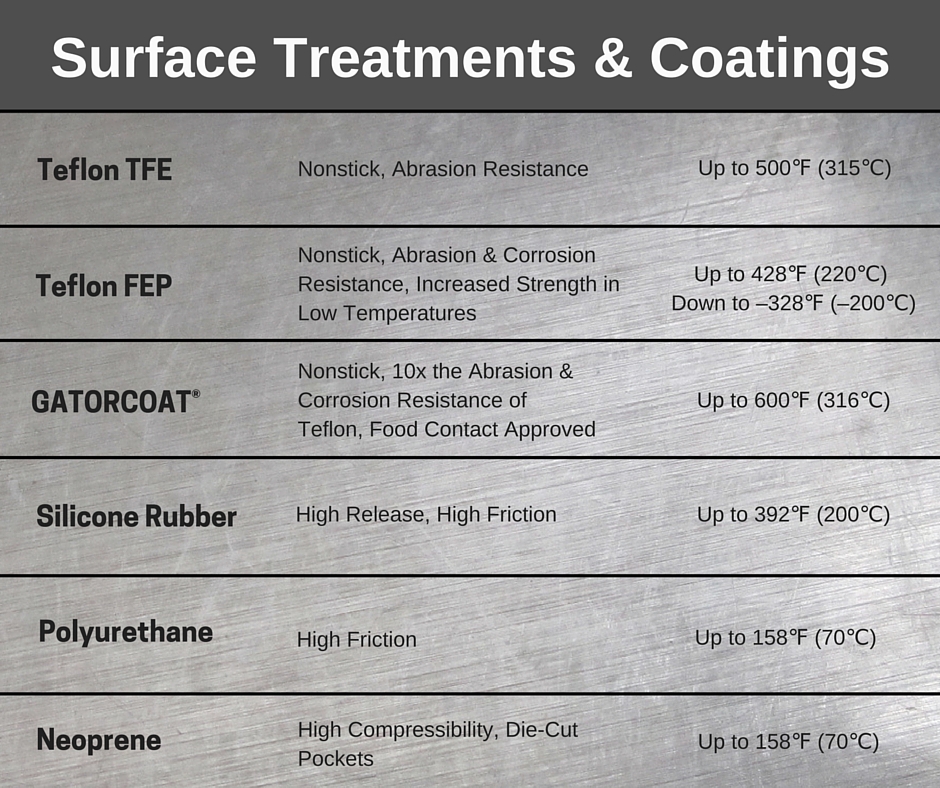
Coatings include but are not limited to:

conveyor system design extreme temperature

High-Temperature Conveyor System Design

conveyor system design extreme temperature
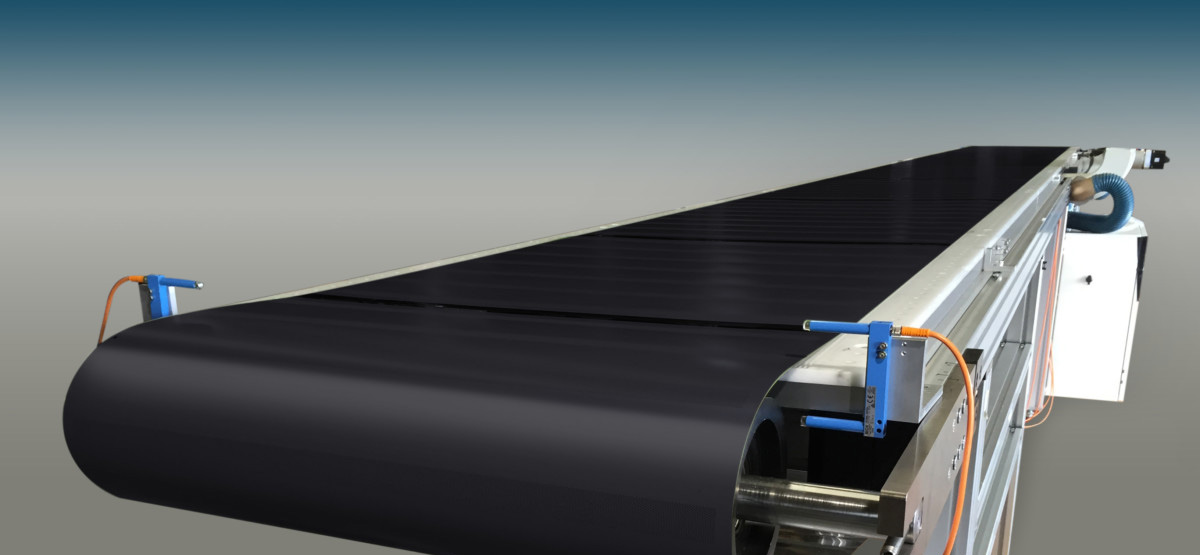
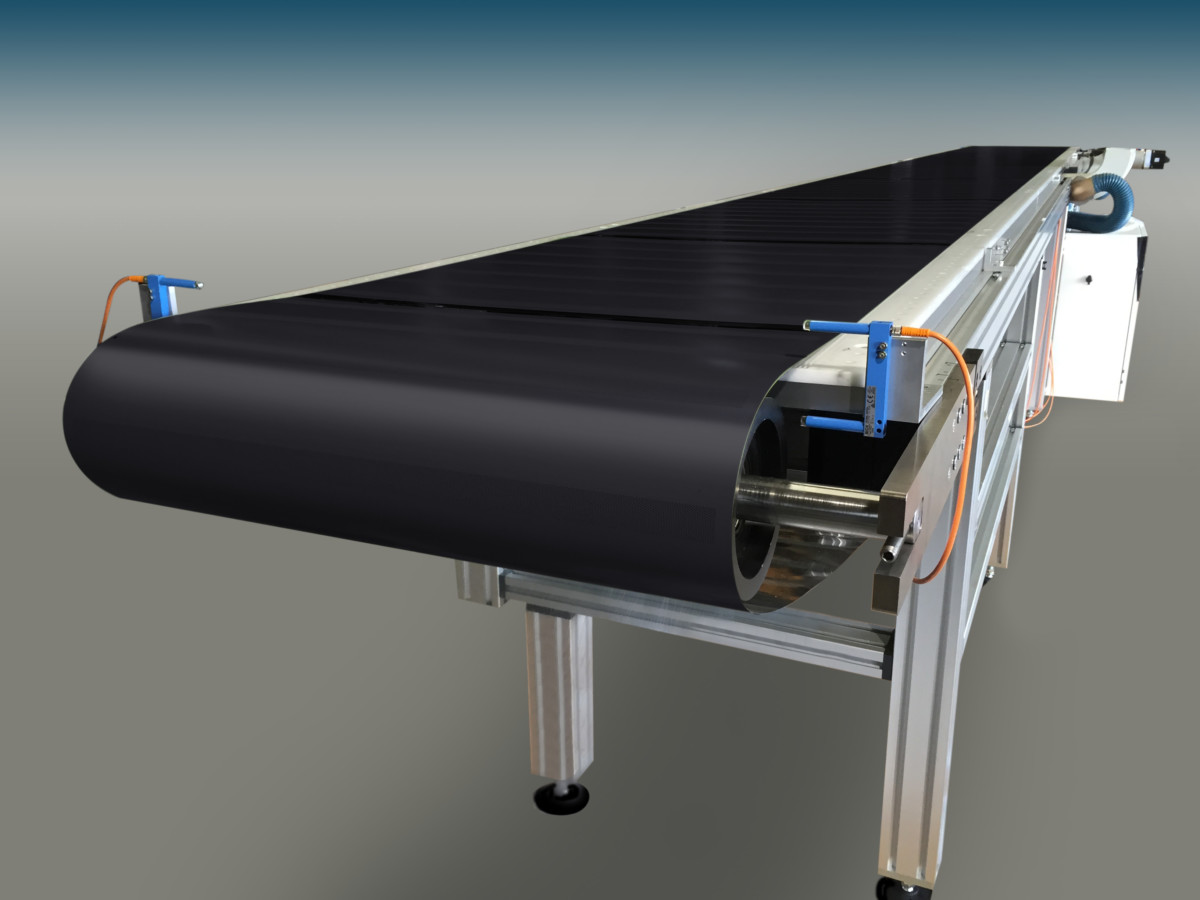
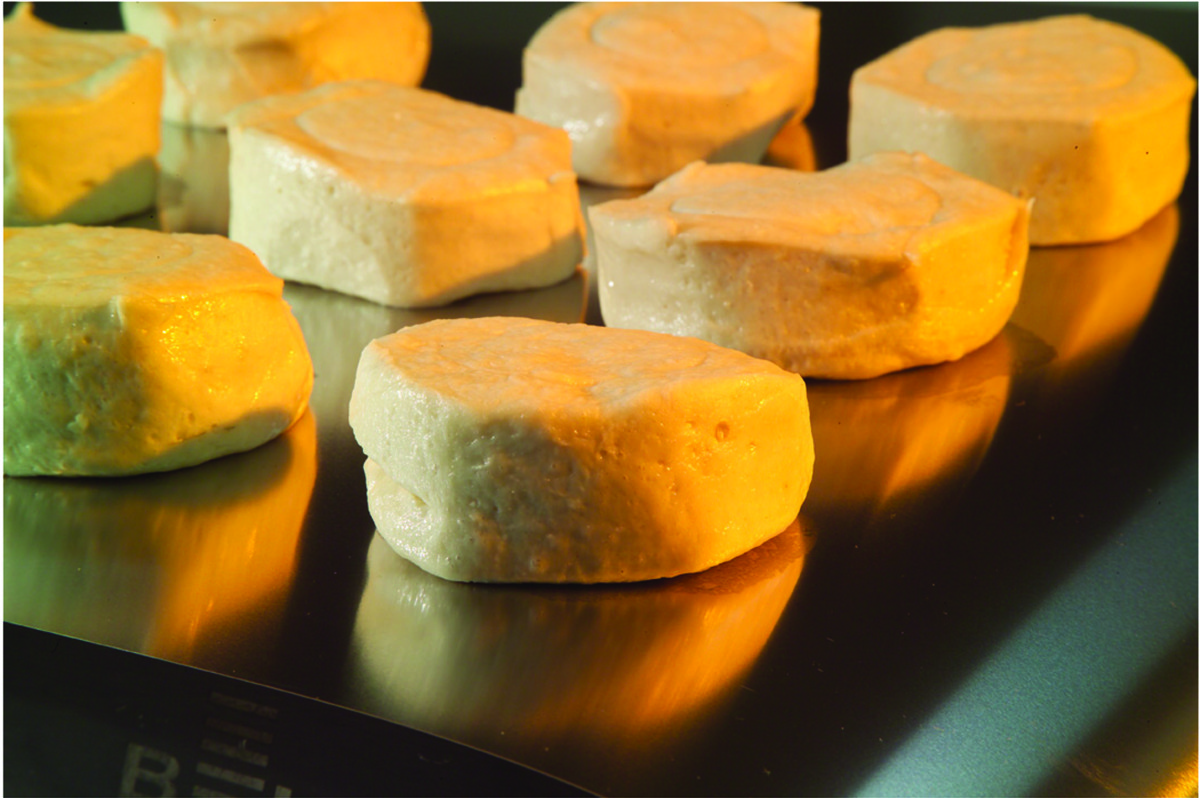
Activities like cooking or sterilization require a conveyor belt that will resist warping at high temperatures.

For extremely high temperature applications, the effect of thermal expansion on the system is an important factor that must be mitigated. During operation, the equipment will likely begin at a relatively cool ambient temperature and then be brought up to the heat intensity required to cook, solder, or otherwise process the product being transported. The belt must then be able to transition back down to an ambient temperature, or in some cases, down to a freezing environment. If unaccounted for, the effect of expansion and contraction in the system can have a negative impact on belt timing, tracking, tension, and surface flatness.

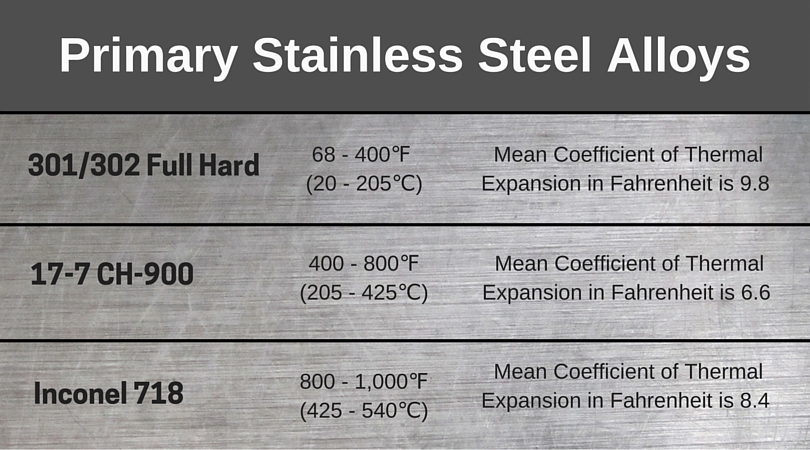
Material selection for the conveyor system will depend on the level of heat the belt will be expected to withstand. Some systems, such as solar panel stringer equipment, will be expected to endure temperatures exceeding 700℉. There are many different alloy compositions of stainless steel that have different coefficients of thermal expansion. Belt Technologies engineers can help you choose the right alloy for your application.
 

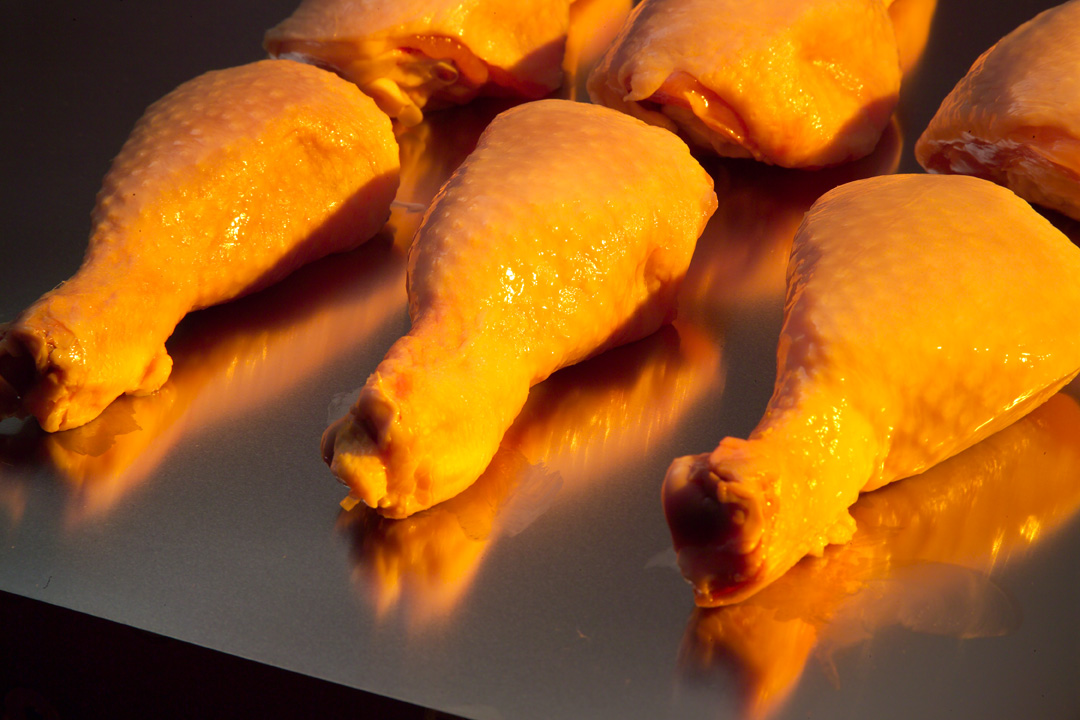
Activities like cooking or sterilization require a conveyor belt that will resist warping at high temperatures.

Various coatings or surface treatments, such as GATORCOAT®, can be applied to maximize a belt’s resistance to high temperatures while maintaining optimum release qualities. This facilitates product release from the belt surface.

Any metal exposed to extremely high temperatures will eventually deform, warp, or expand. The engineers at Belt Technologies can assist in choosing the right alloy to achieve optimal belt performance while minimizing deformations. This allows the system to operate for the maximum lifespan of the conveyor belt while requiring minimal downtime for repairs or maintenance. Typically, Belt engineers will recommend stainless steel alloy 17-7 CH-900 due to its very low thermal expansion coefficient, which enables it to endure high temperatures. When temperatures are very high and the warping of the material must be kept at a minimum, other options may include Inconel or Invar alloys

Belt engineers will help you design a conveyor system that accounts for every aspect of the high-temperature system, including expansion joints, fasteners, finishes, all while assuring easy cleaning and maintenance.

Low-Temperature Conveyor System Design

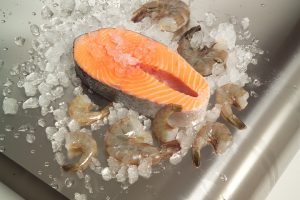
Low-temperature conveyor system applications include the transportation of frozen foods such as meat, fish, ice cream, and some pharmaceuticals that require refrigeration. These systems may require temperatures as low as –25℉. With exceedingly low temperatures, the risk of brittleness in the belt material becomes a major concern. Choosing the right alloy and belt thickness can minimize stiffness in the conveyor belt and prevent breakage.
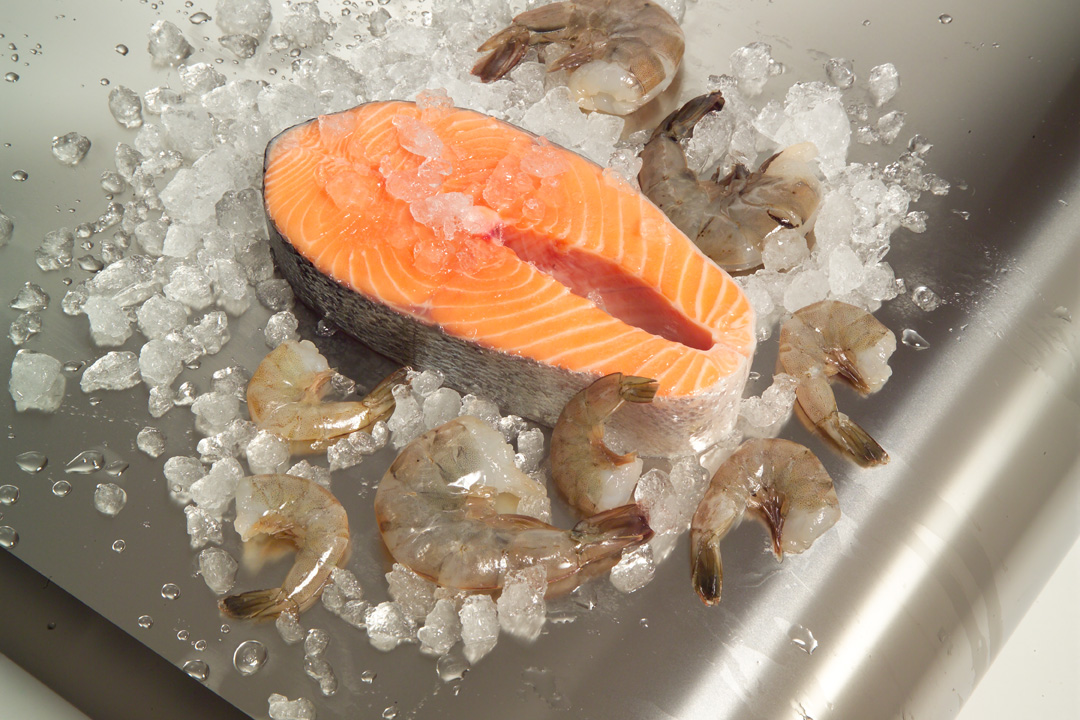
conveyor system design extreme temperature
Low temperature applications, such as freezing processed foods, require materials that will not seize up or become brittle when exposed to extreme cold.

At low temperatures, the impact resistance of system components and the viscosity of the product may introduce unique challenges. Lubricants can thicken and freeze, causing equipment to seize. Stainless steel conveyor belts require no lubrication. Belt Technologies engineers can work with you to design a system that will withstand cold environments effectively.

Maintenance is another factor that should be taken into account when dealing with exceedingly cold environments such as refrigeration units. Unexpected shutdowns can be costly, requiring certain products to be maintained at a freezing temperatures to prevent unnecessary loss. However, performing maintenance in refrigerated environments poses a significant risk to employee health and safety. Belt Technologies manufactures low temperature-resistant conveyor systems that have been designed for quick changeout and sanitization; many maintenance tasks can be performed outside of the freezer whenever possible.

Summary

Whether you are seeking to design a conveyor system for exceedingly high temperatures, freezing temperatures, or a combination of both, Belt Technologies engineers have the knowledge and experience to help. Solid, stainless steel conveyors are available in alloys that provide the optimal range of temperature resistance for any application. Belt performance can be further enhanced with a variety of surface treatments for high-quality product handling. Contact the experts today for comprehensive guidance in designing the perfect high- or low-temperature conveyor system for your application.
Transportbandsystem-Design für Anwendungen mit extrem hohen und niedrigen Temperaturen

Bei der Entwicklung von Transportbandsystemen für Anwendungen mit extremen Temperaturen müssen das Bandmaterial, die Vorteile von Beschichtungsoptionen, die Durchführbarkeit von Wartungsarbeiten und sogar die Materialien für Riemenscheiben und Führungsleisten besonders berücksichtigt werden. Belt Technologies verfügt über das Wissen und die Erfahrung, um Ihnen bei der Auswahl der richtigen Materialien für Ihre Hoch- oder Tieftemperaturanwendung zu helfen.

Entwicklung von Transportbandsystemen für Hoch- und Tieftemperatur-Anwendungen

Neopren, Gummi und andere herkömmliche Bandmaterialien können beim Einsatz in Umgebungen mit sehr hohen oder tiefen Temperaturen zu unsicher sein. Neopren kann z. B. nur Temperaturen bis zu 200℉ widerstehen. Wenn Temperaturen diese Schwelle überschreiten, beginnt das Material Zeichen einer thermischen Zersetzung zu zeigen. Dazu gehören das Schmelzen und die Freisetzung reizender Gase. Temperaturen unter 0℉ wiederum führen dazu, dass Neoprenbänder bis zur Funktionsunfähigkeit hart werden.

Im Gegensatz dazu hat sich Edelstahl als haltbares, vielseitiges und sanitäres Transportbandmaterial etabliert, das einer Reihe extremer Temperaturen widerstehen kann. Es gibt verschiedene Edelstahllegierungen, die die Funktionsfähigkeit eines Transportbandes bei hohen oder tiefen Betriebstemperaturen maximieren. Belt Technologies bietet auch eine breite Palette an Bandbeschichtungsoptionen an, die die einzigartigen Anforderungen eines gegebenen Systems erfüllen können.

Die Beschichtungen umfassen, sind aber nicht beschränkt auf:

Transportsystem-Design für extreme Temperaturen

Hochtemperatur-Transportbandsystem-Design

Transportbandsystem-Design für extreme Temperaturen
Aktivitäten wie Kochen oder Sterilisieren erfordern ein Transportband, das sich bei hohen Temperaturen nicht verzieht.

Bei Anwendungen mit extrem hohen Temperaturen ist die Auswirkung der thermischen Ausdehnung beim System ein wichtiger Faktor, der gemindert werden muss. Im Betrieb nimmt die Ausrüstung den Betrieb wahrscheinlich bei relativ kühlen Temperaturen auf und wird dann auf die Temperatur erhitzt, die für den Koch-, Löt- oder jeden anderen Prozess, der am transportierten Produkt erfolgen soll, erforderlich ist. Das Band muss dann zur Umgebungstemperatur oder in manchen Fällen sogar in eine kalte Umgebung zurückwechseln. Wenn das nicht berücksichtigt wird, können die Auswirkungen von Ausdehnung und Kontraktion zu einer negativen Beeinträchtigung der Bandeinstellung, der Führung, der Spannung und der Oberflächen-Flachheit führen.

Die Materialauswahl für das Transportbandsystem hängt vom Grad der Hitze ab, dem das Band widerstehen soll. Einige Systeme, z. B. Solarmodul-Stringer-Ausrüstung, müssen Temperaturen widerstehen, die 700℉ überschreiten. Es gibt zahlreiche verschiedene Kompositionen von Edelstahllegierungen, die verschiedene Wärmeausdehnungskoeffizienten bieten. Die Techniker von Belt Technologies können Ihnen bei der Auswahl der richtigen Legierung für Ihre Anwendung helfen.


Aktivitäten wie Kochen oder Sterilisieren erfordern ein Transportband, das sich bei hohen Temperaturen nicht verzieht.

Verschiedene Beschichtungen oder Oberflächenbehandlungen, z. B. GATORCOAT®, können aufgebracht werden, um den Widerstand des Bandes gegenüber hohen Temperaturen zu maximieren, während die optimalen Freisetzungseigenschaften bewahrt werden. Das erleichtert die Produktfreigabe von der Bandoberfläche.

Jedes Metall, das extrem hohen Temperaturen ausgesetzt wird, wird sich letztendlich verformen, verziehen oder ausdehnen. Die Techniker bei Belt Technologies können Sie bei der Auswahl der richtigen Legierung unterstützen, sodass eine optimale Bandleistung bei minimaler Deformation gewährleistet wird. Dadurch kann das System über die maximale Betriebslebenszeit des Transportbandes arbeiten, während nur minimale Stillstandszeiten für Reparaturen oder Wartungsarbeiten erforderlich sind. Normalerweise empfehlen die Techniker von Belt Technologies die Edelstahllegierung 17-7 CH-900, da diese einen sehr niedrigen Wärmeausdehnungskoeffizienten aufweist, wodurch sie hohen Temperaturen widerstehen kann. Wenn das Verziehen des Materials bei sehr hohen Temperaturen minimal gehalten werden muss, sind weitere Optionen Inconel- oder Invar-Legierungen.

Die Techniker von Belt Technologies helfen Ihnen bei der Entwicklung eines Transportbandsystems, das jeden Aspekt eines Hochtemperatursystems berücksichtigt. Dazu gehören ebenfalls Dehnungsfugen, Halterungen, Veredelungen, bei denen auch eine einfache Reinigung und Wartung sichergestellt wird.

Tieftemperatur-Transportbandsystem-Design

Zu Transportbandsystem-Anwendungen mit Tieftemperatur gehören der Transport von gefrorenen Lebensmitteln wie Fleisch, Fisch, Eis und einigen Medikamenten, die Kühlung erfordern. Diese Systeme benötigen Temperaturen bis –25℉, und bei übermäßig tiefen Temperaturen wird das Risiko der Brüchigkeit beim Bandmaterial zu einem wichtigen Problem. Die Auswahl der richtigen Legierung und Banddicke kann die Steifheit des Transportbandes minimieren und ein Brechen verhindern.

Transportbandsystem-Design für extreme Temperaturen
Tieftemperatur-Anwendungen, z. B. das Einfrieren verarbeiteter Lebensmittel, erfordern Materialien, die sich bei einer Aussetzung gegenüber extremer Kälte nicht festfressen bzw. brechen.

Bei Tieftemperaturen können die Stoßfestigkeit der Systemkomponenten und die Viskosität des Produkts eine einzigartige Herausforderung darstellen. Schmiermittel können eindicken und gefrieren und dazu führen, dass sich die Ausrüstung festfrisst. Edelstahl-Transportbänder benötigen keine Schmierung. Die Techniker von Belt Technologies arbeiten gern mit Ihnen an der Entwicklung eines Systems, das effektiv einer kalten Umgebung widerstehen kann.

Wartungsarbeiten sind ein weiterer Faktor, der berücksichtigt werden muss, wenn mit übermäßig kalten Umgebungen wie Kühlanlagen gearbeitet wird. Unerwartete Abschaltungen können teuer sein und erfordern, dass bestimmte Produkte auf Gefriertemperatur gehalten werden, um unnötige Verluste zu vermeiden. Allerdings stellt die Durchführung von Wartungsarbeiten in gekühlten Umgebungen ein signifikantes Risiko für die Gesundheit und Sicherheit von Angestellten dar. Belt Technologies fertigt Transportbandsysteme, die Tieftemperaturen widerstehen und für einen schnellen Austausch und eine schnelle Hygienisierung entwickelt wurden. Außerdem können zahlreiche Aufgaben außerhalb der Gefrierkammer durchgeführt werden, wann immer das möglich ist.

Zusammenfassung

Ob Sie nach einem Design für eine Transportbandsystem für übermäßig hohe oder tiefe Temperaturen oder einer Kombination aus beidem suchen, die Techniker von Belt Technologies verfügen über das Wissen und die Erfahrung, um Ihnen zu helfen. Solide Edelstahl-Transportbänder stehen in Legierungen zur Verfügung, die einen optimalen Temperaturwiderstand für jede Anwendung bieten. Die Bandleistung kann mit einer Vielzahl an Oberflächenbehandlungen für eine qualitativ hochwertige Produktbehandlung weiter verbessert werden. Kontaktieren Sie noch heute einen Experten für eine umfassende Anleitung bei der Entwicklung des perfekten Hoch- oder Tieftemperatur-Transportbandsystems für Ihre Anwendung.

Conception d’un système convoyeur pour des applications sous des températures extrêmes, basses et élevées

Lors de la conception de systèmes convoyeurs pour des applications impliquant des températures extrêmes, un soin spécial doit être porté aux matériaux du tapis, aux avantages des options de revêtements, à la facilité de l’entretien et même aux matériaux utilisés pour les poulies et les rails de guidage. Belt Technologies possède les connaissances et l’expérience pour vous aider à choisir les bons matériaux pour votre application sous hautes, ou basses, températures.

Concevoir des systèmes convoyeurs pour des applications sous hautes et basses températures

Le néoprène, le caoutchouc et autres matériaux courants de tapis convoyeur peuvent être dangereux pour une utilisation par des températures extrêmement hautes ou basses. Le néoprène par exemple peut uniquement supporter des températures de 93,3 ˚C. Si les températures excèdent ce seuil, le matériau commence à montrer des signes de décomposition thermique, ce qui inclut la fonte et la propagation de gaz irritants. A l’inverse, les températures inférieures à – 17 0˚C causeront le durcissement du néoprène jusqu’à ce qu’il soit dysfonctionnel.

L’acier inoxydable par contre, est connu pour être un matériau de tapis convoyeur durable, versatile et sain, capable de supporter une large gamme de températures extrêmes. Différents alliages d’acier inoxydable existent, pouvant maximiser la capacité d’un tapis convoyeur à fonctionner sous des températures d’opération plus élevées ou plus basses. Belt Technologies propose aussi une large gamme d’options de revêtements de tapis pouvant répondre aux exigences uniques d’un système donné.

Les revêtements incluent entre autres :

conception de système convoyeur pour températures extrêmes

Conception de système convoyeur sous hautes températures

conception de système convoyeur pour températures extrêmes

Les activités telles que la cuisson ou la stérilisation demandent un tapis convoyeur résistant à la torsion sous de hautes températures.

Pour les applications sous des températures extrêmement élevées, l’effet de l’expansion thermique sur le système est un facteur important qui doit être atténué. Lors de l’utilisation, l’équipement commencera sans doute à une température ambiante plutôt douce, puis sera porté à l’intensité de chaleur requise pour cuisiner, souder ou traiter le produit transporté. Le tapis doit alors pouvoir passer à une température ambiante, ou dans certains cas, à un environnement de congélation. Si l’on ne le prévoit pas, l’effet de l’expansion et de la contraction dans le système peut avoir un effet négatif sur la synchronisation, le fonctionnement, la tension et la platitude de la surface.

Le choix du matériau du système convoyeur va dépendre du niveau de chaleur que le tapis devra supporter. Certains systèmes, tels que des

équipements de longerons de panneaux solaires
, devront endurer des températures dépassant 371 ˚ C. Il existe de nombreux alliages différents d’acier inoxydable ayant différents coefficients d’expansion thermique. Les ingénieurs de Belt Technologies peuvent vous aider à choisir l’alliage adéquat pour votre application.


Les activités telles que la cuisson ou la stérilisation demandent un tapis convoyeur résistant à la torsion sous de hautes températures.

Différents revêtements ou

traitements de surface
, tels que le GATORCOAT®, peuvent être appliqués pour maximiser la résistance d’un tapis aux hautes températures tout en conservant des qualités de production optimales. Cela facilite l’enlèvement du produit de la surface du tapis.

Tout métal exposé à des températures extrêmement élevées finira par se tordre, se déformer ou s’étendre. Les ingénieurs de Belt Technologies peuvent aider à choisir l’alliage adéquat pour obtenir des performances optimales du tapis tout en minimisant les déformations. Cela permet au système d’opérer pour la durée de vie maximale du tapis convoyeur tout en nécessitant des temps d’arrêt minimes pour les réparations ou la maintenance. Les ingénieurs de Belt recommandent en général l’alliage d’acier inoxydable 17-7 CH-900 à cause de son très faible coefficient d’expansion thermique qui lui permet de supporter des températures élevées. Lorsque les températures sont très élevées et que la torsion du matériau doit rester minimale, d’autres options peuvent inclure les alliages Inconel ou Invar.

Les ingénieurs de Belt vous aideront à concevoir un système convoyeur prenant en compte chaque aspect du système de haute température, notamment les joints d’expansion, les écrous, les finitions, tout en assurant un nettoyage et un entretien simples.

Conception d’un système convoyeur pour basses températures

Les applications de système convoyeur à basse température incluent le transport d’aliments congelés tels que la viande, le poisson, la crème glacée et certains produits pharmaceutiques nécessitant d’être réfrigérés. Ces systèmes peuvent nécessiter des températures aussi basses que – 31˚C. Sous des températures extrêmement basses, le risque d’effritement du matériau du tapis devient un souci majeur. Choisir l’alliage et l’épaisseur de tapis adéquats peut minimiser la rigidité du tapis convoyeur et empêcher la cassure.

conception de système convoyeur pour températures extrêmes

Les applications sous basses températures, telles que la congélation d’aliments préparés, nécessitent des matériaux qui ne vont pas se pétrifier ni se désagréger lors d’une exposition à un froid extrême.

A de basses températures, la résistance aux impacts des composants du système et la viscosité du produit peut introduire des défis uniques. Les lubrifiants peuvent s’épaissir et geler, provoquant l’arrêt de l’équipement. Les tapis convoyeurs en acier inoxydable ne nécessitent aucune lubrification. Les ingénieurs de Belt Technologies peuvent travailler avec vous à la conception d’un système supportant efficacement les environnements froids.

La maintenance est un autre facteur à prendre en compte lorsqu’il s’agit d’environnements de froid extrême tels que les unités de congélation. Les pannes inattendues peuvent se révéler coûteuses, ce qui exige de maintenir certains produits à des températures de congélation pour éviter une perte inutile. Les activités de maintenance dans des environnements réfrigérés posent toutefois un risque important pour la santé et la sécurité des employés. Belt Technologies fabrique des systèmes convoyeurs résistant aux basses températures, conçus pour des remplacements de pièces et un nettoyage rapides. De nombreuses tâches de maintenance peuvent être réalisées hors du congélateur lorsque c’est possible.

Sommaire

Que vous cherchiez à concevoir un système convoyeur pour des températures extrêmement élevées, des températures de congélation, ou une combinaison des deux, les ingénieurs de Belt Technologies possèdent les connaissances et l’expérience pour vous aider. Les convoyeurs en acier inoxydable plein sont disponibles en alliages fournissant la gamme optimale de résistance aux températures pour toute application. Les performances du tapis peuvent être encore améliorées grâce à une variété de traitements de surface pour la manutention de produits de haute qualité.

Contactez les experts dès aujourd’hui
afin d’être guidé de manière complète dans la conception du parfait système convoyeur pour hautes ou basses températures pour votre application.

BTI Upgrades Conveyor System for Cooling Plastic with Stainless Steel Belt

AGAWAM, MA, May, 2016Belt Technologies, Inc. is the leading provider of stainless steel metal belt conveyor systems and retrofits. Recently, the company provided an upgrade to a customer who was using a conveyor system to process extruded plastic strands.

“The client was originally using mesh metal belts, which met their heat-resistance requirements but left unsightly marks on the end product once it cooled,” said Belt Technologies President Alan Wosky. “Our goal at Belt is to aid customers in finding the perfect metal belt solution to their processing needs and that is exactly what we were able to do here.”

The plastic was extruded directly onto the conveyor belts at very high temperatures upward of 400°F. Their original belt was able to handle the heat, but the mesh pattern of the metal was being seared into the plastic as it dried. To solve this problem, BTI engineers designed and manufactured a solid, flat metal belt of 301FH stainless steel that would withstand the high temperatures without leaving any marks on the end product.

Without a comprehensive retrofit, the customer faced the possibility of replacing the entire conveyor system; this would have been extremely costly. Belt Technologies worked with their existing setup to design the metal belt and pulleys necessary for a smooth, efficient, error-free system.

About Belt Technologies, Inc.

Belt Technologies, Inc. has been producing custom metal belt conveyor solutions for new and existing conveyor systems for more than five decades. With sophisticated engineering and advanced manufacturing processes, they are able to provide an unlimited variety of configurations and coatings for custom-designed belts. Metal belts, timing belts, and metal drive tapes from BTI are superior, high-quality options for automated production and robotic facilities. To learn more about Belt Technologies and metal conveyor belts, visit belt.marketmentorsdev.com/.

BTI rüstet Transportsystem zum Abkühlen von Kunststoff mit einem Edelstahlband auf

AGAWAM, MA, Mai 2016Belt Technologies, Inc. ist der führende Anbieter von Edelstahlband-Transportsystemen und -Umbauten. Kürzlich stellte Belt Technologies für einen Kunden, der ein Transportsystem zur Verarbeitung extrudierter Kunststoffstränge nutze, eine Aufrüstung bereit.

“Ursprünglich nutzte der Kunde ein Metallgewebeband, das die Anforderungen an Hitzebeständigkeit erfüllte. Allerdings hinterließ es beim Abkühlen des Endprodukts unansehnliche Markierungen,” sagte der Präsident von Belt Technologies, Alan Wosky. “Wir bei Belt Technologies wollen den Kunden helfen, die perfekte Metallbandlösung für ihre Bearbeitungsanforderungen zu finden, und genau das konnten wir in diesem Fall tun.”

Der Kunststoff wurde bei sehr hohen Temperaturen von bis zu 400°F direkt auf den Transportbändern extrudiert. Das ursprüngliche Band widerstand der Hitze, aber das Gewebemuster des Metalls wurde in den Kunststoff gebrannt, während dieser trocknete. Um dieses Problem zu lösen, entwickelten und fertigten die Techniker von BTI ein festes, flaches Metallband aus Edelstahl 301FH, das den hohen Temperaturen widerstehen würde, ohne Markierungen auf dem Endprodukt zu hinterlassen.

Ohne umfassenden Umbau hätte der Kunde eventuell das gesamte System austauschen müssen, was mit sehr hohen Kosten verbunden gewesen wäre. Belt Technologies arbeitet mit der vorhandenen Einrichtung, um das Metallband und die Riemenscheiben zu entwickeln, die für ein gleichmäßiges, effizientes, fehlerfreies System erforderlich sind.

Über Belt Technologies, Inc.

Belt Technologies, Inc. stellt seit mehr als 5 Jahrzehnten kundenspezifische Metallband-Transportlösungen für neue und vorhandene Transportbandsysteme her. Anspruchsvolle Technik und fortgeschrittene Herstellungsverfahren helfen, eine unbegrenzte Auswahl an Konfigurationen und Beschichtungen für kundenspezifische Bänder zu entwickeln. Metallbänder, Zahnriemen und Metall-Antriebsbänder von BTI sind überlegene, qualitativ hochwertige Optionen für die automatisierte Produktion und Robotik-Einrichtungen. Wenn Sie mehr über Belt Technologies und Metalltransportbänder erfahren möchten, besuchen Sie bitte belt.marketmentorsdev.com/.

BTI met à jour le système convoyeur pour refroidir le plastique avec un tapis en acier inoxydable


AGAWAM, MA., mai 2016


Belt Technologies Inc. est le fournisseur de pointe de systèmes de tapis convoyeurs en acier inoxydables et d’adaptateurs. La société a récemment fourni une mise à niveau à un client qui utilisait un système convoyeur pour traiter des mèches de plastique extrudé.


“Le client utilisait à l’origine des tapis métalliques maillés répondant à leurs exigences de résistance à la chaleur mais qui laissaient des marques disgracieuses sur le produit final une fois refroidi”, explique Alan Wosky, directeur de Belt Technologies. “Notre objectif chez Belt est d’aider les clients à trouver la parfaite solution de tapis métallique pour leurs besoins de traitement et c’est exactement ce que nous sommes capables de faire dans ce cas”.


Le plastique était extrudé directement sur les tapis convoyeurs à de très hautes températures supérieures à 204


°


C. Leur tapis original était capable de supporter la chaleur mais le motif du maillage du métal se trouvait incrusté dans le plastique en séchant. Pour résoudre ce problème les ingénieurs de BTI ont conçu et fabriqué un tapis plat et plein en acier inoxydable 301FH supportant les températures élevées sans laisser aucune marque sur le produit.


Sans une modernisation générale, le client devait faire face à la possibilité de remplacer le système convoyeur dans sa totalité, ce qui aurait été extrêmement coûteux. Belt Technologies a travaillé sur l’équipement existant pour concevoir le tapis métallique et les poulies nécessaires pour un système sans raccord, efficace et sans erreur.

Au sujet de Belt Technologies Inc.


Belt Technologies Inc. produit des solutions de tapis convoyeurs métalliques personnalisés pour les systèmes de convoyeurs nouveaux et existants depuis plus de cinq décennies. Grâce à des procédés sophistiqués d’ingénierie et avancés de fabrication, la société peut fournir une variété illimitée de configurations et de revêtements pour les tapis conçus à la demande. Les tapis métalliques, synchrones et les cassettes de transmission métalliques de BTI représentent des options supérieures, de haute qualité pour la production automatisée et les installations robotiques. Pour en savoir plus sur Belt Technologies et les tapis convoyeurs métalliques, veuillez consulter le site


belt.marketmentorsdev.com/


.

Automated Solar Stringer Achieves Maximum Flexibility with Wide, Perforated Stainless Steel Conveyor Belts from Belt Technologies

A producer of solar cells recently approached Belt Technologies seeking an innovative engineering design for a new solar stringer machine. Solar stringer machines are used to solder solar cells into modules, which then become part of larger solar panels for applications such as installation on rooftops, roadways, and more. Typically, these machines are designed with multiple narrow belts that convey the solar cells being welded. This multi-belt design limits the size of the modules the machine is able to produce. The customer was seeking a more versatile design that would be able to accommodate solar cell modules of varying configurations.

A Wider Belt Design Accommodates Busbars of Various Sizes for Flexible Production

stainless steel solar stringer conveyor beltThe most common design for this type of machine uses several narrow belts to transport individual busbars. Typical solar cell modules include three busbars. Solar stringer machines are designed with three narrow, coated belts to transport the busbars. However, as solar technology has evolved, cell designs have begun to include up to four or five busbars; the customer wanted a solar stringer machine that could produce solar modules with the full range of busbar configurations. Our engineers took on the challenge and designed a wide, metal conveyor belt that made the machine more flexible and better able to accommodate varying numbers of busbars.

Low-Expansion Stainless Steel Easily Withstands High Soldering Temperatures

Solar cell producers weld cells together by blasting hot air over the weld at a temperature of 390°C (734°F). To make sure the belt could withstand the high temperatures necessary to solder the solar cells in place, Belt engineers selected stainless steel alloy 17CH900a special, low-expansion grade metal. Extreme temperature changes can cause other belts to expand, contract, and become uneven; the 17CH900 low-expansion alloy can better withstand these shifts. This is particularly important, as uneven expansion can complicate belt tracking and shorten the lifespan of a conveyor belt.

Specialized Design Features and GATORCOAT® Ensure Ease of Operation

In addition to the low-expansion stainless steel alloy, engineers utilized Belt Technologies’ GATORCOAT® coating, a proprietary surface treatment which demonstrates superior release qualities following exposure to the high temperatures of the welding process. GATORCOAT® has ten times the friction resistance of other Teflon coatings and will help ensure that the solar cells are transported quickly and smoothly.

Vacuum perforations were also included in the belt design. Combined with the low friction of the GATORCOAT® coating, these perforations allow for gentle, high-speed transportation and automation of the cell welding process.

The belt was delivered and installed successfully. The customer is tremendously satisfied with the results and has acknowledged that Belt engineers have provided better technical input and advice than local competitors.

Looking for an innovative automation solution to keep your production line ahead of the competition? Contact Belt Technologies today!

Automatisierte Solar-Stringer erreichen mit breiten, perforierten Edelstahl-Transportbändern von Belt Technologies eine maximale Flexibilität

Ein Produzent von Solarzellen trat kürzlich an Belt Technologies heran, weil er nach einer innovativen konstruktiven Gestaltung für eine neue Solar-Stringer-Maschine suchte. Solar-Stringer-Maschinen werden verwendet, um Solarzellen zu Modulen zu verlöten, die dann Teil größerer Solarmodule für Anwendungen wie Installationen auf Dächern, an Straßen und mehr bilden. Normalerweise werden diese Maschinen mit mehreren schmalen Bändern entwickelt, die die zu schweißenden Solarzellen transportieren. Dieses Design mit mehreren Bändern beschränkt die Größe der Module, die die Maschine fertigen kann. Der Kunde suchte nach einem vielseitigeren Design, das Solarzellen-Module verschiedener Konfigurationen aufnehmen kann.

Ein breiteres Banddesign nimmt Sammelschienen verschiedener Größen auf, um eine flexiblere Fertigung zu gewährleisten

stainless steel solar stringer conveyor beltDas häufigste Design für diese Art von Maschinen nutzt mehrere schmale Bänder, um individuelle Sammelschienen zu transportieren. Typische Solarzellen-Module umfassen drei Sammelschienen, und daher wurden Solar-Stringer wurden mit drei schmalen, beschichteten Bändern zum Transport dieser Sammelschienen konstruiert. Allerdings können Zellen-Designs dank der Entwicklung der Solartechnologie nun bis zu vier oder fünf Sammelschienen aufnehmen, und der Kunde wünschte sich einen Solar-Stringer, der Solarmodule mit der gesamten Palette an Sammelschienen-Konfigurationen fertigen kann. Unsere Techniker stellten sich der Herausforderung und entwickelten ein breites Metalltransportband, durch das die Maschine flexibler wurde und besser in der Lage ist, eine unterschiedliche Anzahl an Sammelschienen aufzunehmen.

Edelstahl mit geringer Ausdehnung widersteht hohen Löttemperaturen

Hersteller von Solarzellen verschweißen Zellen, indem Heißluft bei einer Temperatur von 390°C (734°F) über die Schweißnaht gestrahlt wird. Um sicherzustellen, dass das Band den hohen Temperaturen widerstehen kann, die erforderlich sind, um die Solarzellen am Platz zu verlöten, entschieden sich die Techniker von Belt Technologies für die Edelstahllegierung 17CH900ein spezielles Metall mit niedriger Ausdehnung. Extreme Temperaturwechsel können bei anderen Bänder dazu führen, dass diese sich ausdehnen, zusammenziehen und ungleichmäßig werden. Die Legierung 17CH900 mit geringer Ausdehnung kann diesen Änderungen widerstehen. Das ist besonders wichtig, da eine ungleichmäßige Ausdehnung den Bandlauf erschweren und die Lebensdauer des Transportbandes verkürzen kann.

Spezielle Design-Funktionen und GATORCOAT® stellen Bedienerfreundlichkeit sicher

Zusätzlich zur Edelstahllegierung mit geringer Ausdehnung nutzen die Techniker von Belt Technologies eine GATORCOAT®-Beschichtung, eine urheberrechtlich geschützte Oberflächenbehandlung, die überlegene Freigabeeigenschaften nach der Aussetzung gegenüber den hohen Temperaturen des Schweißprozesses aufweist. GATORCOAT® bietet einen zehnmal höheren Reibungswiderstand gegenüber anderen Teflon-Beschichtungen und hilft sicherzustellen, dass die Solarzellen schnell und gleichmäßig transportiert werden.

Es wurden auch Vakuum-Perforationen ins Banddesign aufgenommen. Kombiniert mit dem geringen Reibung der GATORCOAT®-Beschichtung ermöglichen diese Perforationen einen schonenden Hochgeschwindigkeitstransport und eine Automatisierung des Zellen-Schweißverfahrens.

Das Band wurde geliefert und erfolgreich installiert. Der Kunde ist enorm zufrieden mit dem Ergebnis und hat bestätigt, dass die Techniker von Belt Technologies bessere technischen Anregungen und Hinweise geben konnten als örtliche Konkurrenten.

Suchen Sie nach einer innovativen Automatisierungslösung, um der Konkurrenz mit Ihrer Fertigungsstraße einen Schritt voraus zu sein? Kontaktieren Sie Belt Technologies noch heute!

Un longeron solaire automatisé réussit une flexibilité maximale avec les tapis convoyeurs larges, perforés, en acier inoxydable de Belt Technologies


Un producteur de cellules solaires a récemment approché Belt Technologies en cherchant un design d’ingénierie innovant pour une nouvelle machine de longerons solaires. Les machines de longerons solaires sont utilisées pour souder des cellules solaires sur des modules qui, à leur tour deviennent une partie de panneaux solaires plus grands pour des applications telles que l’installation sur les toits, les routes et autres. Ces machines sont en général conçues avec plusieurs tapis étroits transportant des cellules solaires à souder. Cette conception à plusieurs tapis limite la taille des modules que la machine peut produire. Le client cherchait un design plus souple qui pourrait recevoir des modules de cellules solaires de différentes configurations.

Un design de tapis plus large accepte des jeux de barres de tailles différentes pour une production souple

tapis convoyeur de longerons solaires en acier inoxydable
La conception la plus courante pour ce type de machine utilise plusieurs tapis étroits pour transporter des jeux de barres individuels. Les modules de cellules solaires typiques incluent trois jeux de barre. Les machines de longerons solaires sont conçues avec trois tapis étroits enduits afin de transporter les jeux de barre. Toutefois, au fur et à mesure qu’évoluait la technologie solaire, le conception de cellules a commencé d’inclure jusqu’à quatre ou cinq jeux de barres ; le client voulait une machine à longerons solaires pouvant produire des modules solaires avec la gamme complète de configurations de jeux de barres. Nos ingénieurs ont relevé le défi et conçu un tapis convoyeur métallique large qui a rendu la machine plus flexible et mieux capable de recevoir des nombres variés de jeux de barres.

L’acier inoxydable à faible expansion supporte facilement les températures élevées de soudure


Les producteurs de cellules solaires soudent ensemble les cellules en soufflant de l’air chaud à une température de


390 °C.


Pour être certains que le tapis puisse supporter les hautes températures nécessaires au soudage des cellules solaires, les ingénieurs de Belt ont choisi l’alliage d’acier inoxydable 17CH900


un métal spécial, doté de qualités de faible expansion. Les changements de température extrêmes peuvent causer l’expansion ou la contraction d’autres tapis, qui peuvent devenir inégaux ; l’alliage à faible expansion 17CH900 peut mieux supporter ces changements. Ceci est particulièrement important car une expansion inégale peut compliquer le fonctionnement du tapis et raccourcir la durée de vie d’un tapis convoyeur.

Des fonctionnalités de conception spécialisées et le GATORCOAT® assurent la simplicité d’opération


En plus de l’alliage en acier inoxydable à faible expansion, les ingénieurs ont utilisé le revêtement


GATORCOAT®


de Belt Technologies, un traitement de surface exclusif démontrant


des qualités de libération supérieures


à la suite d’une exposition aux températures élevées du processus de soudure.


Le GATORCOAT®


possède dix fois la résistance à la friction des autres revêtements Téflon et il aide à garantir que les cellules solaires sont transportées rapidement et de façon fluide.


Des perforations sous vide ont aussi été incluses à la conception du tapis. Combinées à la faible friction du revêtement


GATORCOAT®


, ces perforations permettent un transport délicat à haute vitesse et l’automatisation du processus de soudure des cellules.


Le tapis a été livré et installé avec succès. Le client est particulièrement satisfait des résultats et a reconnu que les ingénieurs de Belt avaient fourni un meilleur avis et conseils technique que les concurrents locaux.


Vous recherchez une


solution innovante d’automatisation


pour garder votre chaîne de production en tête de la concurrence ? Contactez dès aujourd’hui Belt Technologies !

Design Considerations Checklist for Metal Conveyor Belt Systems in Food Processing

food processing metal belt conveyor system design checklistThe diversity and complexity of the food processing industry can make designing the ideal food processing system overwhelming. Many factorsincluding the physical properties of the food being handled, the methods by which the food will be processed, and the sanitation methods used to prevent the spread of diseasewill have an effect on system design.

Belt Technologies, Inc. has an experienced team of engineers who are familiar with the diverse range of requirements for food processing conveyor systems. We have organized the key considerations for designing an automated food processing system into a simple checklist. The list has been designed to help facility managers and equipment-purchasing agents make informed decisions that will result in a system that provides maximum throughput without sacrificing quality or production time.

Consider the Specific Qualities of the Food Being Processed

The type of food being transported and its physical characteristics will strongly influence food processing conveyor system design. For example, food products that will be cut or diced on the belt require a solid surface that will not chip or scratch, which rules out rubber, plastic, and wire or mesh belts as viable material options. Other processes, such as the application of frosting to prepackaged cupcakes, require gentle handling and precise positioning to prepare. Belt Technologies can design stainless steel conveyor belts with custom attachments and timing pulleys to ensure accurate and repeatable product positioning.

Also consider how the food will need to be processed. Will it be cooked, cooled, frozen, or pasteurized on the conveyor belt? Some conveyor belt materials, such as rubber and plastic, have a low tolerance for extreme temperatures. They can warp over time or fracture if temperatures are too high or the transition between temperatures is too drastic. Stainless steel, however, is highly resistant to high and low temperatures and can easily transport food products through cooking and freezing processes.

Raw consumables, like meats, carry a high risk for bacterial contamination and therefore require special design considerations. Any belt carrying these products must be easy to sanitize to reliably prevent the spread of contaminants. Studies have shown that contagens, such as Salmonella, attach more easily to plastic and rubber than to stainless steel. Mesh metal belts may be made of stainless steel, but they also have thousands of grooves, linkages, and crevices where bacteria can hide ; this makes sanitation a challenge that can lead to costly production downtime. Solid stainless steel metal belts offer no safe haven for bacteria and are able to withstand cleaning methods that would corrode weaker belt materials.

Solid Metal Conveyor Belts Have Unique Qualities that Can Be Leveraged for Optimum Performance

Stainless steel metal belt conveyor systems offer a variety of benefits that make them a simple and obvious choice for food processing facilities. Stainless steel is a versatile metal that is highly resistant to corrosion and temperature extremes. Its high thermal conductivity gives stainless steel the ability to evenly transmit heat, which makes stainless steel conveyor belts a reliable choice for processes in which food is cooked on the belt itself. A variety of alloys are available that can maximize the belt’s ability to withstand extreme temperatures, if necessary.

Unlike plastic and rubber conveyor belts, stainless steel belts do not outgas, do not require lubrication, and do not generate particulates. This helps maintain the desired flavor of food products and greatly reduces the risk of contamination by foreign particles. Mesh metal belts may lose linkages or broken wire in the products; they also provide crevices in which bacteria and other particulates can collect.

Germs and bacteria do not have affinity for the smooth surface of stainless steel metal belts, making them more sanitary than other belt materials. Because they are able to withstand corrosive chemicals and high temperatures, stainless steel conveyor systems can be cleaned via a variety of cost-effective methods, including chemicals, high-pressure washing, and high-pressure steaming. Belt Technologies, Inc. designs metal conveyor systems that are easy to access and sanitize. This minimizes downtime and maximizes product throughput with minimal risk to product quality and safety.

Belt Technologies engineers will also ensure your food processing conveyor system will be designed to last. Our metal conveyor belts are built to minimize or eliminate reverse bends and ensure the maximum lifespan of the belt; this saves facility managers valuable time and labor on maintenance.

Environmental Conditions Can Affect Metal Conveyor System Design

The environment in which the system will be installed plays an important role in the design process as well. Food processing conveyors should be built so that surfaces can quickly and easily be exposed for cleaning, maintenance, and inspection. Whether the system is made to be cleaned in or out of place depends on the transport and processing needs of the food product as well as the area around the belt itself. Belt Technologies designs belts that consider both facility and function.

The size and shape of the space are not the only factors to keep in mind. Is the facility subject to controlled temperatures? Will the food preparation processes generate excess moisture that may collect in the system and cause corrosion? Are there any chemicals in use that need to be accounted for? We can assist in choosing the right food processing materials to suit your food processing needs.

Ensure Your Automated Food Processing Conveyor System Aligns with Current Quality Standards

Food processing is one of the most strictly monitored industries in terms of safety and quality. As part of the Food Safety Modernization Act (FSMA), the FDA recently released a set of updated food processing standards designed to prevent contamination and the spread of disease in the food industry. These new regulations focus on the initial design of food processing systems as well as their adherence to cleanliness standards.

Stainless steel is inherently more sanitary than other conveyor belt material options, which makes adherence to FDA standards much easier. The engineers at Belt Technologies will ensure that your food processing conveyor system complies with the strict specifications of the updated FSMA as well as the existing regulations put in place by the FDA.

Whether you are seeking an entirely new food processing conveyor system or to upgrade an existing system for increased safety and product quality, Belt Technologies is able to help. Our comprehensive checklist will allow you to review the factors that will have the most impact on the design of your automated food processing conveyor system.

food processing metal belt conveyor system design checklist