It is very innovative and solve specific problems like temperature and conveying precision.
Author: Devon LaChance
Armando A — Armando Albano Representaciones
Porque siempre que he comprado via telefonica he sido bien atendido pro su personal
Armando A — Armando Albano Representaciones
Porque siempre que he comprado via telefonica he sido bien atendido pro su personal
Präzisionsindizierung mit Edelstahlförderbändern in Minustemperaturen
Belt Technologies verfügt über langjährige Erfahrung in der Entwicklung und Herstellung kundenspezifischer Fördersysteme für automatisierte pharmazeutische Geräte und medizinische Fertigungsanwendungen. Vor kurzem stellte ein Kunde eine herausfordernde Aufgabe an uns. Ihr Ziel war es, das Design einer Maschine, die sie seit fast einem Jahrzehnt produzieren, zu verbessern und zu modernisieren.
Erzielen Sie maximale Genauigkeit und Effizienz für medizinische Anwendungen
Die zu aktualisierende Anlage wurde entwickelt, um Fläschchen zu entnehmen, die zwecks Testen durch das System befördert werden. In dem ursprünglichen Design wurden die Fläschchen in einem Tablettsystem gehalten, während sie durch die Maschine liefen. Eine Nadel wird dann in jedes Fläschchen abgesenkt, um eine Probe zum Testen zu entnehmen. Die Ausrüstung sollte es u.a. Herstellern von Lebensmitteln, Pharmazeutika und chemischen Verbindungen ermöglichen, Proben der hergestellten Materialien zu entnehmen und Qualitätsprüfungen direkt in der Produktion durchzuführen – anstatt Produktproben zur Prüfung an externe Dienstleister zu senden.
Der Kunde wollte die Effizienz des Systems steigern und die Produktion in einer einzigen Charge verdoppeln. Dazu musste die Positionsgenauigkeit der Fläschchen während der Beförderung durch die Anlage verbessert werden. Es war offensichtlich, dass ein Metallband die beste Option ist, allein schon weil die Temperatur der Betriebsumgebung unter dem Gefrierpunkt gehalten wird.
Belt Technologies hat Metallbänder für eine Vielzahl von Anwendungen in Gefriertemperaturen, einschließlich kryogener Prozesse, bereitgestellt. Edelstahl hat eine hohe Beständigkeit gegen extreme Temperaturen und kann problemlos in gekühlten Betriebsumgebungen eingesetzt werden. Metallbänder sind außerdem sehr genau und wiederholbar und ermöglichen daher eine präzise Positionierung der Fläschchen praktisch ohne Verrutschen.
Darüber hinaus entgasen Förderbänder aus Metall nicht und müssen nicht geschmiert werden, sodass keine Gefahr einer Kontamination der zu fördernden empfindlichen Produkte besteht. Zudem fransen sie auch nicht aus und erzeugen keine Partikel, die medizinische Produkte kontaminieren und möglicherweise die Testergebnisse verzerren könnten. Die flache, nicht poröse Oberfläche von Edelstahl nimmt keine Bakterien auf und ist mit praktisch jeder erforderlichen Reinigungsmethode leicht zu reinigen. Dies macht sie zur idealen Wahl für diese Anwendung.
Benutzerdefinierte Lösungen garantieren optimale Verarbeitungsergebnisse
Nach Abschluß der Designverbesserung in Zusammenarbeit mit dem Kunden, stellte Belt Technologies dem Kunden ein nahtloses Band aus vollgehärtetem Stahl zur Verfügung. Das Band ist mit benutzerdefinierten Aufsätzen als Fläschchenhalter ausgestattet, die sicher am Metallband befestigt sind. Zudem ist es mit einem speziellen Lochmuster versehen, durch das Spurhaltung und Präzisionsindizierung ermöglicht wird. Anhand des neu entwickelten Stahlbandes mit Werkstückträgern und Taktgebungsfunktionen können die Fläschchen in der neuen Anlage schneller getestet werden, ohne die Produktqualität oder die Testgenauigkeit zu beeinträchtigen.
Für weitere Informationen zu kundenspezifischen Edelstahlförderbändern für medizinische und pharmazeutische Anwendungen wenden Sie sich bitte an Belt Technologies Europe Ltd, Ansprechpartner: Sebastian Flohr, SFlohr@bte.co.uk
Fehlerbehebung bei Spannungsproblemen im Doppelförderbandsystem
Bei Belt Technologies setzen wir uns für den Erfolg Ihres Systems ein. Unsere Ingenieure sind allzeit bereit, Kunden Hilfestellung zu leisten, bei denen Probleme mit Metallförder-bandsystemen auftreten können, einschließlich der Reise zu Kundenstandorten, um Probleme bei Bedarf vor Ort zu beobachten und gemeinsam mit Ihrem Team umsetzbare Lösungen zu finden. So hat uns vor kurzem ein Kunde kontaktiert, mit der Frage, warum die Metallbänder in deren Doppelförderbandsystem routinemäßig abgenutzt sind.
Probleme mit übermäßigem Verschleiß bei parallelen Förderbändern
Ein OEM in der medizinischen Fertigungsindustriehatte Probleme mit einem Paar nebeneinander angeordneter Metallbänder in einem System, das Werkzeuge für die Zahnausrichtung durch einen Verpackungsprozess transportiert. Bedauerlcherweise waren die Flanschen an den Scheiben und einige der Taktgebungselemente an den Riemen viel schneller gerissen und abgenutzt als anhand des Designs berechnet wurde.
Bei diesem System wurden die Riemen parallel auf einer gemeinsamen Antriebswelle mit unabhängiger Spannung am Umlenkende angeordnet. Beide Riemenscheiben waren mit Entlastungsnuten versehen, für den freien Lauf der Schraubköpfe mit denen Werkstückträger auf den Bändern befestigt waren. Für die synchrone Spurhaltung der beiden Riemen war eine speziell enwickelte Taktgebungsscheibe als Antriebsscheibe eingesetzt. Die Umlenkrolle war mit Flanschen ausgestattet, welche die Riemen in Ausrichtung hielten, um eine ordnungsgemäße Produktpositionierung sicherzustellen. Der Kunde vermutete zunächst, dass die Flanschen den übermäßigen Verschleiß verursachten, da sie im Laufe der Zeit sichtbar beschädigt wurden.
Bei der Installation eines Metallgurtes ist die richtige Spannung entscheidend
Die technische Unterstützung bei der Fehlerbehebung wurde zum Kunden vor Ort gebracht. Unser Team besprach sich mit dem Wartungsteam und den Technikern beim Kunden und nahm die in Betrieb befindlichen Geräte in Augenschein. Nach Inspektion der Anlage konnten unsere Ingenieure feststellen, dass die Flanschen nicht die Ursache für den Verschleiß waren.
Der Kunde hatte die Riemen bei der Installation mit einer sehr hohen Spannung, die zu übermäßiger Reibung zwischen Riemen und Riemenscheibe führte, eingestellt. Infolgedessen richtete sich der Riemen nicht mit den Taktgebungkugeln auf der Antriebsscheibe präzise aus, was zu Rissen/Ausbrechen der Lochkanten führte, als der Riemen durch die beträchtliche Reibungslast über die Taktgebungskugeln gedrückt wurde. Sobald der Riemen aus der Position mit den Taktgebungskugeln gedrückt wird, wurden die Flanschen an der Riemenscheibe durch die Kante des Riemens beschädigt. Unsere Ingenieure haben dann in Zusammenarbeit mit den Mitarbeitern vor Ort eine wiederholbare Methode zum Spannen des Riemens entwickelt und sie im Installieren und Spannen der Riemen geschult.
Bei der Installation eines Förderbandes aus Edelstahl ist das richtige Spannen ausschlaggebend zur Gewährleistung einer optimalen Leistung und der Langlebigkeit des Systems. Das Einstellen der Spannung variiert je nach Riementyp.
Für weitere Informationen oder wenn Sie Bedenken hegen, dass auf Ihrem Förderband Probleme mit der Riemenspannung auftreten könnten, wenden Sie sich schnellstmöglich an uns – Belt Technologies Europe Ltd – Ansprechpartner: Sebastian Flohr – SFlohr@bte.co.uk
Troubleshooting Tensioning Issues in Dual Conveyor Belt System
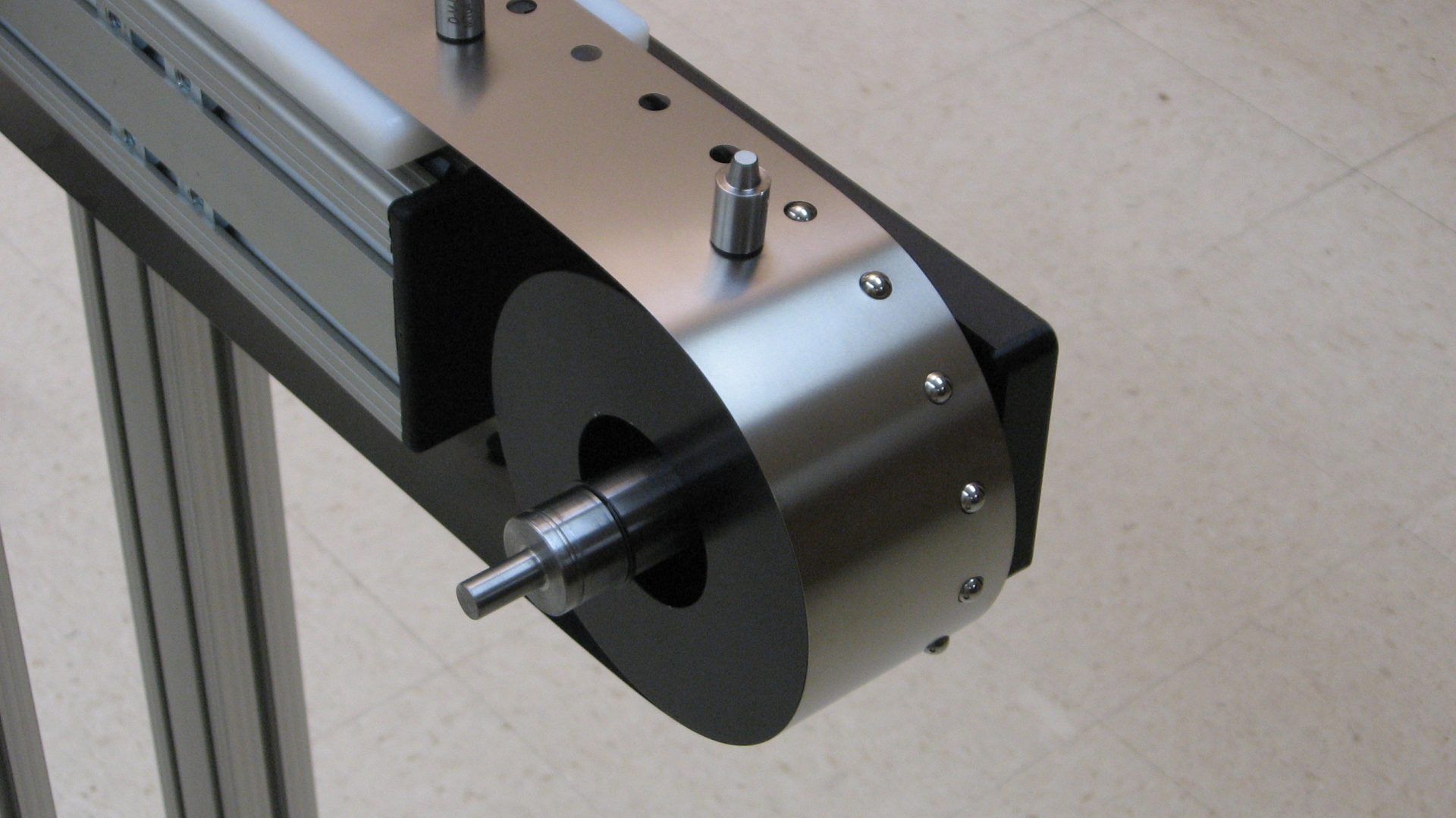
At Belt Technologies, we are dedicated to the success of your system. Our engineers are always willing to aid customers who may experience issues with their metal conveyor belt systems, including traveling onsite to customer locations to observe issues in the field and work with your team to find actionable solutions. Recently, a customer contacted us to get help figuring out why the metal belts in their dual belt conveyor system were routinely wearing out.
Trouble with Excessive Wear in Parallel Conveyors
An OEM in the medical manufacturing industry was having trouble with a pair of metal belts aligned side by side in a system designed to transport tooling for dental aligners through a packaging process. Unfortunately, the flanges on the belts and some of the timing attachments on the belts were cracking and wearing down much faster than the design specified. They called Belt Technologies to see if the experts on our team could help them achieve a longer lifespan for their conveyor belts.
For this system, the belts were arranged in parallel on a common drive shaft with independent tensioning on the idler side. Both pulleys included relief grooves in the face for clearance of a screw head for fixed attachments on the belt. To keep the tracking of the two belts in sync, the drive pulley was a specially designed timing pulley. The idler pulley included flanges, which also kept the belts in alignment to ensure proper product positioning. The customer initially suspected the flanges of causing the excessive wear, as they were visibly damaged over time while the belts were in use.
When Installing a Metal Belt, Proper Tensioning is Key
Technical support traveled to the customer site to assist in the troubleshooting. Our team spoke to their maintenance and engineering staff and observed the equipment in operation. After examining the system in use, our engineers were able to determine that the flanges were not the cause of the wear and tear.
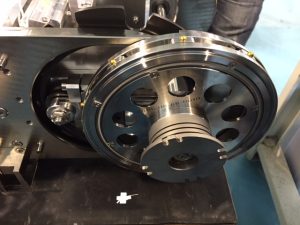
The customer was installing the belt with a very high tension that created excessive friction between the belt and pulley. As a result, the belt was not realigning with the timing pins on the drive pulley. Consequently, the timing holes cracked when the belt was forced over the timing pins by the sizeable frictional load. Once the belt was forced out of position with the timing teeth, the flanges on the pulley were damaged by the edge of the belt. Belt engineers worked with the on-site staff to develop a repeatable method to tension the belt within the correct range and to train them on how to correctly install and tension the belt.
When installing a stainless steel conveyor belt, proper tensioning is key to ensuring optimal performance and the longevity of the system. Adjusting the tension varies based on the belt type. For more information, or if you suspect your conveyor is experiencing belt tension issues, contact the experts at Belt Technologies today.
Stainless Steel Heat Sealing Bands for Sustainable Paper Packaging in Food Processing Application
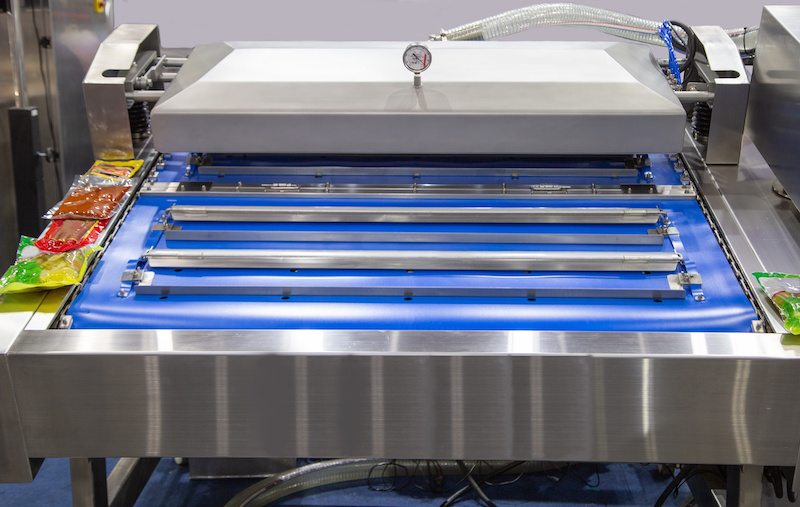
Belt Technologies is experienced with the unique needs and requirements of a variety of specialty packaging applications. One of our longstanding customers is an OEM specializing in the manufacture of heat sealers for the food processing industry.
Stainless Steel is Ideal for High Heat Applications
For this specialty packaging application the heat sealer would be applied to a paper bag that is filled with the food product by a hopper, then moves through the heat sealing bands to close it. In previous models, Teflon sealing bands were used to seal plastic packaging materials. Plastic based packaging can be heated at low temperatures, however, it is not a sustainable material option. The newer product bags were made of paper which uses a stronger adhesive, necessitating the use of higher temperatures to properly seal the bags.
While a Teflon band would typically be the more cost-effective option, the seams of the Teflon bands would fall apart at the required 500°F. Stainless steel has the advantage of high thermal conductivity, allowing for a higher rate of heat transfer and even sealing. Our engineers advised the client on the specific grade of stainless steel that would be the most effective and supplied them with a seamless metal belt for their heat sealing equipment.
Heat sealing bands by Belt Technologies are smooth, durable and accurate, making them the ideal choice to reliably handle the rate of production in a variety of specialty packaging applications. They are capable of sealing any thermoplastic material and apply heat evenly and efficiently. For more information about continuous metal bands for heat sealing application, contact the experts at Belt Technologies today.
Reduce Your Recall Risk With Solid Stainless Steel Belts and Conveyor Systems
Belt Technologies Announces 2019-2020 Event Schedule
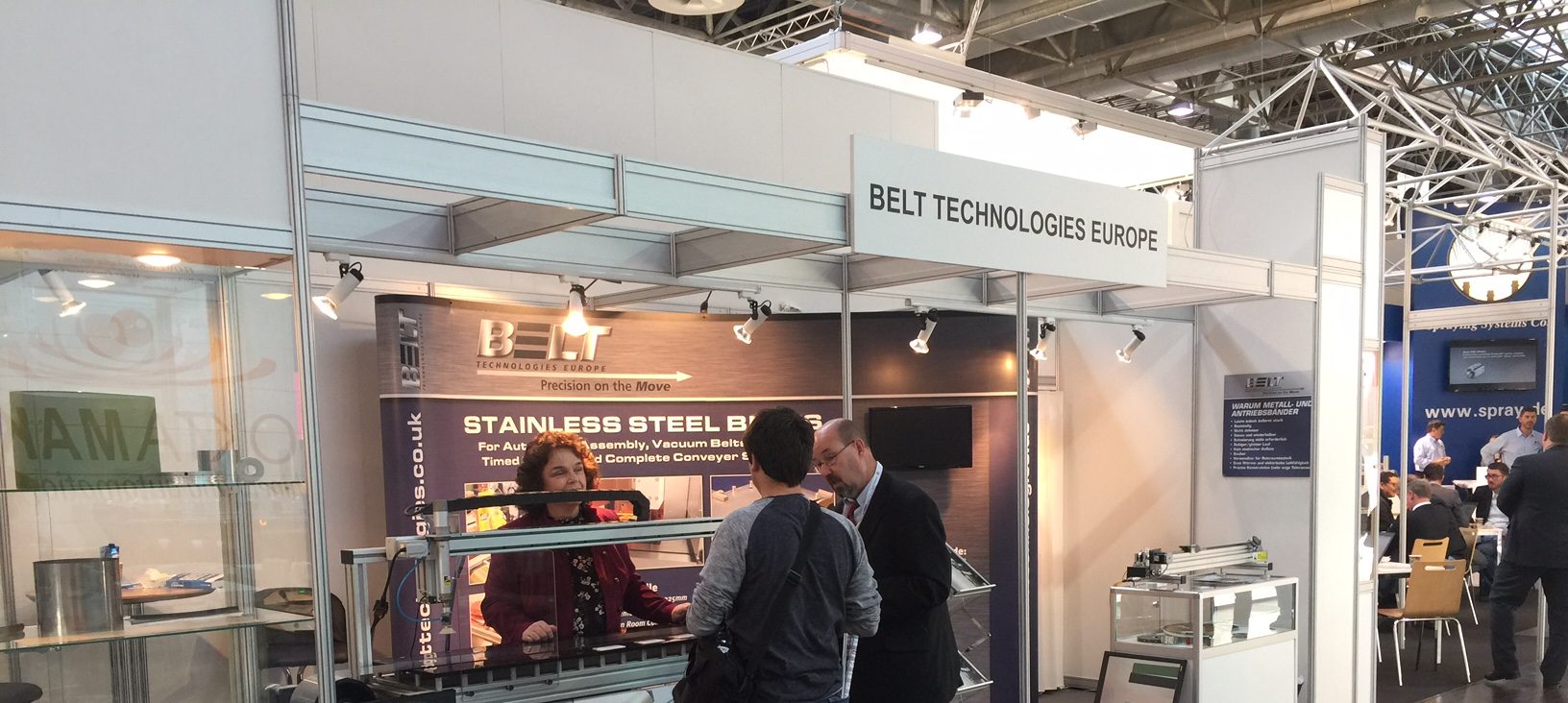
AGAWAM, MA, September 2019—Belt Technologies, a leading producer of custom stainless steel belts, timing belts, drive tapes and more, has released its event schedule for the 2019-2020 season. They will be attending several tradeshows and industry events around the world this year.
“Attending these events provides us with immeasurably valuable opportunities to meet with our peers and customers face to face,” said Belt Technologies President, Al Wosky. “We find that it continues to be worthwhile to make the effort to attend these events each year. They give us a chance to familiarize ourselves with developments in other facets of the industry, meet with customers new and old, and ensure we’re providing comprehensive, relevant solutions to customer problems.”
Networking with other industry leaders and clients face-to-face at tradeshows and similar events enables Belt Technologies to gain a more realistic view of their customers’ needs. It also gives manufacturers and OEMs a hands-on opportunity to explore the many ways Belt Technologies can improve their automation processes with custom stainless steel conveyor belts, conveyor belt systems, timing belts, drive tapes and more.
This year’s roster of trade shows begins with the Pack Expo this September in Las Vegas. The team at Belt Technologies is looking forward to the events this year and they encourage interested industry buyers to contact the design team ahead of time if they would like to connect at one of the events. For a full list of Belt Technologies’ 2019-2020 trade show schedule, visit their website.
Read the original press release, here.
Seamless Stainless Steel Belt Provides Infinite Possibilities for 3D Printing
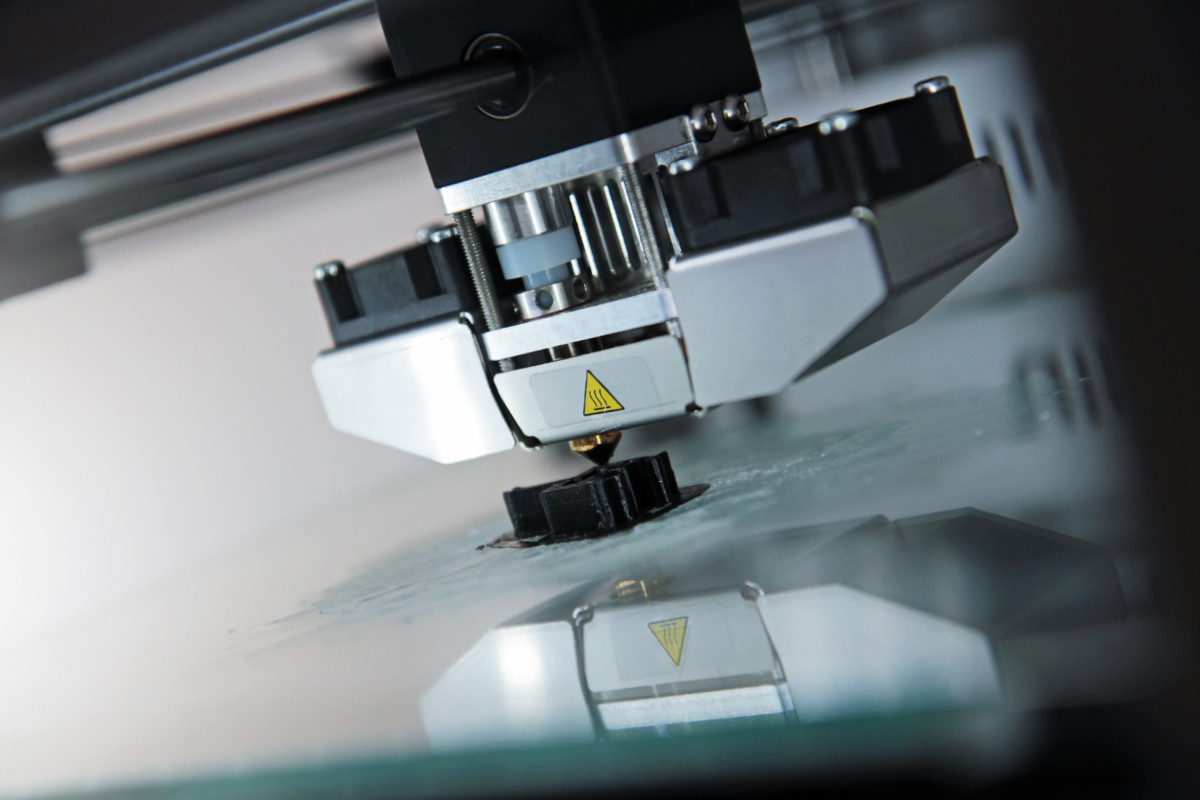
At Belt Technologies, one of the things we enjoy most about our work is helping innovative engineers bring their visions to life. Stainless steel belts can be found in a wide variety of industries, and our team has had the opportunity to help with the development and production of game-changing equipment in more than a few of them.
 3D printing is one burgeoning industry that Belt Technologies has had a hand in helping to shape. Stainless steel belts, pulleys, and drivetapes are excellent for additive manufacturing applications due to their smooth, impermeable surface and repeatable accuracy. Our team has worked on several impressive 3D printing projects in the past, including large-scale, industrial additive manufacturing applications. One of our most interesting recent projects in this industry was for the development of the White Knight 3D printer by NAK 3D Designs, which is owned and operated by Karl Brown.
Innovation Through Persistence and Partnership
 Like many great inventions, Karl Brown’s White Knight 3D printer has humble beginnings. After developing a personal interest in 3D printing, Mr. Brown has been on an individual quest to create an infinite printing surface for seamlessly printing large objects. Up until now, printing large items on commercial-sized printers required operators to print them in pieces that are then assembled separately.
He was able to create a functioning prototype in his workshop which garnered attention on social media after appearing on a Livestream. Bolstered by support from the community, he began seeking ways to make his vision into an accessible reality. After being told by several 3D printing belt specialists that fulfilling the specifications for his design was not possible, Karl found his way to Belt Technologies.
Achieving “Infinite Z” with Seamless Welded Metal Belts
Our engineers were more than willing to help Karl realize his vision. As fellow 3D printing enthusiasts, our team was compelled by the idea of developing a commercial 3D printer with an infinite printing surface. They provided him with engineering and design feedback to determine the appropriate thickness for the size of the belt to ensure smooth, long-lasting operation. Although a seamless welded belt was initially out of his price range, the team was so certain it would succeed, they insisted he try one as proof of concept.
After testing the effectiveness himself, Karl was sold. Belt Technologies provided him with a 400mm x 1920mm full hardened seamless stainless steel belt. The endless belt, combined with linear rails and several additional top-of-the-line pieces enables the White Knight 3D printer to do what no one else can: print an 8ft long sword in one complete piece.
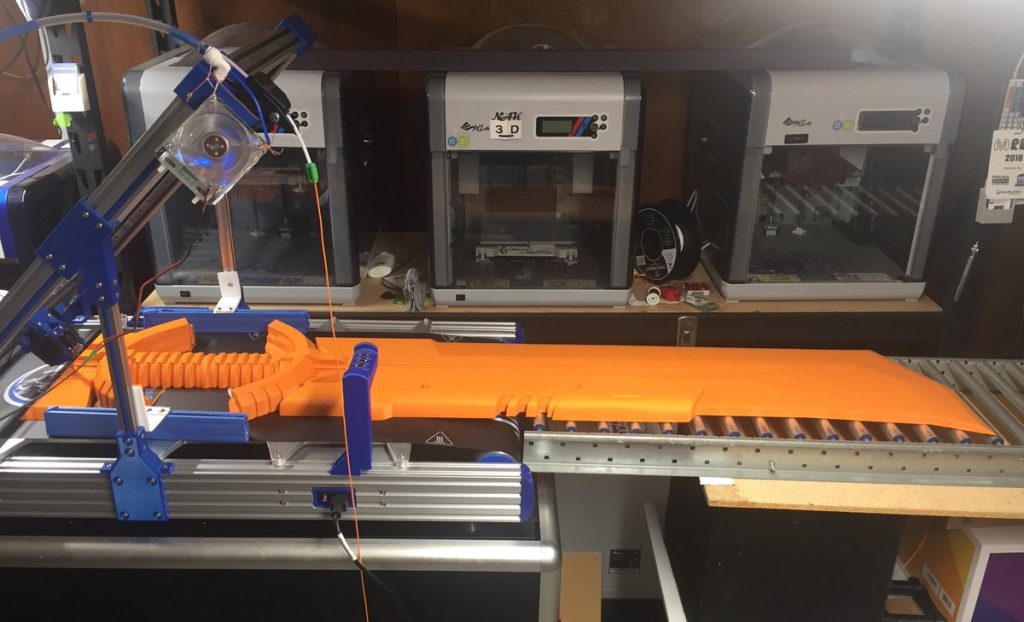
A full hardened stainless steel belt will not stretch, warp, or break, and the smooth, impermeable surface provides easy release of the extruded product. Unlike other belt options Karl had tried, the seamless belt by Belt Technologies does not curl or warp the print. “I would definitely recommend working with Belt Technologies for their product quality, responsiveness, group pricing, and their familiarity with 3D printer design,” said Mr. Brown. “It’s been a very pleasurable experience to collaborate with experienced engineers who are engaged in the project on a personal and professional level.”
The team at Belt Technologies is thrilled to see the success of Karl’s design and look forward to seeing more iterations in 3D printing technology from him in the future. For more information about stainless steel belts, pulleys and drive tapes for 3D printer and additive manufacturing applications, contact the experts at Belt Technologies today.
To see more of Karl Brown’s White Knight in action, visit his youtube channel.
Image provided courtesy of Karl Brown