Belt Technologies Logo

Créer des tapis convoyeurs métalliques perforés pour la production automatisée de pizzas congelées

Les tapis convoyeurs métalliques perforés sont idéaux pour la production alimentaire automatisée


Les propriétés uniques des tapis convoyeurs métalliques les rendent idéaux pour le secteur


du traitement des aliments


. Leur versatilité les rend facilement adaptables à n’importe quel nombre de processus de production du secteur alimentaire. A la différence des matériaux des tapis conventionnels, les tapis métalliques en acier inoxydable ne dégazent pas ; cela signifie qu’ils n’ont pas d’effet négatif sur la saveur du produit. Les tapis convoyeurs métalliques ne nécessitent pas de lubrification ni ne génèrent de particules qui compromettraient la qualité consommable des produits. Ils résistent aussi à la corrosion et peuvent facilement être nettoyés, que ce soit avec des produits chimiques ou avec une intense vapeur.


La qualité la plus bénéfique des tapis convoyeurs en acier inoxydable dans le secteur alimentaire est leur résistance aux températures extrêmes, ce qui les rend idéaux pour les traitements de production alimentaire nécessitant la cuisson ou la congélation du produit brut. Leur capacité à conduire facilement l’énergie sous forme de chaleur signifie que les aliments sont cuits de manière égale et complète. Grâce aux systèmes convoyeurs métalliques, les installations automatisées de traitement des aliments peuvent obtenir une vitesse et exactitude de production maximale sans sacrifier la sécurité ou le goût.

https://belttechnologiesinc.wistia.com/medias/lyqda8jka5?embedType=async&videoFoam=true&videoWidth=640

Les problèmes de fabrication causent des retards dans les traitements automatisés de cuisson


Un producteur de pizzas congelés préemballées a récemment contacté Belt Technologies à cause d’un problème. Ils utilisaient un procédé de cuisson automatisé avec des tapis convoyeurs métalliques de Belt Technologies. Les tapis avaient été fabriqués dans nos installations puis envoyés à un constructeur de machines choisi par le client. La boutique de machines tierce avait perforé les tapis avant de les installer sur le système plus grand de production de pizzas.

https://www.belttechnologiesinc.wistia.com/medias/hk1io6k9sw?embedType=async&videoFoam=true&videoWidth=640


Les tapis furent soudés par Belt Technologies à un angle de 75 degrés pour une résistance supplémentaire. Les perforations ajoutées par le constructeur de machines furent faites le long du côté du tapis, avec un diamètre de 3,1 mm et une hauteur de 51 mm. Une fois terminés et installés, les tapis furent utilisés pour transporter les pizzas à travers le processus de cuisson, au cours duquel elles furent soumises à des températures élevées de 240 degrés Celsius.


Les tapis se racornissaient malheureusement sur toute leur longueur et cassaient aux points de soudure. Le client contacta les experts de Belt Technologies et demanda : Qu’est-ce qui peut causer cela ?

Des techniques correctes de perforation font toute la différence


Nos ingénieurs purent résoudre les problèmes de torsion et les cassures aux points de soudure. Ils découvrirent que les dégâts étaient causés par des techniques de perforation incorrectes utilisées par les tapis métalliques perforés par

l’atelier de construction.


De nombreuses techniques de perforation mécanisées


telles celles utilisées par l’atelier de machines extérieur


sont à impact élevé et peuvent provoquer un stress non nécessaire sur le tapis. Lors de l’utilisation de ces techniques, une série de mesures précises et particulières doivent être prises pour empêcher le tapis de “ressortir” ou de craquer le long des perforations. Dans les cas où ce résultat est prévisible, Belt Technologies utilise une variété de méthodes exclusives de perforation incluant la gravure mécanique et chimique, ainsi que la technologie laser. Ces dernières approches reposent sur une chaleur intense ou une réaction chimique pour réaliser chaque perforation ; cela aide à préserver l’intégrité du tapis.


Chez Belt Technologies, nous préconisons l’utilisation des bonnes techniques de fabrication et des matériaux adéquats pour chaque application. C’est pourquoi chaque système de tapis convoyeur métallique que nous concevons est fabriqué spécifiquement aux mesures de votre application. Appelez ou

demandez un devis
dès aujourd’hui !
 

Engineering Perforated Metal Conveyor Belts for Automated Frozen Pizza Production

Perforated Metal Conveyor Belts Are Ideal for Automated Food Production

The unique properties of metal conveyor belts make them ideal for the food processing industry. Their versatility makes them easily adaptable to any number of food industry production processes. Unlike conventional belt materials, stainless steel metal belts do not outgas; this means they have no adverse effect on product flavor. Metal conveyor belts do not require lubrication or generate particulates that would otherwise jeopardize edible product quality. They are also resistant to corrosion and can be easily sanitized—either chemically or with intense steam.

The most beneficial quality of stainless steel conveyor belts in the food industry is their resistance to extreme temperatures, which makes them ideal for food production processes that require the cooking or freezing of raw product. Their ability to easily conduct energy in the form of heat means food is cooked thoroughly and evenly. With metal belt conveyor systems, automated food processing facilities can achieve maximum production speed and accuracy without sacrificing safety or flavor.


Manufacturing Issues Cause Delays in Automated Cooking Processes

A producer of prepackaged frozen pizzas recently contacted Belt Technologies with a problem. They had been using an automated cooking process with metal conveyor belts from Belt Technologies. The belts were fabricated at our facilities and then sent to a machine builder, chosen by the client. The third-party machine shop perforated the belts and then installed them into the larger, pizza-producing system.

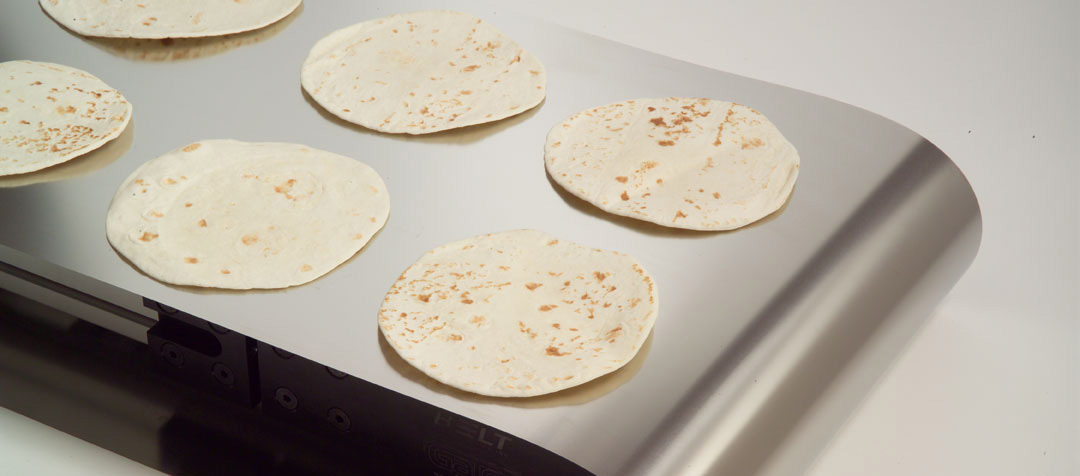
The belts were welded by Belt Technologies at a 75-degree angle for extra strength. The perforations added by the machine builder were made along the edge of the belt at a diameter of 3.1mm and a pitch of 51mm. Once completed and installed, the belts were used to transport pizzas through the cooking process, where they were subjected to high temperatures of 240 degrees Celsius.

Unfortunately, the belts were cupping along their entire length and failing at the weld joints. The client came to the experts at Belt Technologies to ask: What could be causing this?

Proper Perforation Techniques Make the All the Difference

Our engineers were able to resolve both the warping issues and the failures at the weld joints. They found that the damage was being caused by incorrect perforation techniques used by the third-party machine-perforated metal beltsbuilding shop.

Many mechanized perforation techniqueslike those used by the outside machine shopare high-impact and can cause unnecessary stress to the belt. When using these techniques, a series of particular, precise measures must be taken to prevent the belt from “sticking out” or cracking along the perforations. In instances where this outcome is likely, Belt Technologies uses a variety of proprietary perforation methods that include mechanized, as well as chemical etching and laser technology. These latter approaches rely on intense heat or a chemical reaction to make each perforation; this helps preserve the integrity of the belt.

At Belt Technologies, we advocate using the right fabrication techniques and materials for each application. This is why each metal belt conveyor system we design is custom-made specifically for your application. Call or request a quote today!

Konstruktion perforierter Metall-Transportbänder für die automatisierte Produktion von Tiefkühlpizza

Perforierte Metall-Transportbänder sind ideal für die automatisierte Lebensmittelproduktion

Die einzigartigen Eigenschaften von Metall-Transportbändern lassen sie zur idealen Wahl für die Lebensmittel verarbeitende Industrie werden. Dank ihrer Vielseitigkeit sind sie einfach an beliebig viele Produktionsprozesse der Lebensmittelbranche anpassbar. Im Gegensatz zu herkömmlichen Bandmaterialien gasen Edelstahlbänder nicht aus, was bedeutet, dass sie keinen negativen Effekt auf das Aroma der Produkte haben. Metall-Transportbänder benötigen keine Schmierung und erzeugen keinen Feinstaub, der sonst die Qualität des Lebensmittels gefährden könnte. Sie sind außerdem widerstandsfähig gegenüber Korrosion und können einfach hygienisiert werden – entweder chemisch oder mit starkem Dampf.

Die wichtigste Eigenschaft der Edelstahl-Transportbänder in der Lebensmittelindustrie ist ihr Widerstand gegenüber extremen Temperaturen, wodurch sie ideal für Lebensmittel-Verarbeitungsverfahren geeignet sind, bei denen die Rohware gekocht oder eingefroren werden muss. Ihre Fähigkeit, Energie in Form von Wärme einfach weiterzuleiten, bedeutet, dass Lebensmittel gründlich und gleichmäßig gekocht werden. Mit Metallband-Transportsystemen können automatisierte Einrichtungen der Lebensmittelverarbeitung eine maximale Produktionsgeschwindigkeit und Präzision erzielen, ohne dass die Sicherheit oder das Aroma geopfert werden.

https://belttechnologiesinc.wistia.com/medias/lyqda8jka5?embedType=async&videoFoam=true&videoWidth=640

Probleme in der Fertigung verursachen Verzögerungen bei automatisierten Kochverfahren

Ein Hersteller von vorgefertigten Tiefkühlpizzas kontaktierte kürzlich Belt Technologies wegen eines Problems. Das Unternehmen nutzte ein automatisiertes Kochverfahren mit Metall-Transportbändern von Belt Technologies. Die Bänder waren in unseren Einrichtungen hergestellt und dann an einen vom Kunden ausgewählten Maschinenbauer versandt worden. Der Drittanbieter perforierte die Bänder und installierte sie dann in größere Systeme zur Pizzaproduktion.
http://belttechnologiesinc.wistia.com/medias/hk1io6k9sw?embedType=async&videoFoam=true&videoWidth=640
Die Bänder waren für zusätzliche Stärke von Belt Technologies in einem 75-Grad-Winkel geschweißt worden. Die vom Maschinenbauer hinzugefügten Perforationen erfolgten entlang der Kante des Bandes mit einem Durchmesser von 3,1mm und einem Abstand von 51mm. Nach Fertigstellung und Installation wurden die Bänder verwendet, um Pizzas durch den Kochvorgang zu transportieren. Hier wurden sie hohen Temperaturen von bis zu 240 Grad Celsius ausgesetzt.

Leider kam es bei den Bändern entlang ihrer gesamten Länge zu einem Hohlziehen und zu Schwächen an den Schweißnähten. Der Kunde kam zu den Fachkräften von Belt Technologies und fragte: Wodurch konnte das verursacht werden?

Richtige Perforationstechniken machen den Unterschied

Unsere Techniker waren in der Lage, sowohl das Problem der Auffaltung als auch die Ausfälle an den Schweißnähten zu beheben. Sie stellten fest, dass der Schaden durch fehlerhafte Perforationstechniken, die der DrittanbieterPerforierte Metallbändernutzte, verursacht wurden.

Zahlreiche mechanische Perforationstechniken wie die von der Fremdwerkstatt eingesetzten — erfolgen mit hohem Einschlag und können dadurch eine unnötige Belastung für das Band verursachen. Wenn diese Techniken eingesetzt werden, muss eine Reihe bestimmter präziser Messungen vorgenommen werden, um zu verhindern, dass das Band “absteht” oder entlang der Perforationen reißt. In Fällen, bei denen dieses Ergebnis wahrscheinlich ist, nutzt Belt Technologies eine Reihe urheberrechtlich geschützter Perforationsmethoden, zu denen sowohl mechanische als auch Laser-Technologien und chemisches Ätzen gehören. Die letztgenannten Ansätze nutzten starke Hitze oder eine chemische Reaktion, um jede Perforation zu erzeugen. Das hilft, die Integrität des Bandes zu bewahren.

Wir bei Belt Technologies setzen uns für die richtigen Fertigungstechniken und Materialien für jede Anwendung ein. Aus diesem Grund wird jedes Metallband-Transportsystem kundenspezifisch von uns für Ihre Anwendung entwickelt. Rufen Sie noch heute an oder fordern Sie ein Angebot an!


冷凍ピザオートメーション生産用の金属メッシュコンベヤベルトの設計

食品生産オートメーションに理想的な金属メッシュコンベヤベルト

金属コンベヤベルトの独自の性質は食品加工産業に理想的ですいかなる食品加工工程にも適応できる汎用性があります。従来のベルト材質に比較してステンレススチール製のべルトはガスを放出せず、食品の味に悪影響を与えません。金属コンベヤベルトは潤滑を必要とせず、製品の味を損なう微粒子を発生しません。耐食性があり、化学溶剤または強力な蒸気で簡単に消毒できます。

食品加工産業におけるステンレススチール製ベルトの最大の利点は極端な温度に耐えられることです。これは原材料の調理や冷凍を必要とする食品加工に理想的な特徴です。エネルギーを熱として伝導する能力があるため、食品が完全かつ均一に調理されます。オートメーション生産施設は金属ベルトコンベヤを利用することで、味や安全性を犠牲することなく、最高の生産速度と精度を実現します。

https://belttechnologiesinc.wistia.com/medias/lyqda8jka5?embedType=async&videoFoam=true&videoWidth=640

製造問題によりオートメーションの加工工程に遅延が発生する

冷凍ピザの生産会社が最近、Belt Technologiesに相談を持ち掛けました。彼らはBelt Technologiesの金属コンベヤベルトをオートメーションの加工工程に使用していました。ベルトは当社で製作され、顧客が選択した機械メーカーに送られました。第三者の機械工場がベルトに穿孔し、それをピザ生産システムに取り付けました。
https://www.belttechnologiesinc.wistia.com/medias/hk1io6k9sw?embedType=async&videoFoam=true&videoWidth=640
ベルトはBelt Technologiesにより高強度を持たせるために75度の角度で溶接され、機械工場によりベルトの端に3.1mm径、51mmピッチの穴が開けられました。設置されたベルトは摂氏240度の高温で調理を行う工程にピザを搬送するために使用されました。

残念ながらベルトは長さ全体で歪曲し、溶接継手で破損してしまいました。顧客は原因を発見するためにBelt Technologiesの専門家に問い合わせました。

適切なパーフォレーションテクニックが違いを作る

弊社エンジニアは歪曲問題と溶接接手で破損する問題を解決しました。彼らは第三者機械工場による不適切なパーフォレーション(穿孔)テクニックが損害を起こしたことを発見しました。
穿孔された金属ベルト

多くの機械的なパーフォレーションテクニックが外部の機械工場で行われますがハイインパクトのためにベルトに不要な応力を与えます。これらのテクニックを使用する時、ベルトが「飛び出し」たり穴から亀裂を発生させないために、いくつかの対策を正確に実施することが必要です。このような問題が起こることが予想される時、Belt Technologiesは機械的、化学エッチング、レーザーテクノロジーなどを含む専有のパーフォレーション方法を用います。これらの方法はベルトの健全性を確保するために穿孔に高温の熱や化学反応を使用します。

Belt Technologiesはそれぞれの用途に合う製造技術と素材だけを使用します。弊社が設計する金属ベルトコンベヤは、常にお客様の用途に合わせてカスタムメードされます。ご質問、見積り請求には本日ご連絡ください!


Aufrüstung eines Transportbandsystems mit einem Edelstahlband für eine perfekte Produkthandhabung

Umbau von Metall-Transportbändern
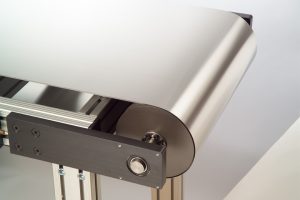
Unsere flachen Metall-Transportbänder werden aus Einzelbögen hochwertigen Edelstahls gefertigt.

Die Techniker von Belt Technologies verfügen über das Fachwissen und die Erfahrung, um nicht nur brandneue, kundenspezifische Transportsysteme zu entwickeln und zu bauen, sondern auch, um vorhandene Transportsysteme umzubauen und sich die einzigartigen Eigenschaften von Edelstahlbändern zunutze zu machen. Wenn uns ein Kunde hinsichtlich eines Problems mit einem vorhandenen System anspricht, sind wir mehr als bereit, um die speziellen Bedürfnisse zu prüfen und eine Lösung bereitzustellen.

Produktfertigung erfordert Spezialbänder

Kürzlich kontaktierte ein Kunde Belt Technologies auf der Suche nach einer Lösung für ein Problem bei der Produkthandhabung. Sein Unternehmen produziert hochwertige Kunststoffe und Harze, die bei hohen Temperaturen auf einem Transportband extrudiert werden und dann während des Transports abkühlen. Die ursprünglichen Transportbänder waren Metallbänder mit Netzstruktur. Diese widerstanden den hohen Temperaturen, die zum Extrudieren des Kunststoffs erforderlich sind, hinterließen jedoch beim Abkühlen Markierungen auf den Kunststoffsträngen. Der Kunde benötigte ein neues Transportband, das erhöhten und wechselnden Temperaturen widerstehen kann, ohne Markierungen auf dem Endprodukt zu hinterlassen.

Netzstruktur oder flaches Metallband: Was benötige ich?

Umbau von Metall-Transportbändern
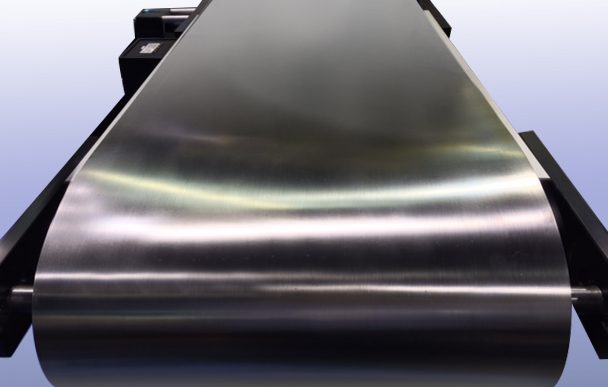
Die gleichmäßige Oberfläche von flachen Metall-Transportbändern stellt sicher, dass das Endprodukt keine unerwünschten Markierungen oder Eindrücke aufweist.

Flache Metallbänder sind haltbar und einfach zu reinigen. Ihr Widerstand gegenüber großer Hitze lässt sie zu einer großartigen Wahl für Anwendungen, die hohe Temperaturen nutzen, werden. Im Gegensatz zu Metallbändern mit Netzstruktur werden unsere flachen Metall-Transportbänder aus einem Einzelblatt hochwertigen Edelstahls gefertigt. Die endlosen Metall-Transportbänder von Belt Technologies haben eine flache, gleichmäßige Oberfläche, wodurch sie ideal für Anwendungen sind, bei denen eine gleichmäßige Produktoberfläche benötigt wird.

Bänder mit Netzstruktur sind eine weitere Form von Metall-Transportbändern, die oft in Anwendungen mit hohen Temperaturen eingesetzt werden. Sie bestehen aus Gliedern oder Metallgewebe, die die Passage von Flüssigkeiten oder Luft ermöglichen. Obwohl sie sehr beliebt sind, können sich die Herausforderungen und Mängel der Bänder mit Netzstruktur nachteilig auf die Fertigungsstraße auswirken. Hunderte oder sogar Tausende von Gliedern bedeuten Hunderte schwierig zu reinigender Aussparungen, wodurch Bänder mit Netzstruktur zu einem Hafen für Verunreinigungen werden. Jede Fehlausrichtung eines Bandes mit Netzstruktur kann zu einer Beschädigung einzelner Drähte und Glieder führen, wodurch das Risiko für einen Bandausfall oder eine Beschädigung des Produkts deutlich steigt. Dadurch wächst auch die Gefahr von Ausfallzeiten. Wie im speziellen Beispiel gezeigt, kann die texturierte Oberfläche eines Bandes mit Netzstruktur auch zu einer Beschädigung des Produkts führen, das dann nachbearbeitet oder vollständig entsorgt werden muss. Eine Aufrüstung mit einem endlosen, soliden Metallband kann viele der teuren Risiken, die mit Transportbändern mit Netzstruktur verbunden sind, beseitigen.

Vermeiden Sie einen vollständigen Systemaustausch mit den erschwinglichen Umbaulösungen von BTI

Unsere Band-Techniker arbeiteten mit dem Kunden zusammen, um ein neues, flaches Metall-Transportband zu entwickeln, das einfach in das vorhandene Transportbandsystem integriert werden konnte. Das neue Band besteht aus vollständig gehärtetem Edelstahl 301, der in der Lage ist, den hohen Temperaturen, die für den Betrieb erforderlich sind, zu widerstehen. Die flache Oberfläche hinterlässt beim Abkühlen keine Markierungen auf dem extrudierten Kunststoff.

Mit einer Umbaulösung von Belt Technologies konnte der Kunde die Kosten für den Austausch des gesamten Systems einsparen und erzielt jetzt die gleichmäßigen Produktergebnisse, die er benötigt. Sind Sie von Ihrem aktuellen System enttäuscht? Rufen Sie an oder fordern Sie noch heute ein Angebot an und lassen Sie unsere Fachleute beim Finden einer Lösung helfen!


Conveyor System Upgrades to a Stainless Steel Belt for Perfect Product Handling

Belt Technologies engineers have the knowledge and experience to not only design and build brand-new, custom conveyor systems, but also to retrofit existing conveyor systems to take advantage of the unique properties of stainless steel metal belts. When a customer contacts us with a problem regarding their existing systems, we are more than ready to examine their specific needs and provide a solution.

Product Manufacturing Requires Specialty Belts

A customer recently contacted Belt Technologies for a solution to a product-handling issue. They produced high-performance plastics and resins, which were being extruded onto a conveyor belt at high temperatures and allowed to cool as they were transported. The original conveyor belts were mesh metal belts; these were able to handle the high temperatures of the extruded plastic material but would leave markings on the plastic strands as the material cooled. The customer needed a new conveyor belt that could withstand elevated and varied temperatures without leaving any markings on the finished products.

retrofit metal conveyor belts
Our flat metal conveyor belts are made from a single sheet of high-end stainless steel.

Mesh or Flat Metal Belts: Which Do I Need?

retrofit metal conveyor belts
The smooth finish of flat metal conveyor belts ensures there are no unwanted marks or dents on finished products.

Flat metal belts are durable and easy to clean. Their resistance to high heat makes them a great choice for applications using elevated temperatures. Unlike mesh metal belts, our flat metal conveyor belts are made from a single sheet of high-end stainless steel. Endless metal conveyor belts from Belt Technologies have a flat, even surface, which makes them ideal for applications that need a smooth product finish.

Mesh belts are another form of metal conveyor belt often used in high-heat applications. They are made of links, or metal weaves that allow the passage of fluids or air. While popular, the challenges and shortcomings of mesh belts can be detrimental to a production line. Hundreds or even thousands of links mean hundreds of difficult-to-clean recesses, making mesh belts a haven for contamination. Any misalignment of a mesh belt can result in damage to individual wires and links, making the risk for belt failure or damage to product significantly higher and increasing the potential for downtime. As demonstrated in this specific instance, the textured surface of a mesh belt can also result in damaged product that must be reworked or scrapped altogether. An upgrade to an endless, solid metal belt can eliminate many of the expensive risks associated with mesh belted conveyors.

Avoid Complete System Replacement with Affordable Retrofit Solutions from BTI

Belt engineers worked with the customer to design a new, flat metal conveyor belt that would easily integrate into the existing conveyor system. The new belt was made with 301 full hard-tempered stainless steel able to withstand the high temperatures required for the operation. The flat surface will not leave any marks on the extruded plastic as it cools.

With a retrofit solution from Belt Technologies, the customer was able to avoid the cost of replacing the entire system and can now achieve the smooth product results they needed. Is your existing conveyor system letting you down? Call or request a quote today and let our experts help find a solution!


Erreichen der maximalen Lebensdauer von Metall-Transportbändern

[et_pb_section admin_label=”section”][et_pb_row admin_label=”row”][et_pb_column type=”4_4″][et_pb_text admin_label=”Text” background_layout=”light” text_orientation=”left” text_font_size=”14″ use_border_color=”off” border_color=”#ffffff” border_style=”solid”]

Metallband-Transportsysteme sind eine haltbare, langlebige Wahl für automatisierte Fertigungs- und Verarbeitungseinrichtungen. Um Ihre Metallbänder bestmöglich zu nutzen, gibt es einige Designüberlegungen, die Sie berücksichtigen sollten. Das hilft bei der Vermeidung von unnötigem Verschleiß und stellt die längstmögliche Lebensdauer Ihrer Bänder sicher.

Designüberlegungen, die Sie vor der Installation berücksichtigen sollten

Der überraschendste Unterschied zwischen Metallbändern und herkömmlichen Arten von Transportbändern liegt im Verhältnis zwischen Durchmesser der Riemenscheibe und Banddicke, das aufrechterhalten werden muss. Während Metallbänder normalerweise aus Edelstahl hergestellt werden, können Riemenscheiben aus Edelstahl, Aluminium oder Kunststoff gefertigt werden. Das hängt von den Desingspezifikationen ab. Die meisten Metallband-Riemenscheiben werden entweder aus Rundmaterial, aus einem I-Träger oder gedeckeltem Rohr gefertigt, und sie können mit Antriebsstiften für Taktgebungstaschen, Entlastungskanälen, herkömmlichen Taktgebungszähnen oder den patentierten Kugellager-Taktgebungszähnen von Belt Technologies entwickelt werden. Für den bestmöglichen Betrieb ist es wichtig, dass der größtmögliche Riemenscheibendurchmesser im Verhältnis zur Dicke des Bandes verwendet wird. Das Mindestverhältnis, das wir bei Belt Technologies empfehlen, ist ein strikt eingehaltenes Verhältnis von 625:1.

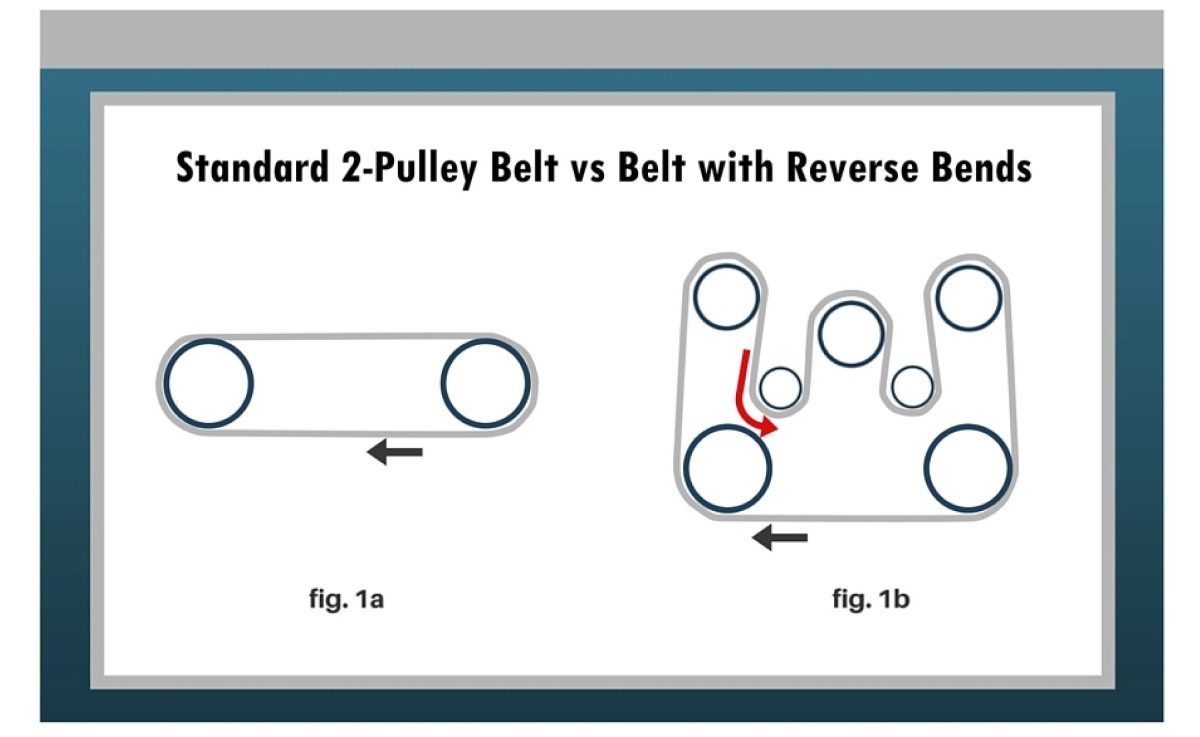
Umkehrbiegungen in Metallbänder sollte vermieden werden, es sei denn, sie sind absolut notwendig, da dadurch die Lebensdauer der Bänder beeinträchtigt wird. Entlang der gleichen Linien sollten so wenige Riemenscheiben wie möglich in das Transportsystem integriert werden, um eine unnötige Beanspruchung des Bandes zu verhindern.

Design eines Metalltransportbandes

Mit Vorsicht handhaben

Obwohl Metallbänder einen höheren Widerstand gegenüber Temperaturen, chemischer Korrosion und physikalischer Beschädigung bieten, müssen sie während der Installation vorsichtig behandelt werden. Das gilt insbesondere für dünnere Metallbänder. An den Kanten und Schweißnähten der Bänder können während Installation und Wartung Beschädigungen auftreten.

Die Bandspannung ist ein weiterer Faktor, der die Lebensdauer eines Bandes beeinflusst. Die Bandspannung sollte so niedrig wie möglich gehalten werden, um die Lebensdauer des Bandes zu verlängern und den Verschleiß am System zu verringern. Wenn die Spannung zu hoch ist, kann sich der Rahmen des Systems verwinden, oder der Riemen selbst kann brechen. Unsere Techniker helfen Ihnen bei der Bereitstellung von Richtlinien, um die richtige Bandspannung zu bestimmen.

Sauber halten

Metallband-Transportsysteme sollten so entwickelt werden, dass ein einfacher Zugang zu einer Seite des Systems gewährleistet ist. Das verringert Stillstandszeiten während der Wartungs- und Sanitisierungsverfahren, da einfacher auf das Innenleben der Metallband-Transportsysteme zugegriffen werden kann. Um eine übermäßige Beschädigung des Bandes zu vermeiden, müssen der Innen- und Außendurchmesser soweit wie möglich von Schmutz frei gehalten werden.

Wenn Sie diese Richtlinien während der Designphase Ihres Metallband-Transportsystems berücksichtigen, maximieren Sie die Lebensdauer Ihres Edelstahlbandes. Eine regelmäßige Wartung und eine ordnungsgemäße Reinigung müssen Teil Ihrer Routineabläufe sein, sobald das Band installiert wurde. Diese Maßnahmen maximieren die Lebensdauer des Bandes und verringern die Möglichkeit einer übermäßigen Beschädigung durch Schmutz oder Zweckentfremdung.

[/et_pb_text][et_pb_cta admin_label=”Call To Action” title=”Design-Leitfaden herunterladen” button_url=”/design-info/” url_new_window=”off” button_text=”Click Now” use_background_color=”on” background_color=”#36516d” background_layout=”dark” text_orientation=”center” header_font_size=”26″ body_font_size=”14″ use_border_color=”off” border_color=”#ffffff” border_style=”solid” custom_button=”off” button_text_size=”20″ button_border_width=”2″ button_border_radius=”3″ button_letter_spacing=”0″ button_use_icon=”default” button_icon_placement=”right” button_on_hover=”on” button_border_radius_hover=”3″ button_letter_spacing_hover=”0″ saved_tabs=”all”] [/et_pb_cta][/et_pb_column][/et_pb_row][/et_pb_section]

How to Achieve the Maximum Metal Belt Conveyor Lifespan

[et_pb_section fb_built=”1″ admin_label=”section” _builder_version=”3.22″][et_pb_row admin_label=”row” _builder_version=”3.25″ background_size=”initial” background_position=”top_left” background_repeat=”repeat”][et_pb_column type=”4_4″ _builder_version=”3.25″ custom_padding=”|||” custom_padding__hover=”|||”][et_pb_text admin_label=”Text” _builder_version=”3.27.4″ background_size=”initial” background_position=”top_left” background_repeat=”repeat” use_border_color=”off” border_color=”#ffffff” border_style=”solid”]Metal belt conveyor systems are a durable, long-lasting choice for automated manufacturing and processing facilities. To get the most out of your metal belts, there are a few design considerations to keep in mind; these will help prevent unnecessary wear and tear and ensure that your belts have the longest lives possible.

Design Considerations to Keep in Mind Before You Install

The most unexpected difference between metal belts and conventional conveyor belt types is the ratio between pulley diameter and belt thickness that must be maintained. While metal belts are typically made of stainless steel, pulleys can be manufactured from stainless steel, aluminum, or plastic, depending on the design specifications. Most metal belt pulleys are either round stock, I-beam, or capped tube and can be designed with drive lug timing pockets, relief channels, conventional timing teeth, or Belt Technologies’ patented ball bearing timing teeth. For metal belts to perform as well as they can, it is imperative to use the largest possible pulley diameter in relation to the thickness of the belt. The minimum ratio that we recommend at Belt Technologies is a strictly maintained 625:1.

Reverse bends in metal belts should be avoided unless absolutely necessary, as they will compromise the lifespan of the belts. Along the same lines, there should be as few pulleys as possible included in the conveyor system to limit unnecessary stress on the belt.

metal belt conveyor design

Handle with Care

Although metal belts provide a higher resistance to temperature, chemical corrosion, and physical damage, they must be handled carefully during installation; particularly in the case of thinner metal belts. Damage can occur at the edges and at the weld joint of the belts during installation and maintenance.

The tension of the belt is another factor that can contribute to the lifespan of a belt. Belt tension should be kept as low as possible to improve belt life and reduce wear on the system. When tension is too high, the system frame can warp or the belt itself may fracture. Our engineers can help by providing guidelines to determine the right belt tension.

Keep It Clean

Metal belt conveyor systems should be designed with easy access to one side of the system. This reduces downtime during maintenance and sanitization procedures by making it easier to access the inner workings of the metal belt conveyor system. To prevent excessive damage to the belt, the interior and exterior diameter of the belt should be kept free of debris as much as possible.

By following these guidelines during the design phase of your metal belt conveyor system, you will maximize the lifespan of your stainless steel belt. Regular maintenance and proper cleaning should be part of your routine operations once the belt is installed. These measures will maximize the lifespan of the belt and reduce the chance of excessive damage from debris or misuse.
[/et_pb_text][et_pb_cta title=”Download the Design Guide” button_url=”/design-info/” button_text=”Click Now” admin_label=”Call To Action” _builder_version=”3.16″ background_size=”initial” background_position=”top_left” background_repeat=”repeat” use_border_color=”off” border_color=”#ffffff” border_style=”solid” button_border_radius_hover=”3″ button_letter_spacing_hover=”0″ saved_tabs=”all” button_text_size__hover_enabled=”off” button_one_text_size__hover_enabled=”off” button_two_text_size__hover_enabled=”off” button_text_color__hover_enabled=”off” button_one_text_color__hover_enabled=”off” button_two_text_color__hover_enabled=”off” button_border_width__hover_enabled=”off” button_one_border_width__hover_enabled=”off” button_two_border_width__hover_enabled=”off” button_border_color__hover_enabled=”off” button_one_border_color__hover_enabled=”off” button_two_border_color__hover_enabled=”off” button_border_radius__hover_enabled=”on” button_border_radius__hover=”3″ button_one_border_radius__hover_enabled=”off” button_two_border_radius__hover_enabled=”off” button_letter_spacing__hover_enabled=”on” button_letter_spacing__hover=”0″ button_one_letter_spacing__hover_enabled=”off” button_two_letter_spacing__hover_enabled=”off” button_bg_color__hover_enabled=”off” button_one_bg_color__hover_enabled=”off” button_two_bg_color__hover_enabled=”off”] [/et_pb_cta][/et_pb_column][/et_pb_row][/et_pb_section]

Un producteur de pizzas se tourne vers Belt Technologies pour une solution de tapis roulant en métal perforé

AGAWAM, MA, 20 janvier 2016Belt Technologies a récemment fourni une solution à un producteur de pizzas surgelées utilisant des tapis automatisés. Le producteur de pizzas avait acheté des tapis roulants solides, sans extrémité, en acier inoxydable auprès du fabricant de tapis roulants en métal basé à Agawam, mais les tapis cassaient et se tordaient lorsqu’ils étaient exposés à la haute température du processus de cuisson des pizzas. Lorsque Belt Technologies a examiné le produit, la société a réalisé qu’il avait été perforé par une entreprise tierce. Le client expliqua qu’ils avaient envoyé les tapis à un fabricant de machines pour qu’ils soient perforés. La méthode de perforation utilisée était la cause des pannes des tapis.

“Nos ingénieurs ont pu déterminé que les dégâts avaient sûrement été causés par les méthodes de perforation à impact élevé utilisées par la société ayant assemblé le système pour l’utilisateur final”, a déclaré Alan Wosky, président de Belt Technologies Inc. “Nous avons réparé les dégâts sur les tapis et nous effectuerons l’étape de perforation lors du processus de production pour le client à partir de maintenant.”

Les tapis roulants en métal représentent une solution idéale pour les établissement de traitement alimentaire devant cuire des produits crus. Les courroies métalliques possèdent un coefficient thermal bien plus élevé que les matériaux conventionnels des tapis, et il y a moins de risques qu’elles ne se tordent ou ne s’étirent lorsqu’elles sont exposées à des températures élevées. Elles conduisent aussi efficacement l’énergie thermique, ce qui donne à chaque fois un produit parfaitement cuit.

Les ingénieurs de Belt Technologies ont cité les méthodes de perforation à impact élevé comme raison de la panne des tapis lors de leur utilisation. Le fabricant de tapis roulants métalliques basé aux États-Unis utilise uniquement des outils manuels spécialisés, la gravure à l’acide ou le découpage au laser pour effectuer des perforations sur les tapis métalliques. Ces techniques provoquent moins de stress sur le métal. Lire l’étude complète réalisée.

Au sujet de Belt Technologies Inc.

Belt Technologies Inc. produit depuis plus de cinq décennies des solutions de tapis roulants métalliques personnalisés pour les systèmes de convoyage nouveaux et existants. Grâce à une ingénierie sophistiquée et à des processus de fabrication avancés, la société peut proposer une variété illimitée de configurations et de revêtements pour les tapis conçus sur mesures. Les tapis métalliques, les courroies de distribution et les cassettes de ruban métallique constituent des options supérieures et de haute qualité pour la production automatique et les installations robotisées. Pour en savoir plus sur Belt Technologies et les tapis roulants métalliques, visitez belt.marketmentorsdev.com/.