Belt Technologies Logo

Metal Belts and Food Production: Celebrating National Frozen Food Month

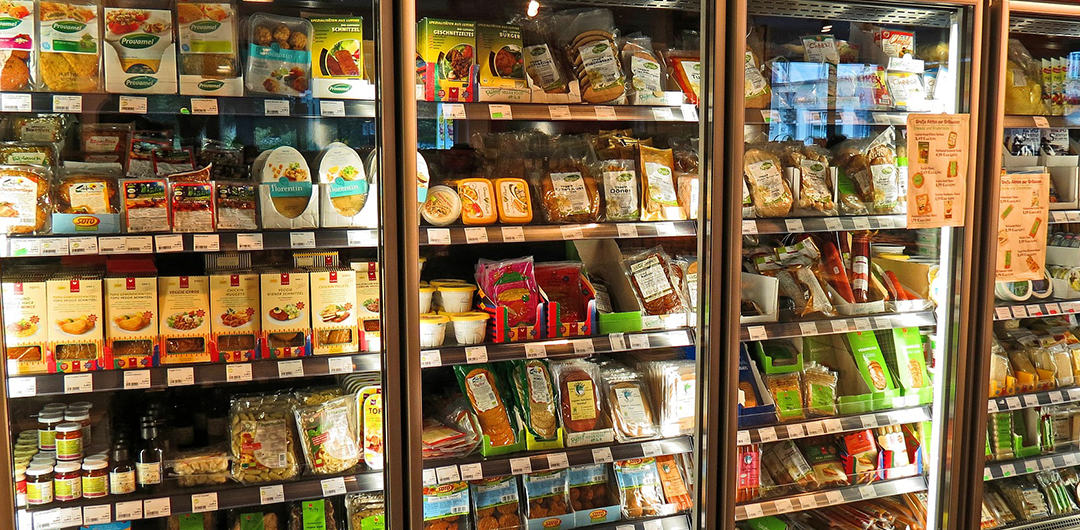
Walk down the frozen food aisle at any supermarket, and you’re sure to see a wide variety of options, from prepackaged pizzas, to individually wrapped burritos and even bags of vegetables. Without a doubt, heating up frozen food is much more convenient and less time-consuming for the average person than prepping and cooking a homemade meal. But there are also many hygiene and safety considerations during the production process before this food makes it to your plate. March is National Frozen Food Month, and in celebration, we’re highlighting the many ways in which our PureSteel® stainless steel metal belts are key in the safe production of these preserved provisions.

Challenges of Frozen Food Production

Consumers are increasingly embracing frozen food. In fact, according to a 2021 report released by the American Frozen Food Institute and the Food Industry Association, frozen foods brought in $65.1 billion in retail sales in 2020, which was a 21 percent increase compared to the previous year.

While the frozen food industry is changing, the challenges of the food production process have mostly stayed the same. According to an article featured in Food Manufacturing, an industry news website, keeping frozen food safe and following hygiene requirements can be a challenge. Temperatures during the freezing process range from anywhere between 25 degrees Celsius and -30 degrees Celsius, so equipment must be able to withstand extreme temperatures. Manufacturing equipment must be cleaned regularly, according to the article; however, some protective paint coatings on parts can deteriorate under corrosive washing conditions, allowing for potential contamination.

PureSteel® as a Sanitary Alternative

When using conveyor automation technologies, companies involved in food production, have found that stainless steel conveyor belts aid in the cooking, freezing and handling of edible products. Our durable PureSteel® stainless steel metal belts are widely used as part of sanitary food processing conveyors.

Compared to HTD or flat neoprene belts, PureSteel® metal belts do not generate particulate, which is ideal for food processing. Our belts can also withstand sustained exposure to extreme temperatures, making them perfect for frozen food manufacturing. And since a PureSteel® metal belt is a single element, it does not generate friction that requires lubrication, which helps to keep conveyor systems clean. Stainless steel metal belts are also resistant to corrosion and can be easily sanitized, either chemically or with intense steam.

Implement PureSteel® In Your Food Processing Operations

Would your frozen food processing operations benefit from the unique attributes of our PureSteel® stainless steel metal belts? Our highly trained and experienced engineers can design, develop and manufacture a complete stainless steel metal belt system to serve your needs. Reach out to us today if you have any questions or if you think your facility could benefit from our products.
PureSteel®: The Continuous Conveying Solution for 3D Printing

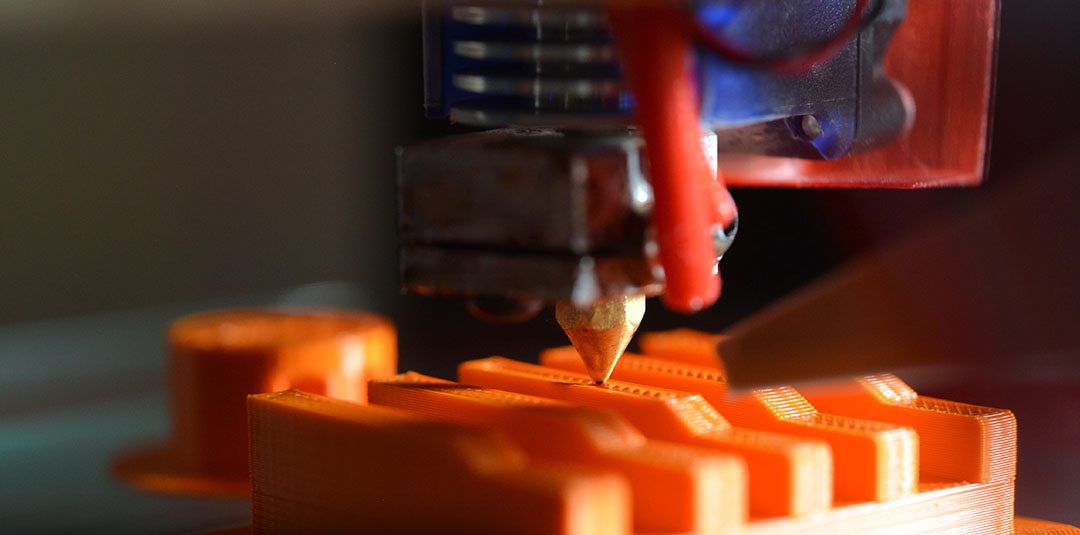
Close up of a 3D printer in actionWhile it has existed in some form for decades, 3D printing has emerged as an important and groundbreaking technology with near-limitless applications from manufacturing to medicine to aerospace and beyond. The process allows manufacturers to construct complex parts quickly and cost-effectively by creating a three-dimensional solid object from a digital file. In this blog, we’ll explain how our stainless steel belts are the perfect continuous conveying solution for 3D printing applications.

Belt’s Role in the 3D Printing Process

A 3D printed object is created by using an additive process, which lays down successive sheets of material onto a surface, one layer at a time. One of the major aspects to consider in this process is the surface that the material is being printed on top of—is it movable? Impermeable? Smooth? PureSteel® belts, pulleys and drive tapes are excellent for additive manufacturing applications for these exact reasons.

The moveability of a surface provides two separate benefits. First, it allows multiple items to be printed simultaneously, without operator action to remove completed printed parts from the machine. It also allows for the printing of larger parts: a section can be printed and then indexed by the belt to print the next section until the part is completed. Both of these benefits can reduce labor expenses while increasing profit margins. Additionally, our PureSteel® belts will not stretch, warp or break, and the smooth, impermeable surface provides easy release of the extruded product. Unlike other belt options, seamless belts will not curl or warp the printed object.

The Creation of the Infinite Surface

The Belt team has worked on several impressive 3D printing projects in the past, including the development of the White Knight 3D printer by NAK 3D Designs, which is owned and operated by Karl Brown. After developing a personal interest in 3D printing, Karl strove to create an infinite printing surface for seamlessly printing large objects, something not previously possible. After being told by several 3D printing belt specialists that fulfilling the specifications for his design was not possible, he contacted Belt Technologies.

As fellow 3D printing enthusiasts, our team provided Karl with engineering and design feedback to determine the appropriate thickness for the size of the belt to ensure smooth, long-lasting operation. The endless belt, combined with linear rails and several additional top-of-the-line pieces enables the White Knight 3D printer to do what no one else can: print an 8-foot-long sword in one complete piece.

How Can We Help You?

The team at Belt Technologies is thrilled to see the success of Karl’s design—can we do the same for you? We’ll work with your design and engineering teams to ensure your 3D printer components not only achieve optimal results but also maximize the lifespan of your equipment. Contact us today to learn more about our PureSteel® 3D printer drive tape, timing tape and pulley manufacturing capabilities

A History of Honoring Healers: Celebrating National Pharmacist Day

A woman speaks to a pharmacist who is holding and pointing to a pill bottle.In post-medieval Europe, laypeople and physicians sought out apothecaries for medicine. Responsible for formulating and selling their own drugs, these professionals were skilled chemists with a penchant for healing. Since then, apothecaries have evolved into the contemporary pharmacist—and while advancements in science have made medicines safer and more effective, today’s pharmacists share the same goals as their historical counterparts. January 12 marks National Pharmacist Day, and to celebrate our modern healers, we are going to highlight how our PureSteel® metal belts and conveyor systems help keep the medical and pharmaceutical manufacturing industries moving.
The Important Role of Pharmacists

While physicians prescribe us with the medicine we need to recover from an illness, it’s not their job to provide us with their suggested remedies. That’s why we head to our neighborhood pharmacy to pick up medicine—but pharmacists do much more than just hand over a drug.

Pharmacists are indeed responsible for providing medicine, but they are also experts in how to correctly store, preserve and take drugs. In the United States, pharmacists must earn a Doctor of Pharmacy degree, and are exceptional resources for people and physicians who are looking for advice on general health topics like diet, how drugs will interact with one another and the side effects of medicine. Pharmacists are crucial in providing information so that people don’t misuse prescription drugs—the manufacturing of which benefits heavily from hygienic metal belts.

Stainless Steel: Sanitary and Safe

In today’s day and age, manufacturing and material handling equipment in the medical and pharmaceutical industries are heavily regulated for safety purposes. Due to this, automated conveyor systems that are used to handle pharmaceutical materials must be completely sanitary, easy to clean and resistant to corrosion. Our PureSteel® metal belts live up to these requirements as they are made from stainless steel, a material known for its smooth and impermeable surface that does not hang on to microbes and bacteria.

Compared to other belt materials such as flat neoprene or HTD, our PureSteel® stainless steel belts do not generate particulate, making them ideal for cleanroom environments. Stainless steel is resistant to corrosion, meaning it can be sanitized by high-pressure steam, high-pressure wash or chemical cleaning. A lack of hidden gaps, recesses and crevices on stainless steel belts also makes them much easier to keep clean than other belt materials. PureSteel® metal belts are also extremely durable, as they are virtually non-stretchable. Combined with a protective chromium oxide surface layer, our belts are the longest-lasting and most hygienic surface for transporting medical equipment and pharmaceutical products.

PureSteel® Helps Make a Pharmacist’s Job Possible

When it comes to adhering to the strict regulations of the pharmaceutical and medical industries, there’s no better product to use in conveyor systems than PureSteel® metal belts. Contact us today to learn more about how we can help you implement our belts in your facility.

Reducing Illness through Hygienic Food Production

Ground beef on a metal conveyor beltHere’s a startling statistic: approximately 48 million people become sick from contaminated food each year, and an estimated 3,000 of those people die. But it’s not just a handful of illnesses at the source—there are actually more than 250 diseases that are spread through food alone. So what can be done to avoid this? The best way to prevent foodborne illnesses is through hygienic food production and preparation; a task perfectly tailored to Belt Technologies and our PureSteel® metal belts.

Worldwide Food Service Safety Month

December, which is recognized as Worldwide Food Service Safety Month, is the ideal time to emphasize the hygienic benefits of our stainless steel belts and conveyors. The observance is designed to remind the public that food safety is crucial, whether cooking at home or processing food that will be shipped to millions of people.

To emphasize the point, just a few months ago, the Centers for Disease Control and Prevention (CDC) issued a warning after more than 800 people contracted salmonella from onions across 37 states. Despite the extensive nature of the contamination, the source was linked to one processing facility—indicating a food processing issue. Events such as these are almost entirely avoidable with the right precautionary measures and sanitary clean-room production elements, including hygienic metal belts.

Keeping it Clean with Belt

So why are metal belts more hygienic than the competition? Firstly, stainless steel is resistant to bacteria, making belts produced from this material easy to clean and in compliance with even the strictest USDA requirements.

They also don’t generate particulate like flat neoprene or HTD alternatives, so they won’t create dust that could impact production in a cleanroom environment. Additionally, PureSteel® products don’t generate component friction and therefore do not need lubrication, reducing the amount of maintenance required and keeping the conveyor system clean.

PureSteel®: No Better Option for Food Safety

There’s no contest—PureSteel® belts are the most sanitary and reliable option on the market, perfect for ensuring a hygienic environment for any food-related application. Contact us today to learn how we can help you create a custom solution specifically for your facility.

Is It Time for an Upgrade? Discover the Benefits of Metal Conveyor Belts

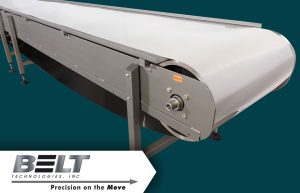
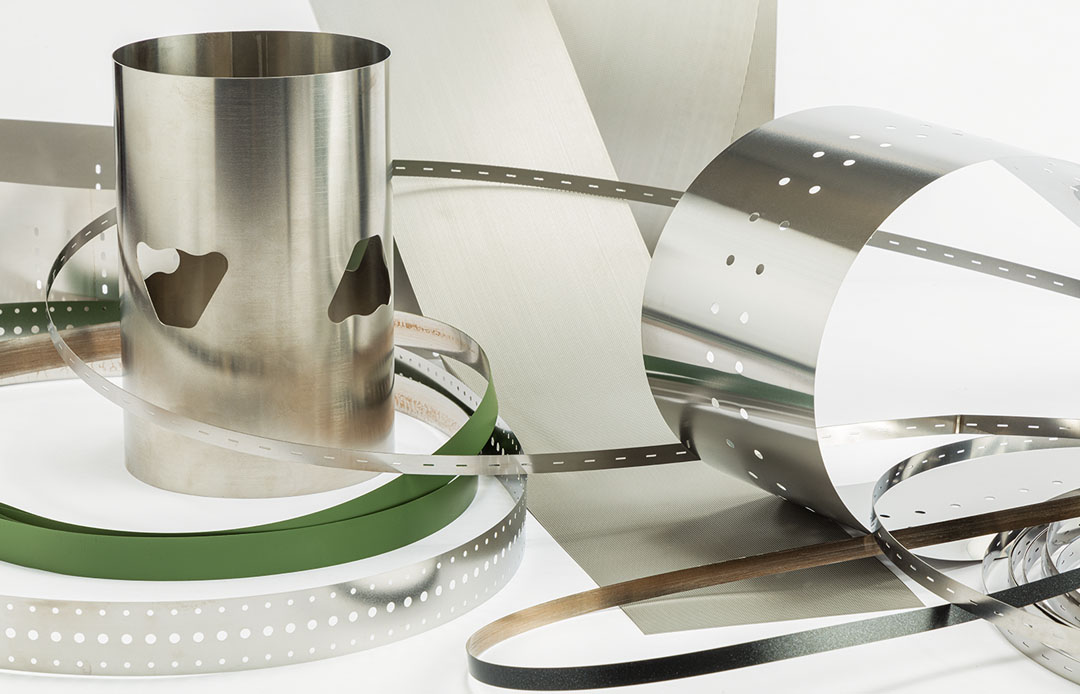
A Belt Technologies endless metal belt conveyorFrom food processing to robotics, many industries rely on conveyor systems to accomplish their manufacturing goals. Belts are such a key component to conveyor systems that even the material they are made from can make or break the accuracy, durability and cleanliness of the entire conveyor operation. So, what belt material is the best? Here, we look at the benefits of metal conveyor belts when compared to belts made from other materials, such as polyester, nylon or cotton—and discuss why it may be worth upgrading to metal belts in your facility.
Durability

When it comes to assessing durability and longevity, conveyor belts made from materials such as polyester, nylon and cotton are leagues behind those made from metal. Unlike the alternatives, our PureSteel® stainless steel endless metal belts can withstand extreme temperatures, vacuums and hostile environments.

Metal belts are not susceptible to the effects of long-term wear of fabric belts, such as stretching or warping. Engineers using metal belts can also choose from a variety of different alloys to achieve varying resistance to chemicals, temperatures and corrosion based on need. And as an added benefit in nearly every application, PureSteel® metal belts have a high strength-to-weight ratio.

Hygiene

The cleanliness of a conveyor system is important in many applications, especially those in the food, pharmaceutical and technology industries. Metal belts don’t generate particulates like flat neoprene or HTD belts do. They are especially useful for cleanroom environments as they do not create dust that could impact production. As a single element, our endless metal belts do not generate component friction and therefore do not need lubrication, reducing the amount of maintenance required and keeping the conveyor system clean. Our metal belts can also be sterilized in an autoclave.

Precision, Accuracy and More

We produce our metal conveyor belts with smooth edges and high-precision tolerances that other belts generally can’t achieve. PureSteel® metal belt conveyor systems also allow for accurate and repeatable results at enhanced speeds. While other belt types and chains often see the pulsation of chordal action during use, PureSteel® metal belts do not, resulting in smoother operations. Their good thermal and electrical conductivity discharge static electricity, making them extra useful in electronic component manufacturing.

Metal Belts in Vertical and Vacuum Conveyor Systems

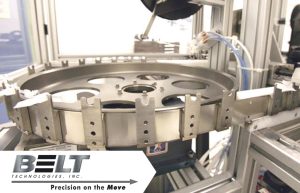
In addition to our horizontal conveyor systems, we offer vertical and vacuum conveyor systems that also use PureSteel® stainless steel belts, customizable with a wide variety of attachments and perforations. In vacuum conveyor systems, customizable perforated metal belts help allow for accurate part positioning and can be surface treated and coated for your specific needs.

Could you benefit from an upgrade to an endless metal belt conveyor system? If so, our team is ready to help you find the right belt and will create a custom solution specifically for your facility. Contact us to learn more.

How to Find the Right Belt for the Job

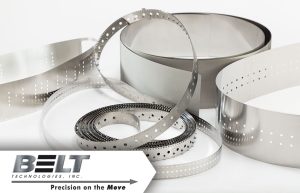
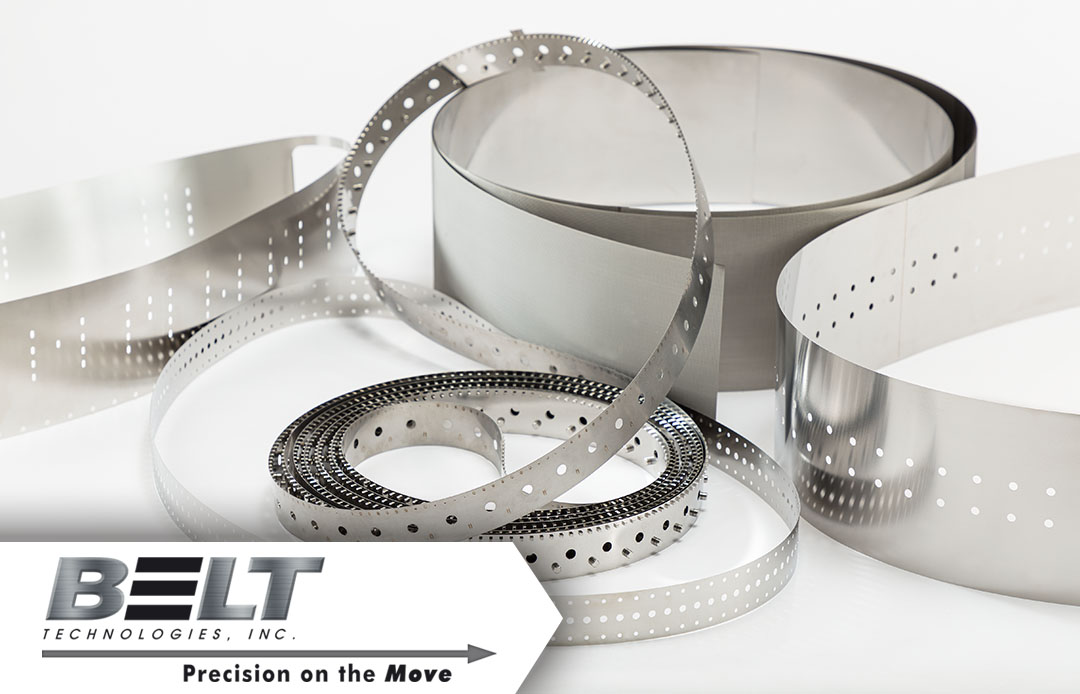
different metal belt optionsAre you looking for the right conveyor belt to meet the specific needs of your facility’s production? Look no further: in this blog, we’ll help you find the right belt for the job and explain why our PureSteel® metal belts provide all the necessary benefits to overcome your manufacturing challenges. Whether you use our drive tapes, timing belts or conveyor belts, our custom products and solutions will help to solve a wide range of automated manufacturing needs.

Meeting Your Needs

What matters most to you? Accuracy? Durability? Cleanroom compatibility? Choosing the solution that’s right for you isn’t always easy, so we’re outlining the specific strengths associated with some of our most popular products.

Endless belts: Our PureSteel® endless metal belts are created by welding together two ends of a metal strip, providing the same strength and versatility you can expect from all of our products. They meet strict sanitary requirements for food processing and pharmaceutical industries.

Perforated belts: Careful and exact placement of perforations, which drive the belt, ensures the precise and accurate positioning of products on its surface. Perforated belts are frequently used in vacuum conveying or for any industry in need of secure transportation, including solar panel production, medical device manufacturing, electronics manufacturing and more.

Timing belts and drive tapes: Designed to function with specialized timing pulleys to guarantee precise and cyclical transport of products. The perforations in these belts are created with a focus on timing elements and not motion generation, making them essential for carriage positioning, indexing and achieving accurate and repeatable results.

Multilayered drive tapes: Ideal for when strength and durability are necessary, but space is a concern. Multilayered drive tapes consist of multiple, stacked bands to increase belt strength while reducing pulley diameter, creating a perfect solution for heavy loads.

Friction drive belts: Belt motion is achieved from tension around two or more pulleys that drive the belt forward. Friction belts are the simplest, lowest cost solution in applications requiring relatively lower precision such as conveying, heat sealing, casting and imaging.

Other Materials Can’t Keep Up

No matter which of our solutions fits your specific production, our PureSteel® metal belts are way ahead of the competition. Unlike polyester, nylon or cotton belts with rubber or plastic covers, metal belts can withstand temperature extremes, vacuum conditions and caustic environments. They are not susceptible to stretching or warping and provide durability while maintaining lightweight flexibility for smooth, continuous operation. Additionally, metal belts do not require lubrication and do not generate particulates, making them cleanroom compatible and ideal for food and pharmaceutical processing.

Our engineers will work with you to find the right belt for the job and will create a custom solution tailored to your facility. Contact us to learn more.

The Unsung Heroes of Environmental Services Week

Clean hospital room for The Unsung Heroes of Environmental Services WeekOver the past year and a half, we have all witnessed incredible work by those in the medical field to keep us safe during the COVID-19 pandemic, and more recently during the resurgence of the virus with the Delta Variant. During Environmental Services Week, from September 12–18, we would like to recognize the professionals on the front lines who don’t usually receive their due: environmental service (EVS) technicians.
As a company that supports the medical industry with our PureSteel® stainless steel belts that operate in cleanroom environments, we want to take the time to acknowledge the critical efforts of EVS professionals while highlighting our supporting role.

What is an Environmental Service Professional?

EVS technicians are responsible for establishing and maintaining healthcare environments that are free of surface contamination and support safety, service and effective operations. They provide the necessary medical cleaning and disinfecting measures needed to keep every person in a given hospital or health care facility safe—and are the first defense against infection control. Without this work, doctors, surgeons, nurses and others wouldn’t be able to safely perform their critically important functions.

Stainless Steel Belts for the Medical and Pharmaceutical Industries

At Belt Technologies, we provide a similar service behind the scenes—creating PureSteel® stainless steel belts to carry medical and pharmaceutical equipment. Conveyor belts are an essential part of medical and pharmaceutical processing, so keeping them clean is a top priority. Our stainless steel belts have become a preferred choice, as they do not require lubrication and do not outgas, eliminating the risk of contamination. They also do not fray or generate particulates, like other belt materials, making them essential in cleanroom situations.

Our stainless steel conveyor systems are designed for easy access, providing savings in both facility maintenance and cleaning labor. Additionally, we can custom design and build them with your application in mind. If you are seeking a clean, customized conveyor system for your pharmaceutical or medical equipment processing needs, contact the experts at Belt Technologies today.

And remember, especially this week, if you know any EVS professionals,  thank them for their work behind the scenes—none of the amazing progress during this pandemic would have been possible without them.

The Top Five Reasons Why Metal Belts Are Better than the Competition

Picture of the number five for blog Five Reasons Why Metal Belts Are BetterWith sophisticated technology and innovative manufacturing processes, we have produced metal conveyors, timing belts and pulleys for more than 50 years. Our superior PureSteel® products are used in a wide variety of industries and are trusted to consistently outperform the competition. With that in mind, here are the top five reasons why metal belts are better than traditional belt alternatives.


1) Accuracy and Repeatability

Our steel belt technology offers unique designs which will guarantee zero slip and absolute precision, which is especially notable in our drive tapes and timing belts. Stainless steel drive tapes substantially reduce chordal vibration, motion loss and backlash that can often result in inaccurate positioning of robotic motion profiles.

When it comes to metal timing belts, our models can be fabricated with a pitch accuracy of ±0.0005 inches, which is understandably valuable in designing, indexing, positioning or processing equipment.

2) Cleanliness

Unlike other belting materials, metal belts don’t generate dust or particulates that could spoil or corrupt food or pharmaceutical products. Stainless steel’s nonporous surface resists contamination, a benefit for applications where food bacteria or other germs could gather in grooves, marks or scratches. Additionally, our PureSteel® belts do not require lubricants that would introduce foreign substances into a clean environment.

3) Durability

Whether it’s extreme temperatures or unforgiving environments, our metal belts can be engineered to handle virtually anything you can throw at them. Stainless steel has a low thermal coefficient of expansion, enabling it to better resist temperature extremes, and is also corrosion resistant and vacuum compatible. Inferior materials such as plastic, rubber or cloth will warp, burn or fall apart at significantly lower temperatures, and shrink or become brittle in extreme cold. Our Sales Engineers can help you select the correct alloy and belt thickness to suit the specific requirements of your operation.

4) Strength

Stainless steel has a tensile strength ranging from of 180 to 300 KPSI (thousand pound-force per square inch), depending on the alloy and temper of the metal. That means relatively thin and lightweight belts can be designed to handle the stresses of almost any application. The high strength and low weight let more of the conveyor’s input horsepower be devoted to moving the product and not the belt, which boosts efficiency and reduces operating expenses. Simply put, metal belts are stronger and more efficient than the alternatives.

 5) Customization

 If you have a problem, we have a customized solution fabricated to meet your exact specifications. We’ve perfected the engineering of our PureSteel® belts, so you can trust us to design a unique belt to meet your exact needs. This includes a broad array of metal alloys, belt width and thickness combinations, perforation, patterns, coatings and attachments.

Do you think your operation could benefit from a stainless steel conveyor system? Contact us today, so we can start planning and providing the custom solutions you need.

How Can We Help You? It’s Get to Know Your Customers Day

Picture of two men shaking hands for blog on get to know your customers dayHello, we’re Belt Technologies; how can we help you? July 15 is Get to Know Your Customers Day, a quarterly observance held in January, April, July and October—but we like to know our customers every day of the year, understanding and exceeding your expectations on each individual project. In this blog, we’re highlighting how we’ve done just that for a few of our previous customers.
Understanding Needs

Our team will always go above and beyond to understand and ensure your needs are met, providing solutions for the problems you face. For example, a U.S. medical manufacturer creating DNA test kits required exponentially improved productivity with reduced operating costs. Our engineers put their heads together and created a belt that could run four separate products on the same line, increasing profits and helping propel the medical industry forward. After that success, the company turned to us to assist in the production of COVID-19 testing kits during the height of the pandemic.

Building Relationships One Belt at a Time

We also understand the importance of building relationships, which drives our dedication to provide exemplary, personalized service to our individual customers. We were recently contacted by a group of students at California State University Long Beach for help with a project in their Senior Design class. The students were creating a hand-crank tamale maker and were in need of a sanitary conveyor solution. Recognizing their entrepreneurial spirit, we helped them with the design of a perforated endless belt.

Customizing Solutions

If you have a problem, we have a customized solution. Recently, we worked with a client attempting to move their projects toward commercialization in the robotics field. They required a system that could lift and rotate very heavy loads, which they needed to achieve in a way that would not change the diameter size of their pulley. They turned to us for a custom solution, and we gave them one: a multilayered belt that allowed for much higher torque than a traditional belt with a pulley of the same size.

Discover How We Can Help You

So, as a potential customer, we want to know: how can we help you? Contact us today, so we can get to know you, your operation and your goals—and start planning and providing the solutions you need.

Top 5 Benefits of Vertical Conveyors

Our vertical conveyor systems are not to be confused with elevator, spiral or reciprocating systems. No—our unique take on a vertical conveyor turns a horizontal conveyor on its side, positioning the conveyor belt surface vertically. This unique belt-positioning brings with it a number of advantages. In this blog, we’ll explore the top 5 benefits of vertical conveyors and share some design considerations.

Benefit 1: Increased Productivity

top 5 benefits of vertical conveyorsBy using both sides of the conveyor belt, the output is doubled. This is especially helpful when:

  • Producing or processing medical devices
  • Plating and/or coating products
  • Creatively transporting uniquely shaped products

Despite the extra output, our vertical conveyors do not require any extra floor space. Compact and efficient, they truly are a win-win for a company looking for a unique solution to increase profits, offset an investment of another type of equipment—or both.

Benefit 2: Cost-Effectiveness

Despite doubling output, operational costs to run a vertical conveyor are the same as traditional, horizontal conveyors. In fact, in some applications, costs are decreased with the vertical option, especially if multiple products are being transported at a time. (See Benefit 3.)

Benefit 3: Flexibility

A key benefit of vertical conveyor systems is their flexibility—but it’s two-fold.

  • Vertical conveyors are able to transport more than one type of product at a time. This helps to reduce manpower needed on an assembly line to work on changeovers or reconfigurations on a shop floor.
  • In addition, metal belts and conveyor systems have a high resistance to both chemical corrosion and extreme temperatures, making them appropriate for use across a wide variety of industries.

Benefit 4: Cleanliness

The medical and food industries are but two that benefit from vertical conveyors.

  • Metal vertical conveyor systems are easy to clean and resistant to bacterial adhesion. This keeps medical tools and products hygienic and food products safe to consume.
  • Likewise, with minimal touchpoints, medical or food products are less likely to accumulate debris, helping customers from both industries meet stringent safety standards.
  • And because they do not require any lubricants, the medical or food items being transported are not susceptible to contamination.

You can hear more about the benefits a vertical conveyor offered one of our medical customers in this case study. Notably, the system has been running flawlessly since 1999 and contributed to the production of COVID-19 test kits during the height of the pandemic.

Benefit 5: Customization Options

No matter your industry or application, our experts can customize a vertical conveyor to suit your budget and meet your objectives. Choose from:

  • Surface coatings and treatments to optimize product handling
  • Custom perforations to aid in product tracking and transport
  • Attachment integration
  • And more

Building a vertical conveyor requires an innovative approach to engineering a solution. Our design experts give special attention to the relationship between the belt and its pulleys to guarantee the belt will not slip during normal operation. We’ve successfully developed methods to ensure belt alignment for numerous vertical systems and are prepared to assist with this important design element for your application. Ready to start designing? Contact us today.