Belt Technologies Logo

Helping Our Heroes during National Hospital Week 2021

This past year has been difficult for everyone, but that’s especially true for medical workers who selflessly put their health on the line during the height of the COVID-19 pandemic to ensure the health and safety of others. National Hospital Week 2021 runs from May 9 through May 15; it’s a time to thank all of the health care employees who have worked tirelessly to help us all. It also provides a platform for us to highlight the ways our metal belts continue to help support the industry behind the scenes.

Just What the Doctor Ordered
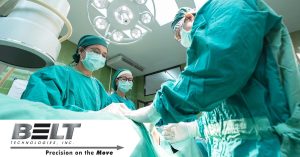
Picture of surgeons in a hospital for blog about National Hospital Week 2021Medical equipment is held to a higher safety standard than other products—the materials used to process, handle and transport it need to be bacteria resistant and easy to clean. Additionally, surgical robotics rely on extreme precision and accuracy to perform their delicate functions. Medical manufacturers often turn to Belt Technologies because our stainless steel belts embody all of these qualities.

Our belts have:

  • A smooth and impermeable surface to prevent the housing of microbes or bacteria, which can thrive in other belt materials like rubber or plastic.
  • High resistance to corrosion, which allows the belts to be sanitized with high-pressure steam, high-pressure wash and chemical cleaning.
  • High heat resistance, allowing them to be thoroughly sterilized.
  • The ability to be designed for zero-backlash with high life cycle requirements in surgical robotics applications.

It is due to these aspects, and due to our reputation for expert support from concept to completion, that medical personnel turn to Belt in the manufacturing process for medical equipment. Our belts provide a minimal risk of contamination and maximum compliance with existing regulations.

Success Is in Our DNA

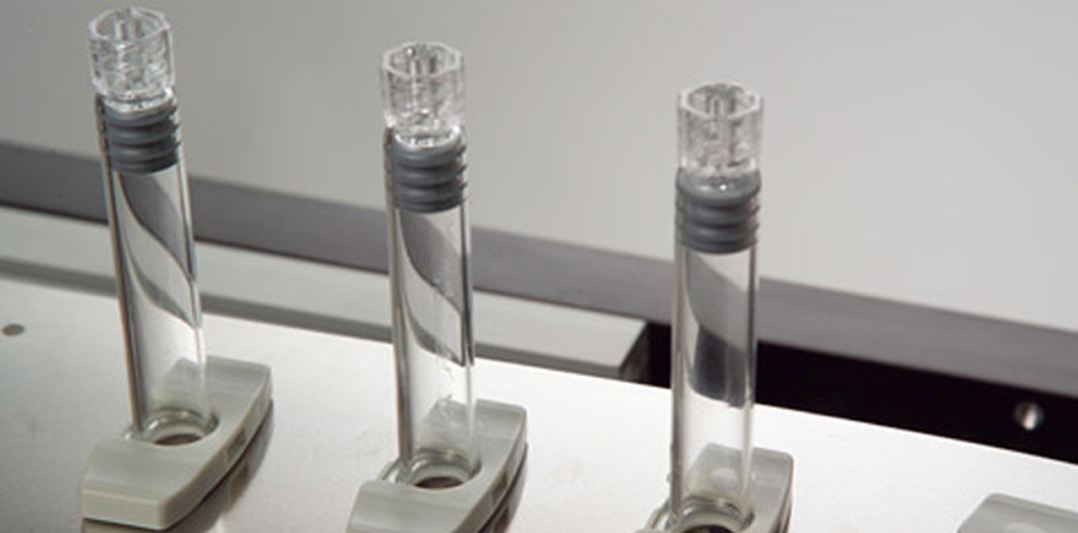
Prior to the COVID-19 pandemic, a molecular diagnostics company reached out to us to improve their production for revolutionary DNA analysis technology. The company was producing 400 disposable reaction tubes per day for DNA test kits and the need arose to produce more. The company opted for a metal belt conveyor system with both the pulleys and belts supplied from Belt Technologies. We improved their process times while simultaneously altering their configuration to allow for four separate products to be run on the same line—which led to increased output—18 million units per year—not to mention increased profits and impressive strides in the medical field.

One success led to another and the company chose us to assist in the production of COVID-19 test kits at the height of the pandemic. We were happy to do our part to supply medical professionals with the tools they need to do their jobs, and we would be happy to do the same for you. Contact us if you think we can help your company with a personalized solution. And remember to take some time this week to thank any of the health care professionals in your life.

Celebrate National Robotics Week

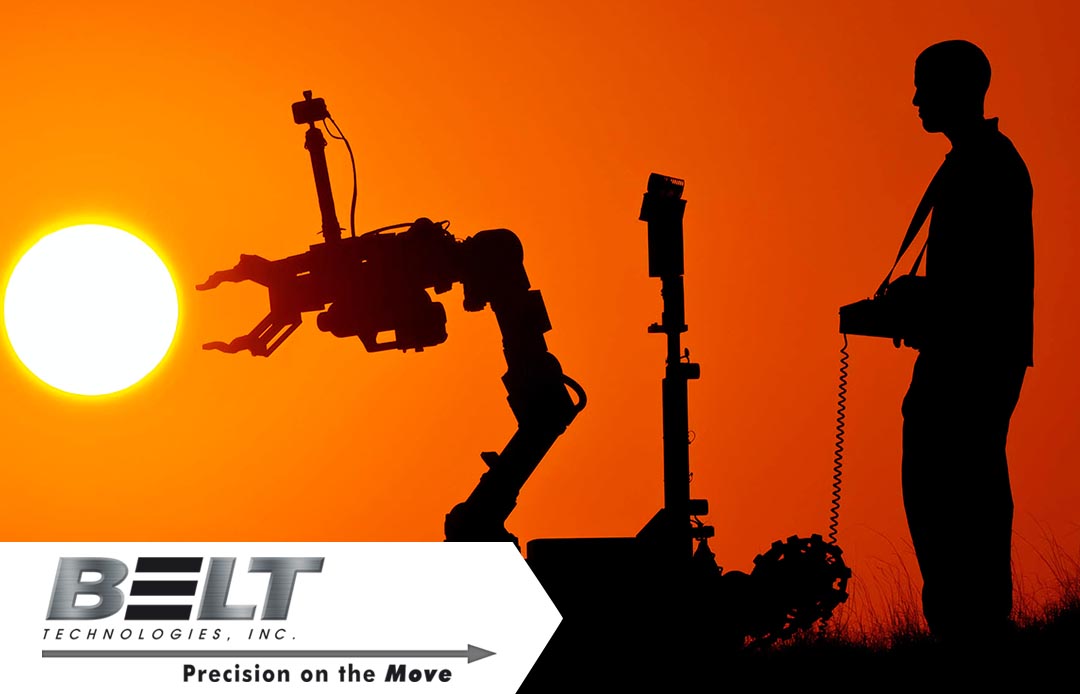
There are few things that can really spark a child’s imagination the way that robots can—from R2D2 to the Mars 2020 Perseverance Rover. That’s where National Robotics Week comes in. Running from April 3 through April 11, the mission of the observance week is to inspire students to explore science, technology, engineering and mathematics (STEM) related fields, including careers in robotics. We proudly support this goal and will continue to celebrate National Robotics Week as we manufacture belts that propel the industry forward.

Accuracy and Repeatability

The success of the robotics field is based on the ability to provide actions that are both highly accurate and consistently repeatable. That description perfectly sums up all of our non-stretchable, stainless steel products, but especially our drive tapes and timing belts which are able to perform with near-zero backlash, both of which have been implemented in the following:

  • Robotic arms
  • Carriage positioning
  • 3D printers
  • LCD production
  • Optical element drives

Precision on the “Mooove”

 At Belt Technologies, we can work with you to develop a unique solution for your robotics application. We were previously approached by a company producing automated robotic equipment for the dairy industry. The customer’s equipment included a robotic arm that controlled milking attachments designed to attach to a cow’s udder.

A metal band on the arm was experiencing a high rate of failure due to poor attachment points and a high level of torque. Our engineers worked with the customer to remove the high bending loads and extend the lifespan of the belt.

How Can We Help You?

Belt Technologies’ drive tapes also empower a large number of robotic applications in the medical, semiconductor and industrial fields. Our stainless steel drive tapes and timing belts can also meet the demanding needs of your application, and, if necessary, many of our engineers have the knowledge and experience to help with your customized design. Contact us today to find out how we can help with your robotics or automation system. And remember, during National Robotics Week, we’re recognizing the amazing work that continues to be done in this quickly growing industry, and we’re proud of the part we’ve been able to play to help it move forward. We hope our solutions help to inspire future engineers into STEM careers, including robotics.

Belt Technologies Offers Food Processing Solutions

Today is National Frozen Food Day, a time to recognize how advances in food preservation have improved our modern lives. From ice cream to pizza to meat, we understand the importance of food preservation and think it’s a perfect time to tout our ongoing work in food processing solutions.

Metal Belts and Food Processing

Stainless steel metal conveyor belts are excellent for cooking, freezing and handling edible products, offering a variety of benefits over belts made out of traditional materials. Metal belts do not require lubrication, meaning that there is no risk of chemicals tainting the food. Additionally, stainless steel is resistant to bacteria, making belts produced from this material easy to clean and in conformance of even the strictest USDA requirements. Due to the nature of stainless steel, there is also no concern of fraying, which can happen with other materials, leading to particulates contaminating food products.

The most important aspect to highlight on National Frozen Food Day is the resistance metal belts have to extreme temperatures. Stainless steel can withstand cooking and freezing processes that food products are frequently subjected to during manufacturing—meaning that facilities using metal belts on their production line can more easily automate their processes and handle the food less throughout them—just adding to hygiene and overall efficiency.

Frozen Food Solutions Offered by Belt

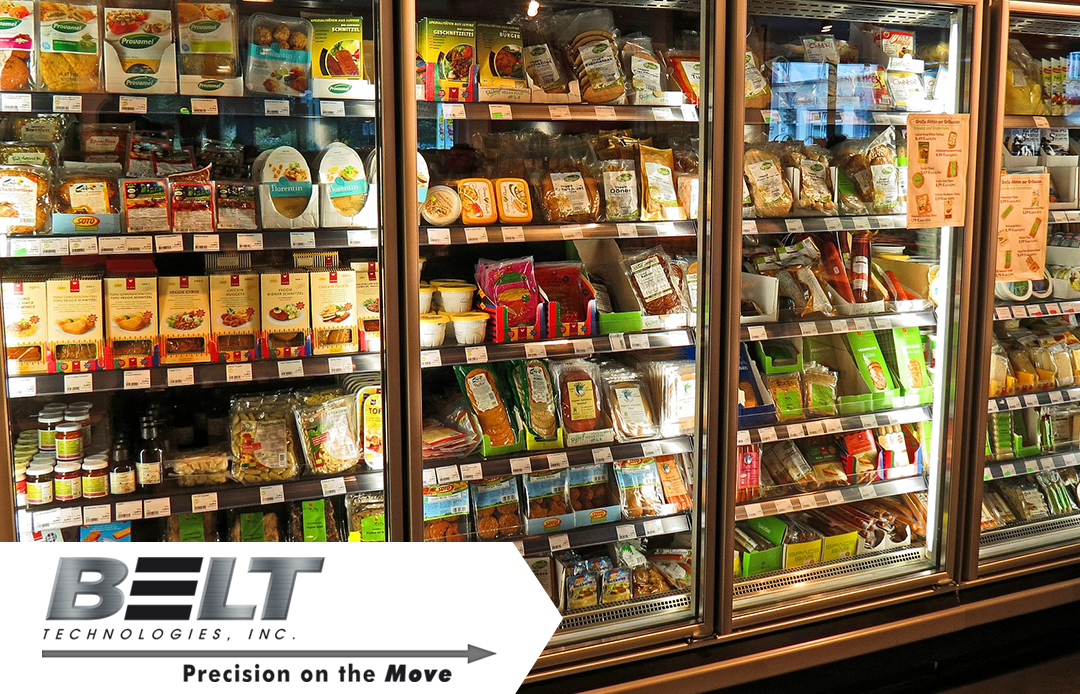
Picture of a frozen food section for blog about Food Processing SolutionsAs an example, we helped a customer design a belt that could operate in temperatures as low as -40°F. The customer’s setup needed to compress a meat product at high speeds between a freezing drum and the belt. We developed a combined solution that included a solid metal belt and a piano hinge termination to make it easier to clean and load the machine.

In another instance, a company specializing in gourmet butter products was in need of a belt that would operate in temperatures under -150°F. They were originally working with a standard Teflon-coated fabric belt but due to the nature of their product, constant cleaning was a necessity. The traditional belts needed to be replaced every 3–4 weeks due to constant abrasion from the cleaning process. When the facility switched to our stainless steel belts, the time between operational shutdown was increased to 6–12 weeks. The company was so satisfied they also bought a metal belt for a second machine.

How We Can Help with Your Application

Stainless steel belts are the most sanitary and reliable option on the market, perfect for any food application. In honor of National Frozen Food Day, enjoy your favorite frozen meal and contact us to learn how we can help you create a customized food processing solution.

Three Fun Facts to Celebrate National Engineers Week

From roads to computers to metal conveyor belts—engineers create and design the products that make our world run. Now, it’s time to recognize them as part of National Engineers Week. At Belt Technologies, we’re celebrating the engineers involved in our work with three fun facts about engineering.

What is National Engineers Week?

A little history before we get to the facts: engineering week (EWeek) was founded by the National Society of Professional Engineers 70 years ago. Its goal has been dedicated to ensuring a diverse and well-educated future engineering workforce by stressing the importance of STEM (science, technology, engineering and math) literacy. This is something we absolutely support and practice through the educational opportunities we offer our employees, and the interns and students we’ve mentored.

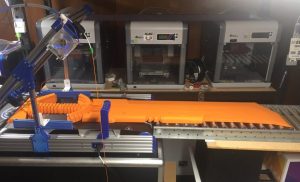
Most recently, we worked with a group of students at California State University to complete a final project in a senior design class. We were pleased to learn of how the team was able to integrate a PureSteel TM perforated endless belt into the design of a hand crank tamale maker and applaud their entrepreneurial spirit and (tasty) results.

This year, we hope you’ll join us in celebrating future engineers during National Engineers Week from Sunday, February 21 to Saturday, February 27.

Picture of the number 3 made out of a chain to accompany blog on National Engineers Week.Engineering Fun Facts

1) The Nation’s First Engineer

Do you know who the first engineer in the United States was? Believe it or not, it was our first President, George Washington! It’s no coincidence that National Engineers Week is celebrated in conjunction with his birthday—February 22.

Before he led the United States and even before he was a general in the Revolutionary War, Washington was a land surveyor in Virginia. In his work, he mapped out boundaries, established property lines and developed plans for straight roads through rough terrain.

Much like George Washington, we could be considered a pioneer by some with the introduction of our “revolutionary” products.

2) The Ferris Wheel

It’s not probably something you think about while at an amusement park, but the Ferris Wheel is actually considered one of the greatest engineering wonders in the world—and the story behind it is equally fascinating. In 1893, the city of Chicago won the right to hold the World’s Fair. At the previous exposition in 1889, the city of Paris unveiled the Eiffel Tower, so the expectations were high. Engineer George W. Ferris unveiled the original massive wheel which was supported by two 140-foot steel towers and connected by a 45-foot axle. It was the largest single piece of forged steel ever created at the time. The wheel was comprised of 36 separate gondolas which were capable of holding up to 60 people each, for a grand total capacity of 2,160 passengers!

The sheer size and capacity stretched the limits of what was considered possible. We are doing the same with our metal belts, pushing the limits of durability and tolerance. Of special note are our multi-layered belts. Offering even greater strength and durability than our single-layer variants, our multi-layered belts are manufactured by precisely cutting equal lengths of metal and welding each together for a smooth and strong finish. An engineering marvel like the Ferris wheel? We’d say so.

3) The Hoover Dam was Engineered with Unproven Techniques

One of the most famous civil engineering marvels in the world was created with techniques that were untested and unproven to work. A massive concrete structure like the dam had never been attempted before. The Hoover Dam contains so much concrete that it had to be poured block by block utilizing a complicated cooling system.

Completed in 1935, the dam still generates 4 billion kilowatt-hours of hydroelectric power each year. Much like the Hoover Dam, we are breaking new ground with the custom and off-the-shelf solutions we provide for use in robotics and industrial automation applications.

How Can Our Engineers Help You?

National Engineers Week is a great time to celebrate all of this history, but it’s also a time for us to honor the engineers who make our work at Belt Technologies possible. Our engineers will work with you to design and customize a metal belt that fits your facility’s needs. Contact us for more information on how engineers can increase your efficiency and save you money.

Also, remember to recognize the engineers in your life and make sure you wish them a happy National Engineers Week!


Improve Your Productivity in 2021

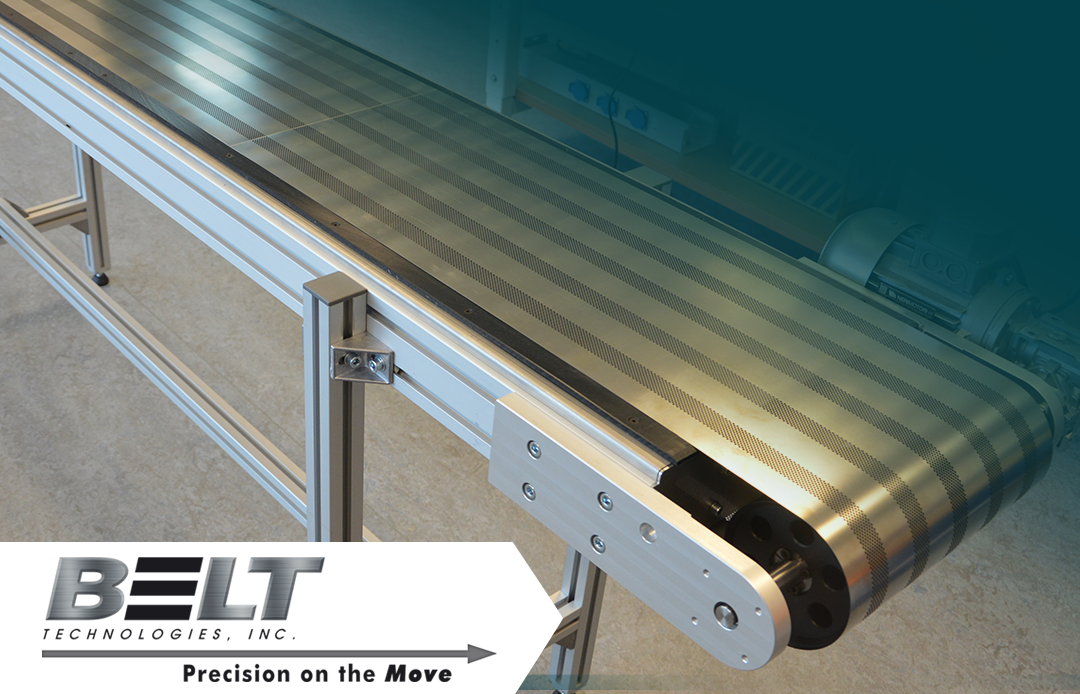
Picture of Belt Technologies stainless steel belt to accompany blog to improve your productivity in 2021The new year is finally here, have you made a New Year’s resolution yet? We’re not talking about slimming down or getting to the gym, we’re talking about your business. It’s the perfect time to improve your productivity in 2021, and our line of stainless steel belts, conveyors and pulleys can help you achieve that goal.
Identify the Issues

More productive equipment means more profit, so it’s important to identify any issues you may want to make as soon as possible. Some common improvements include:

  • Using equipment you can trust
  • Reducing cleaning/maintenance time
  • Trimming your “waste”

Switching to our stainless steel products is a solution that can help you fix all these issues—they’re more durable, more precise, and more sanitary than other options.

How Will Our Stainless Steel Belts Help?

Durable: Belt Technologies, Inc. has been producing metal conveyor belts, timing belts, and pulleys for more than five decades. We provide equipment with a proven track record of durability. Metal belts:

  • Can withstand extreme temperatures
  • Resist chemicals, humidity and corrosion
  • Require no lubrication which reduces maintenance

Precise: Metal belts are virtually nonstretchable when compared to other belt types. Because of this, they are ideal for situations of precision positioning.

Sanitary: Unlike flat neoprene belts, metal belts don’t release particles into the air, making them optimal for food and pharmaceutical processing. They cut out the “waste” released into the air, and unlike neoprene belts, they can be sterilized in an autoclave.

Now is the Best Time to Upgrade

Our metal belts have been trusted in a wide variety of industries for more than 50 years, including:

It doesn’t matter what field you’re in, the new year is the perfect time to consider upgrading your systems to improve your productivity in 2021. Contact the experts at Belt Technologies for more information on how we can help.

Celebrating 3D Printing Day

Belt Technologies is celebrating 3D printing day and the many ways our company has advanced the industry.

Every year on December 3 (3D) we celebrate 3D Printing Day. We hope we can convince you to join us in celebrating 3D Printing Day, too, by sharing some interesting things that have been 3D printed as well as some ways we have been fortunate to advance the industry.

What exactly is 3D printing?

To construct complex parts quickly and cost effectively, many manufacturers elect to use 3D printers, machines capable of producing three dimensional parts by way of additive manufacturing. This entails using a digital file to guide a machine to lay down successive layers of material, often plastic, to form a solid end product.

Infinite printing possibilities?

While the concept of 3D printing is still relatively new, a recent viral story helped it gain some mainstream understanding and acceptance. Earlier this year, Robert Downey, Jr. as Iron Man, delivered a 3D printed prosthetic arm to a grateful recipient. You can learn about his story here.

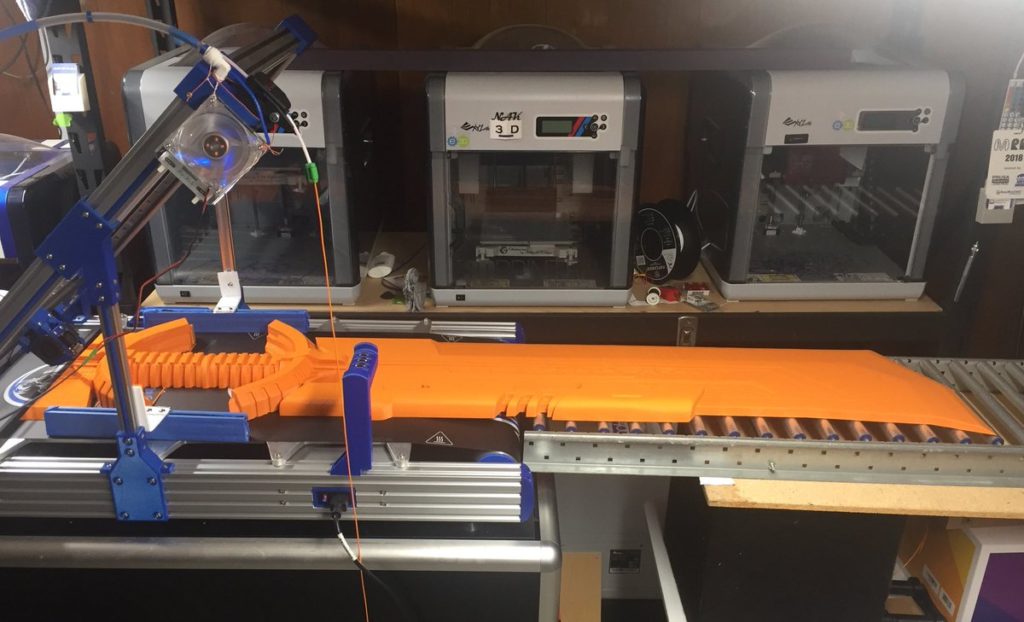
This touching story represents just one example of the infinite possibilities for 3D printing, including those produced by our customers. For instance, we helped one customer, a leading manufacturer of large scale industrial 3D printing equipment, to produce prototype designs for boat hulls, helicopter rotors and even a submarine nose cone. We also have the pleasure of working with a number of small independent 3D printers producing a myriad array of parts and even an 8-foot-long plastic sword. In each case, the mobility and precision provided by an endless stainless steel belt that can also stand up to the high heat generated by the printing process was critical to the performance of these machines.

How do we help?

We are regularly contacted by 3D printer OEMs to develop and fabricate parts of all shapes and sizes that aid in the 3D printing process. Why?

  • Our stainless steel belts improve printing quality and accuracy during product production.
  • Stainless steel has a high resistance to temperature extremes that can be achieved as printer heads move throughout applications and across sintering materials. Using our products means that production never has to slow down.
  • Stainless steel is also highly durable and resistant to chemical corrosion and physical impact, other considerations of professionals involved in 3D printing.
  • Our stainless steel belts, drive tapes and timing tapes provide a precisely movable base to print on. This allows for multiple items to be printed simultaneously, without operator action to remove completed printed parts from the machine, making our products a perfect addition to busy assembly lines.
  • They also allow for the printing of larger parts: a section can be printed and then indexed by the belt to print the next section until the part is completed: our team can produce drive tapes as large as 35” for industrial-level equipment and as small as 0.1” for more specialty products and uses.
  • Pulleys also play an essential part in performance and reliability by controlling belt systems and providing optimal belt tension and motion control.

Above all else, our products improve efficiencies and runtimes of 3D printing projects, helping to reduce labor expenses while increasing profit margins for companies large and small. Interested in learning more? Contact the experts at Belt Technologies for more information about our 3D printer drive tape, timing tape and pulley manufacturing capabilities.

Why American Made Matters

why American made mattersDid you know that, for every $1.00 spent in manufacturing, another $2.74 is added to the economy?1 Or that for every one worker in manufacturing, five more are hired elsewhere? 1 If you ask us, these are compelling enough reasons to do business with American companies, but we’re here to offer even more. If you’ve been here before, you may already know that we hail from the Bay State, and all of our products are produced in America. Throughout this blog, we’ll discuss why American made matters and share a bit more about our company.

Ethics

Manufacturing facilities in the United States are highly regulated to ensure worker safety, compliance with labor laws and the issuance of fair wages. We are happy to report that the majority of our workforce has grown with us, with 25% working for us for 20 years or more.  We are also a diverse team, with women and minorities representing 44% of our U.S. workforce. We’d like to believe that it’s our company culture and offerings that contribute to this longevity. If you’re interested in joining our team, available positions are posted here.

Quality

American manufacturers take pride in producing high-quality, durable products made from  the finest raw materials and produced by skilled craftsmen overseen by experienced engineers and manufacturing managers. We are no exception. All of our metal belts undergo stringent quality inspections, and our results are precise: we are able to fabricate metal belts with a station-to-station pitch accuracy of ±0.0005”.

Sustainability

We are conscious of our company’s environmental impact, and for that reason, we source materials locally whenever possible, and employ a company recycling program. And, unlike alternative belts like neoprene or fabric, metal is naturally occurring and able to be recycled, making our products a more sustainable option.

Pride

Belt Technologies is proud to be an American manufacturer of metal belts, timing belts, metal drive tapes and custom metal belt conveyor systems. When you do business with our company, we hope you’ll take pride in your decision to partner with us.


1National Association of Manufacturers (NAM) calculations using 2018 IMPLAN data

Manufacturing Precision on the Move

Manufacturing Precision: Celebrating National Manufacturing DayCelebrating National Manufacturing Day

The first Friday of October is National Manufacturing Day, which coincidentally is also recognized as National Apple Betty Day. In fact, the month of October is riddled with national food observance days. Having a hand in manufacturing precision and, specifically, contributing to the food industry, we thought we’d meet in the middle with this blog touching upon both areas of our expertise.

First, the People and the Process

Members of our manufacturing team possess backgrounds in industrial engineering, mechanical engineering and welding technology. Together, they manufacture our products using sophisticated technology and innovative processes. Drawing from experience, and considering client needs and desired results, they work alongside our customers to create metal belts, belt components and complete conveyor systems that are fabricated to meet exact specifications.

With skill and pride to ensure exact measurements that will maximize product throughput and quality, we live up to our tagline: “precision on the move.”

Manufacturing for the Food Industry

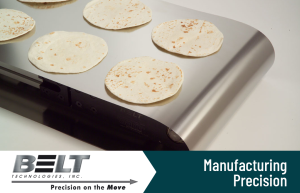
It may surprise you to learn that our metal belts can easily transition from a cooking stage to a freezing stage in a food-handling process. This makes them ideal for use in almost every food-handling industry application, including fast food, dairy, frozen foods, seafood and others. This video details how our products are used in these types of applications.

In fact, the properties of our belts make them appropriate in the following ways, and for the following food observation days:

  • October 11, National Sausage Pizza Day: Metal belts have a longer lifespan than their plastic counterparts, helping companies “meat” production quotas without fail.
  • October 19, National Seafood Bisque Day: Wire, mesh, fabric or rubber belts can deteriorate and generate particulates that can get into the food. This makes our metal belts a better “catch.”
  • October 25, National Greasy Foods Day: Our belts do not outgas or require any greasy lubrication, so there’s no risk that the food’s flavor or quality will be impacted during transport. This is welcome news on “National Greasy Foods Day” or any day.

Could You Benefit from Our Manufacturing?

Are you a member of the food industry who could benefit from our stainless steel solutions? Or are you interested in learning how our manufacturing precision could benefit your organization or application? Give us a call.

Celebrating Surgical Technologists Week

Surgical Technologists WeekLending a Hand to a Growing Profession

Demands during World War II necessitated the creation of a new profession: surgical technologist. Charged with the preparation of operating rooms, surgical technologists sterilize equipment and help surgeons and patients before, during and after procedures. Forty-four years later, the third week in September was proclaimed Surgical Technologists Week by the Association of Surgical Technologists Board of Directors to acknowledge the important role these individuals play. Through this blog, we shine light on the profession, the observation, and the role our parts play in the medical industry.

A Growing Profession

The U.S. Bureau of Labor Statistics reports over 100,000 surgical technologists in the field today. With an aging population and projected increased need for surgery, the profession is expected to grow exponentially—faster than the average of all other occupations through the year 2028.

This growing need for surgical care comes with a corresponding need for surgical instruments, and our company capably lends a hand to medical manufacturers.

Manufacturing Rx

Microbes and bacteria are no match for stainless steel. The smooth, impermeable surface of our belts make them an ideal solution for companies producing sterile equipment like test kits or equipment for the medical industry.

When surgical technicians prepare an operating room, they must do so ensuring that everything in it—including the surgeon, the patient, and instruments to be used to perform the procedure—are sterile. When our belts and conveyor systems are used in the production of such instruments, they contribute to the necessary sterility and help to mitigate the spread of germs.

Sterile. Stat.

To maintain health and safety standards, medical devices are understandably heavily regulated. Our products make the grade. Resistant to corrosion, they can withstand rigorous and frequent cleaning. This makes our metal belts an ideal, long-lasting and sterile solution to transport the equipment and pharmaceutical products being manufactured.

If a particularly small or intricate part is being produced, our engineers may suggest custom belt perforations or added coatings to safely house and carry them.

No Complications

If you’re interested in learning more about our company or products, we’d welcome the opportunity to speak with you over the phone. Or, if you’re looking for a second opinion, read some real-life case studies from customers in the medical industry.

August 17 is Massachusetts Day

Made in MassachusettsPlease join us in celebrating everything the Bay State has to offer, including metal belts, of course!

Today is National Massachusetts Day! Let’s take a moment to acknowledge and celebrate some of the wonderful products that have come out of our home state, the Bay State. If you’re from the Northeast, these might make you even prouder to have hailed from here. If you’re not from Massachusetts, we still think you’ll find these fast facts interesting.

Precision on the Move

A resident of Woburn at the time of his discovery, Charles Goodyear is credited with developing the process of rubber vulcanization—a process used in the production of rubber tires. His story is one of strife and perseverance, but his hard work paid off. Today, there is one rubber tree for every two humans on Earth, and the trees’ cultivation helps to create, of course, tires, and other everyday items we may overlook or take for granted: hot water bottles, boots and dishwashing gloves, among others.

Of course, it’s Goodyear’s tire discovery that he’s best known for as it revolutionized the way the world travels. (Dare we say, that’s similar to our tagline: precision on the move.)

Belt Technologies has a tire tie-in; our company provided a conveyor that will be used in the recycling of used tires. You may find it interesting to note that when it comes to traditional methods of tire recycling, the standards are grinding, shredding, crumbing and incineration. All of these methods have some negative environmental impacts.

The tire recycling process Belt’s product will be involved in uses microwaves to extract a tire’s oil, along with other valuable by-products. The process does not melt tires, but rather, breaks apart their molecular bonds, allowing for reclamation of virtually 100 percent of a tire’s by-products, including the reclamation of the carbon black, oil, steel and hydrocarbon gas.

The system will see high heat, an abrasive product and microwave radiation, which our stainless steel belts are ideally suited for.

Made in Mass: Microwave Ovens

Percy Spencer, an American physicist, a native of Newton, MA, discovered microwave technology and invented the microwave oven. A self-taught scientist, he was remarkably adept at mathematics and science disciplines, however, it was a happy accident that led to his best-known invention.

Standing too close to a magnetron (a microwave tube used in radar technology) caused a chocolate bar in Percy’s pocket to melt. Wondering if this type of energy could cook food, he placed corn kernels near the magnetron and to his (and later, the world’s) delight, microwave popcorn was invented.

As foodies ourselves—we have a hand in nearly every food processing application (cooking, freezing and transporting) and industry (dairy, frozen food, seafood and more)—we celebrate our like-minded friend, Spencer, and celebrate his ingenuity and advancement of food processing—something that we likewise are so proud to have a hand in.

We also celebrate these Massachusetts’ inventions:

  • Chocolate chip cookies (invented by Ruth Graves Wakefield in Whitman)
  • Sweetheart candy hearts and Candy Buttons (made by the Necco company in Revere)
  • Tupperware (invented by Earl Tupper in Leominster)
  • The sport of basketball (invented by James Naismith in Springfield)
  • Disposable safety razors (invented by King Camp Gillette in Boston)
  • The typewriter (invented by Charles Thurber in Worcester)

Stainless Steel Belts and Conveyor Systems

Of course, we’d be remiss if we didn’t celebrate the sophisticated technology and innovative processes from our own engineering team, operating in Agawam. We can essentially serve any industry that relies on assembly lines and automated production systems. Printing, food processing, medical device manufacturing, robotics, solar panel technology, battery production, and semiconductor and electronics production represent some examples of industries that use our products.

If you’d like to learn more about our company or products, we’ll be happy to discuss both over the phone or over a cup of Dunkin’ coffee (created in Quincy).