How a metal belt improved a time-honored tradition
It is believed that tamales originated as early as 8000 to 5000 BC in Mesoamerica. Adopted by Aztec and Mayan civilizations and then Mexican and Guatemalan cultures, tamales are enjoyed for their portability and versatility. Made of masa or dough steamed in a corn husk or banana leaf, tamales can be stuffed with meats, cheeses, fruits, vegetables, chilies, or any combination thereof. While eating them is easy, producing them can be tedious. It is for this reason that tamales are typically mass produced, often around the holidays, to be stored and enjoyed throughout the following year.
When engineering student Alejandra Marroquin had the opportunity to improve the time-consuming process, she seized the opportunity, putting her manufacturing knowledge and mechanical inclinations to use in her Senior Design class at California State University Long Beach.
The Assignment
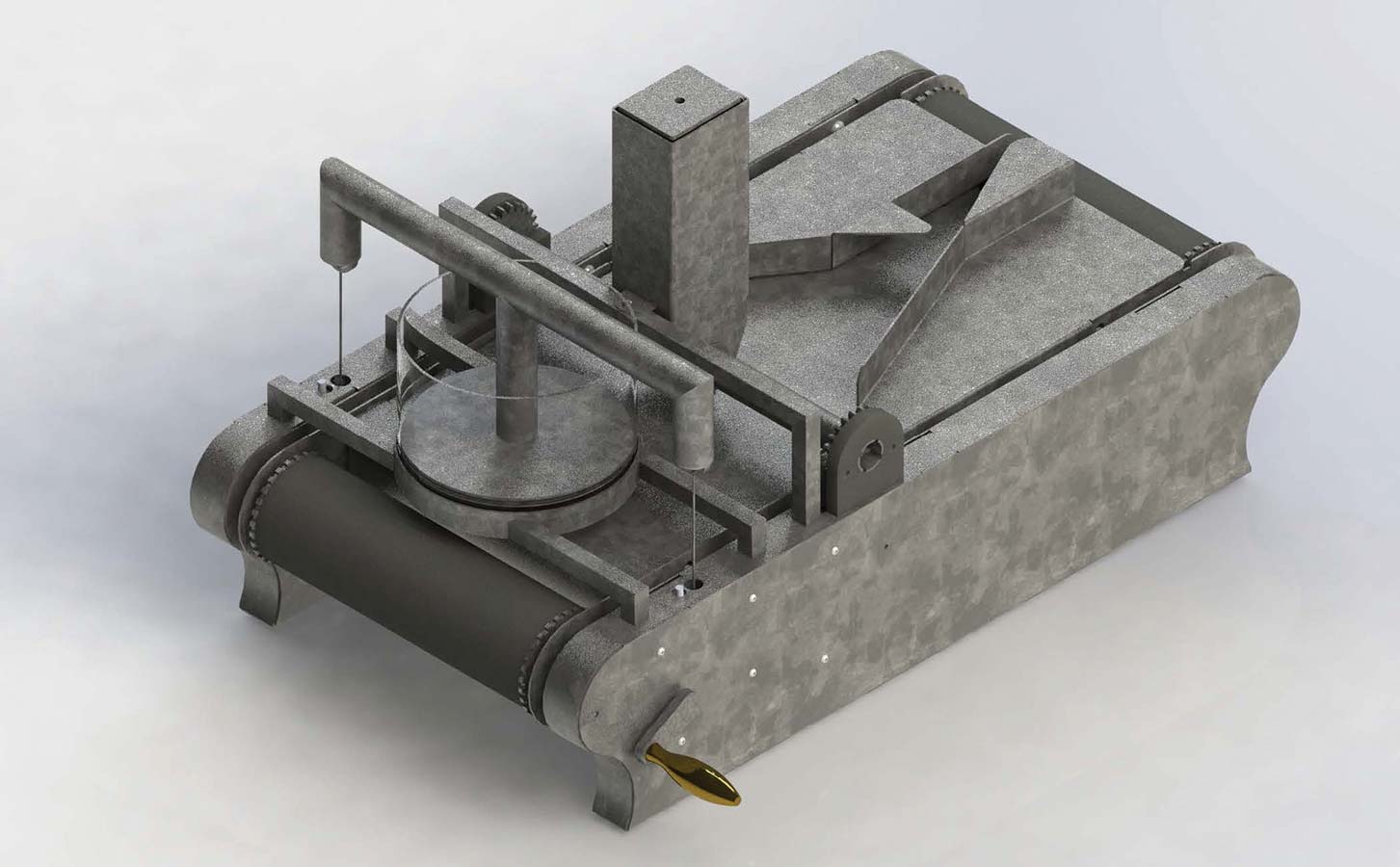
Alejandra’s Senior Design professor placed students into groups, and allowed each to plan, design and produce a working prototype as their final project. Alejandra and her partners quickly settled on the prototype to produce: a hand-crank tamale maker. The idea was to cut down on the amount of time necessary to produce each tamale, and moreover, cut down on the manual stretching and rolling required.
The Plan
Students used computer-aided design software, SolidWorks, to plan and map out the design of their assembly. Taking into consideration the various stages of tamale production—the extrusion of dough or masa, dispersion of filling, folding of the corn husk—they also considered how best to achieve a proper gear ratio and timing system. From the beginning, the students recognized the need for food grade parts including gears, a crank and conveyor belt, all of which they intended to source or fabricate.
The Materials
In researching sanitary conveyor belts through an online search, Alejandra learned of and contacted Belt Technologies to discuss her project and to place what she believed would be an order. Recognizing the students’ entrepreneurial spirit and design sense, Belt was happy to deliver a gratis perforated endless belt. Not only did the belt meet the design specs, but it was also a durable and sanitary addition to the newly devised kitchen equipment, meeting safe food handling recommendations of the Food and Drug Administration.
The Results
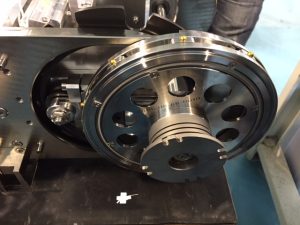
The prototype developed is a mechanical tamale maker driven by a hand crank. After latching a corn husk into a slot on the stainless steel belt from Belt Technologies, the user must rotate the crank clockwise to engage gears that will move the tamale through each stage of production. This is accomplished smoothly, hygienically and with significantly less effort than one would exert if producing a tamale by hand.
Of the results, Alejandra Marroquin expressed appreciation for Belt Technologies, stating that, “The conveyor is really at the heart of the prototype. We are so grateful to Michael Loomer [Belt Technologies’ Business Development Manager] who not only helped with the part design but also with the fabrication and shipping.”
Michael Loomer was equally appreciative of the opportunity to contribute to the project sharing, “We always are up to a design challenge and although this was a student project, our design intake, consultation and design was not dissimilar from a traditional company order. We’re happy to hear that our product aided in the finished project and wish Alejandra and her team members continued success in the future.”
“The conveyor is really at the heart of the prototype. We are so grateful to Michael Loomer [Belt Technologies’ Business Development Manager] who not only helped with the part design but also with the fabrication and shipping.” — Alejandra Marroquin, California State University Long Beach student
Metal belt systems improve cycle times, reduce costs for automated assembly lines
A key to automation success, in general, is to improve productivity and reduce operating costs, while creating new, innovative products for a defined customer base. This premise is especially true in the medical industry. When a U.S.-based medical manufacturer needed to accomplish this task, they needed to look no further than Belt Technologies who solved not one but two complex automation issues.
It’s in our DNA
Our tagline is “Precision on the Move,” and it’s by design—and found in each of our designs. First called upon to design automation equipment used in the production of revolutionary test systems for DNA analysis technology, our company was immediately put to the test, challenged to improve cycle times and reduce costs.
While the manufacturer’s DNA test procedure was markedly faster than competitive tests, and even faster than the company’s own previous offerings, the process by which the manufacturer produced the test was not. Initially, the company was producing the disposable reaction tube—a key element in the test—by hand, completing a paltry 400 tubes per day. Needless to say, some degree of automation was necessary to create the needed 18 million parts per year.
But increased throughput was only half of the equation: cost savings was the other.
After investigating a variety of options, a metal belt conveyor system was chosen to replace the automation in place, with the belts and pulleys supplied by Belt Technologies. The result? Improved process times and more than that—with the new configuration, four separate products could be run on the same line, increasing profits and making strides in the medical field.
The Nuts and Bolts of it All
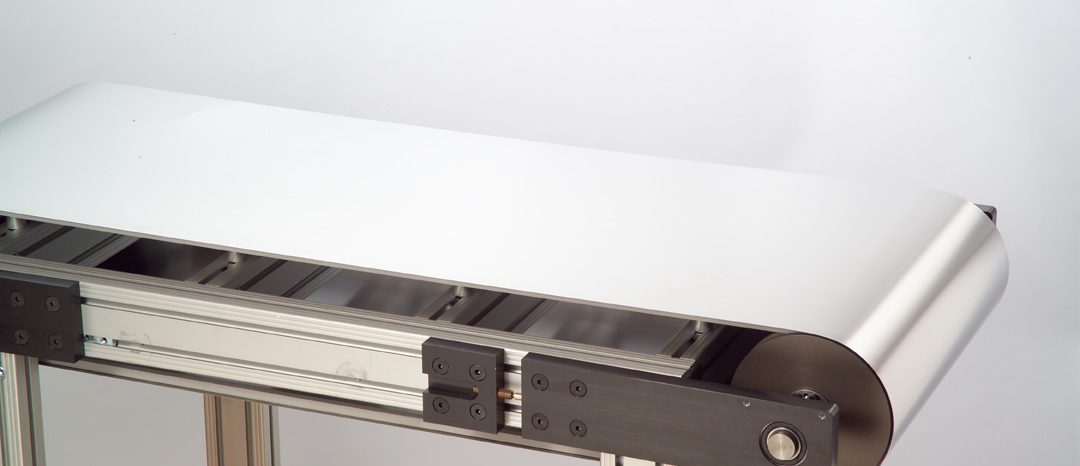
Metal belts offer advantages over similar products, as well as belts made of other materials. To begin with, metal belts possess various unique properties that result in superior precision control, longevity, and cost effectiveness. In many cases, they are preferable to other belt types (such as rubber and fiberglass) as metal belts do not stretch like standard timing belts, and variations in surface speed are minimized. Metal belts from Belt Technologies also run without lubrication of any kind, offer unlimited travel lengths, and are available in a variety of alloys. When compared with other power transmission or motion control components (such as linear actuators, lead screws, and chains) metal belts are often preferred, due to their high strength-to-weight ratio, durability, and precise positioning.
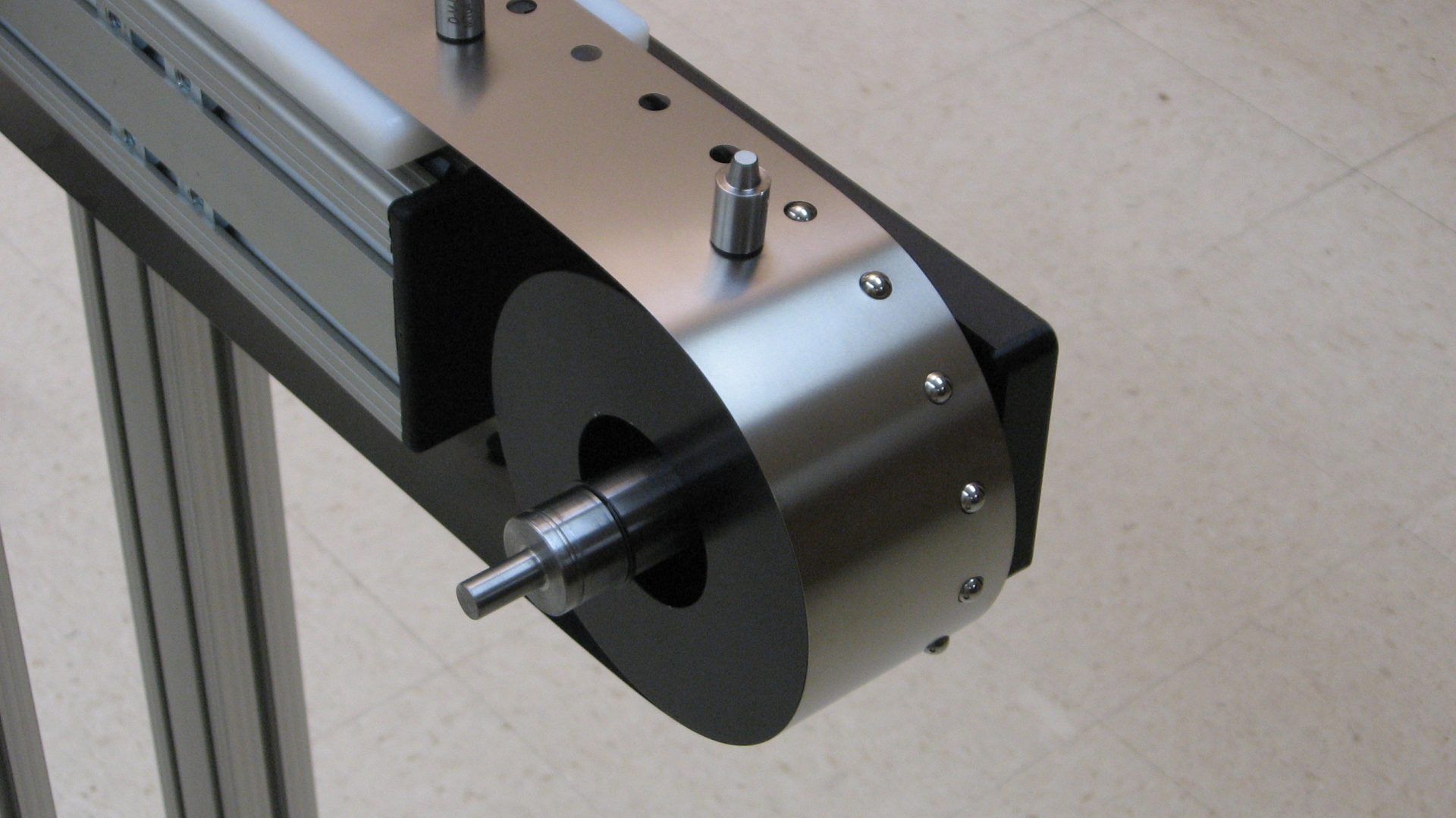
After each assembly line was built, drive and idler pulleys, metal belts, and timing screws, which are used to attach the cleats, were integrated into the production process. Running flawlessly since 1999, the company again turned to Belt Technologies in 2020 in light of the COVID-19 pandemic to assist in the production of testing kits.
One of the key benefits of this vertical conveyor system is the flexibility to handle multiple products. The belts were designed to connect with the company’s proprietary tooling through a common interface designed into each tool covering an array of different products, allowing for reduced changeover times. What’s more—the vertical solution, by utilizing both sides of the metal belt, doubled output without increasing operational costs. This was an especially important consideration considering the urgency of brining COVID-19 test kits to market. Furthermore, given the direct public benefit of these test kits, Belt Technologies gave top priority to producing these belts on an expedited basis to meet the company’s substantially increased demand. It’s safe to say that Belt Technologies was “just what the doctor ordered” for this U.S. manufacturer. Does your assembly line need a similar cure?
“We looked at various conveyor products and had a problem with the high mass of the system. The obvious solution was metal belts, which provide low inertia and excellent repeatability. Plus, in the future, we could also extend the line very easily, due to the flexibility of the belts.” —project lead
Achieve Maximum Accuracy and Efficiency for Medical Applications
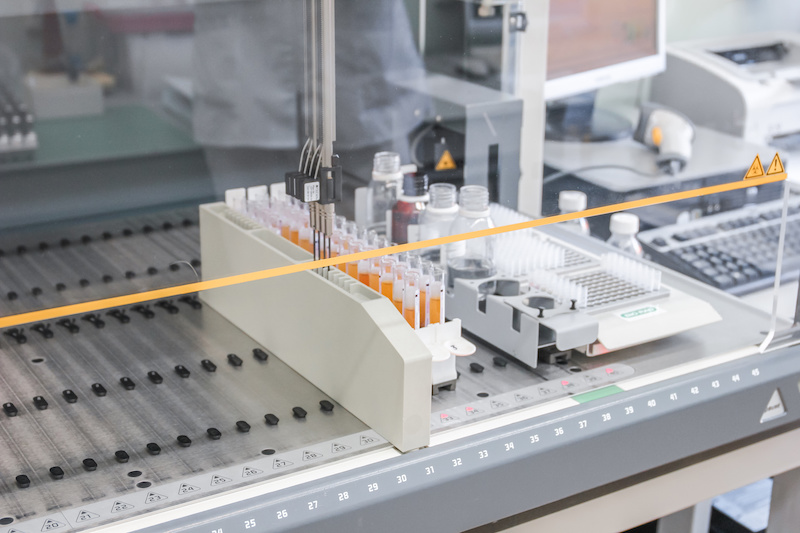
The equipment being updated was designed to sample vials as they are conveyed through the system for testing. In the original design, the vials were held in a tray system as they are moved through the machine. A needle is then lowered into each vial to take a sample for testing. The equipment was intended to allow producers of food, pharmaceuticals, chemical compounds, and more, to take samples of the materials being produced and perform quality testing directly on the production floor— instead of sending product samples to outside service providers for testing.
The customer wanted to increase the efficiency of the system and double product yield in a single batch. To do this, they needed to improve the positional accuracy of the vials as they were conveyed through the system. They recognized that a metal belt would be the best belt material option as the ambient temperature of the operating environment is kept below freezing.
Belt Technologies has provided metal belts for a variety of applications in freezing temperatures, including cryogenic processes. Stainless steel has a high resistance to extreme temperatures, and can easily handle refrigerated operating environments. Metal belts are also highly accurate and repeatable, providing precise positioning of the vials with virtually no slippage.
Additionally, solid metal conveyor belts do not outgas or require lubrication, so there is no risk of contamination to the sensitive products being conveyed. They also will not fray or generate particulates that could contaminate medical products and potentially skew testing results. The flat, nonporous surface of stainless steel does not absorb bacteria and is easy to clean with virtually any cleaning method required, making it the ideal choice for this application.
After working with the client to finalize their design, Belt Technologies provided the customer with a seamless belt made of 301 full hardened steel. It features custom vial holder attachments that are firmly attached to the metal belt. We also added a custom perforation pattern in the belt for tracking and precision indexing. With the metal belt, secure attachments and timing features, the new equipment will be able to sample vials at a faster rate of speed without risking product quality or testing accuracy.
At Belt Technologies, we are dedicated to the success of your system. Our engineers are always willing to aid customers who may experience issues with their metal conveyor belt systems, including traveling onsite to customer locations to observe issues in the field and work with your team to find actionable solutions. Recently, a customer contacted us to get help figuring out why the metal belts in their dual belt conveyor system were routinely wearing out.
Trouble with Excessive Wear in Parallel Conveyors
An OEM in the medical manufacturing industry was having trouble with a pair of metal belts aligned side by side in a system designed to transport tooling for dental aligners through a packaging process. Unfortunately, the flanges on the belts and some of the timing attachments on the belts were cracking and wearing down much faster than the design specified. They called Belt Technologies to see if the experts on our team could help them achieve a longer lifespan for their conveyor belts.
For this system, the belts were arranged in parallel on a common drive shaft with independent tensioning on the idler side. Both pulleys included relief grooves in the face for clearance of a screw head for fixed attachments on the belt. To keep the tracking of the two belts in sync, the drive pulley was a specially designed timing pulley. The idler pulley included flanges, which also kept the belts in alignment to ensure proper product positioning. The customer initially suspected the flanges of causing the excessive wear, as they were visibly damaged over time while the belts were in use.
When Installing a Metal Belt, Proper Tensioning is Key
Technical support traveled to the customer site to assist in the troubleshooting. Our team spoke to their maintenance and engineering staff and observed the equipment in operation. After examining the system in use, our engineers were able to determine that the flanges were not the cause of the wear and tear.
The customer was installing the belt with a very high tension that created excessive friction between the belt and pulley. As a result, the belt was not realigning with the timing pins on the drive pulley. Consequently, the timing holes cracked when the belt was forced over the timing pins by the sizeable frictional load. Once the belt was forced out of position with the timing teeth, the flanges on the pulley were damaged by the edge of the belt. Belt engineers worked with the on-site staff to develop a repeatable method to tension the belt within the correct range and to train them on how to correctly install and tension the belt.
When installing a stainless steel conveyor belt, proper tensioning is key to ensuring optimal performance and the longevity of the system. Adjusting the tension varies based on the belt type. For more information, or if you suspect your conveyor is experiencing belt tension issues, contact the experts at Belt Technologies today.
Belt Technologies is experienced with the unique needs and requirements of a variety of specialty packaging applications. One of our longstanding customers is an OEM specializing in the manufacture of heat sealers for the food processing industry.
Stainless Steel is Ideal for High Heat Applications
For this specialty packaging application the heat sealer would be applied to a paper bag that is filled with the food product by a hopper, then moves through the heat sealing bands to close it. In previous models, Teflon sealing bands were used to seal plastic packaging materials. Plastic based packaging can be heated at low temperatures, however, it is not a sustainable material option. The newer product bags were made of paper which uses a stronger adhesive, necessitating the use of higher temperatures to properly seal the bags.
While a Teflon band would typically be the more cost-effective option, the seams of the Teflon bands would fall apart at the required 500°F. Stainless steel has the advantage of high thermal conductivity, allowing for a higher rate of heat transfer and even sealing. Our engineers advised the client on the specific grade of stainless steel that would be the most effective and supplied them with a seamless metal belt for their heat sealing equipment.
Heat sealing bands by Belt Technologies are smooth, durable and accurate, making them the ideal choice to reliably handle the rate of production in a variety of specialty packaging applications. They are capable of sealing any thermoplastic material and apply heat evenly and efficiently. For more information about continuous metal bands for heat sealing application, contact the experts at Belt Technologies today.
Belt Technologies has been working with OEMs specializing in the automated food processing industry for decades. Recently, a new food industry customer requested our help in designing and producing a stainless steel conveyor belt for a system designed to freeze breaded meat products. The customer’s engineers were seeking a way to convey the product through a spiral drum freezer on a solid metal belt.
Metal Belts Are Ideal for Virtually Any Food Processing Application
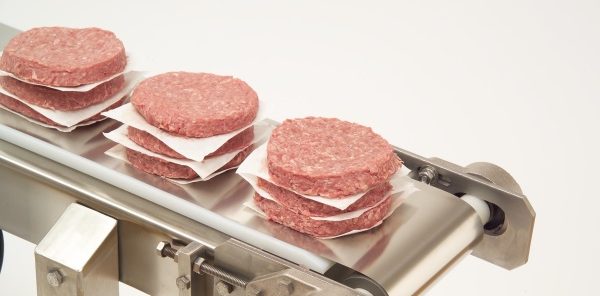
Solid metal conveyor belts are ideal for automated food processing applications. They do not outgas or require lubrication like other belt materials, so there is no risk to the flavor or quality of edible products. Additionally, metal belts will not fray or generate particulates that could contaminate food products and potentially endanger consumers. The flat, nonporous surface of stainless steel does not absorb bacteria and can easily be cleaned with chemical sprays, pressure washes, high powered steam, and more. Perhaps most importantly, metal belts are highly resistant to extremes in temperature, which gives them the ability to withstand the various cooking and freezing processes that food products are subjected to during manufacturing.
Maintain Optimal Functionality in Freezing Temperatures
For this particular food processing application, the customer was improving upon a system that was used to freeze webs of 24” wide, ½” thick, processed meat. The meat product would be compressed at high speeds between a freezing drum and the belt. The change to a spiral freezing drum was expected to increase production throughput by more than 10x the original processing speed.
The customer’s engineering team initially had questions in regards to how a seamless metal belt would react to operating conditions below -40℉. Their initial prototype used a Teflon belt but they knew this material would not work in the freezing conditions required. Belt Technologies has provided metal belts for a variety of freezing applications, including cryogenic processes for the pharmaceutical industry. Experienced members of the Belt Technologies team went onsite to examine the customer’s prototype in person. After reviewing the prototype, our engineers were able to assure the client that stainless steel, which has a very high resistance to extreme temperatures, would be the best material option.
Belt Technicians Can Help You Solve Engineering Challenges
The client’s new system design presented our engineering team with a unique challenge: how to track, tension and install a solid metal belt that could navigate a complex belt path with many bends? Originally, the design called for a seamless, endless belt—however, it became apparent that this type of belt would not work for this system. Belt Technologies developed a custom piano hinge solution with a central shaft. This unique combination of a solid metal belt with a piano hinge termination would make it easier to clean and load the machine.
The customer was very satisfied with the successful solutions and level of attentive support provided by the Belt Technologies engineering team. If you have an automated food processing challenge, contact the experts at Belt Technologies today.
Belt Technologies was recently approached by a customer that produces plastic pellets for recreational and automotive components. The pellets were made by extruding hot, melted plastic onto a conveyor belt which would then be transported to the next production phase while it cooled.
The original conveyor system used a basic mesh metal belt to transport the resin pellets after they were extruded. Unfortunately, the surface texture of the mesh metal belt was leaving undesired impressions on the plastic as it cooled. The customer came to the experts at Belt Technologies seeking a solution that could improve their system’s product handling.
Replacing Mesh Metal Conveyor Belts
The customer wanted proof of concept before investing in an entirely new conveyor, so they designed a belt that could be retrofitted to their existing conveyor system. Belt Technologies has experience with these types of customer requests, and we were able to advise them that replacing the belt would be a satisfactory solution to their problem. Our team visited the customer at their facility to survey the system and ensure that a replacement conveyor belt would be possible. To replace the mesh metal belt, our experts determined the original pulleys were too small and would need to be replaced with drive pulleys. In addition, due to the restricted size of the system, the new belt would need to be welded in place, rather than being welded first and installed after the fact.
The plastic would be extruded onto the belt at temperatures ranging from 500°F to 600°F. The new belt would need to be able to withstand these elevated temperatures. The unique properties of stainless steel make our endless metal conveyor belts an ideal choice for applications dealing with high heat. They are resistant to extremes in temperature and will not warp, even with continuous exposure, enabling them to last much longer than conventional conveyor belt materials.
Achieve Superior Product Quality and Throughput
Endless metal conveyor belts from Belt Technologies have a flat, impermeable surface which makes them the best option for applications that need a smooth product finish. They are made from a flat sheet of stainless steel, rather than a series of links and chains like mesh metal belts. We produce endless metal belts by welding stainless steel into a continuous band. Our welds are seamless and incredibly strong—achieving flawless welds when working with thin stainless steel belts is our specialty.
To install the new replacement belt, it would need to be welded in place on the existing system. Our team has the ability to weld belts onsite if necessary, however, the customer was willing to send their entire system to Belt Technologies to complete the installation. With the new, smooth metal belt from Belt Technologies successfully installed, the customer was able to achieve the perfect product results they were looking for.
Belt Technologies has the capability to produce custom stainless steel belts for a variety of unique applications beyond conveyor belt systems. One such application includes an automated pill dispenser cabinet for a large, medical device OEM. The dispenser for these projects is designed with a series of drawers that house medications for secure storage. To ensure the prescription pills cannot be dispensed without proper authorization, each drawer is built with a unique metal belt made with specialized window perforations. These window perforations limit access to the medications in the drawer. Only the necessary dosage is reachable through the window.
Stainless Steel Is Ideal for Medical Applications
Stainless steel is a great material choice for almost any automated medical application. Medical devices and materials are heavily regulated to maintain health and safety standards. They must be easy to clean and resistant to corrosion.
Stainless steel has a smooth, impermeable surface that offers no opportunity for microbes or bacteria to attach. Studies have shown that bacteria does not attach to the surface of stainless steel as readily as it does to other belt materials, such as rubber or plastic. This attribute is particularly valuable in clean room environments. Because it is highly resistant to corrosion, stainless steel can be cleaned via any method that best serves the application, from high-pressure steam washing to chemical cleaning. In addition, stainless steel belts do not generate particulates or require lubrication, which makes them an excellent choice for applications where prevention of contamination is a priority.
Achieve Precise Custom Perforations
Each drawer of these automated pill dispensers includes a metal belt with custom perforation patterns that are chemically etched. The larger “window” perforations are designed to enable access to the exact dosage required. They are then sent to a secondary operation that “folds” the outer edges of the window, which ensures a rounded surface that won’t scrape or cut attendant’s hands. A smaller perforation pattern on the edge of the belt is used as a part of the advanced optical positioning system. This allows the automated system to track which drawers are opened, who opened them, and how many times they were opened throughout the day.
Belt Technologies Can Produce Metal Belts for Unique Applications
The limited space within each drawer initially made these belts challenging to design and produce. The pulleys are very small, necessitating the use of thin belts. Despite these restrictions, our engineers were more than capable of producing belts that fit the customer’s design. The end result was a belt that is 3.770” wide x 0.005” thick x 43.946” long. We produce the belts in a variety of stainless steel grades for the customer, including 301, 302, 304, or 316 Full Hard Stainless Steel. We produce each automated pill dispenser according to the needs of the hospitals that purchase them; they can be built in a variety of configurations. On average, Belt Technologies produces up to 200 of these belts at a time.
At Belt Technologies, our engineers have the knowledge and experience to produce stainless steel belts for a wide variety of applications. Do you have a unique automated design that would benefit from the properties of stainless steel? Contact us today to learn more.
A stainless steel belt is considered “wide” when it is between 22 to 35 inches in width. Wide belts require particular consideration to produce and are traditionally made with thicknesses of 1 millimeter or greater to preserve belt integrity. At Belt Technologies, one of our core strengths is our ability to produce wide metal belts from thinner materials.
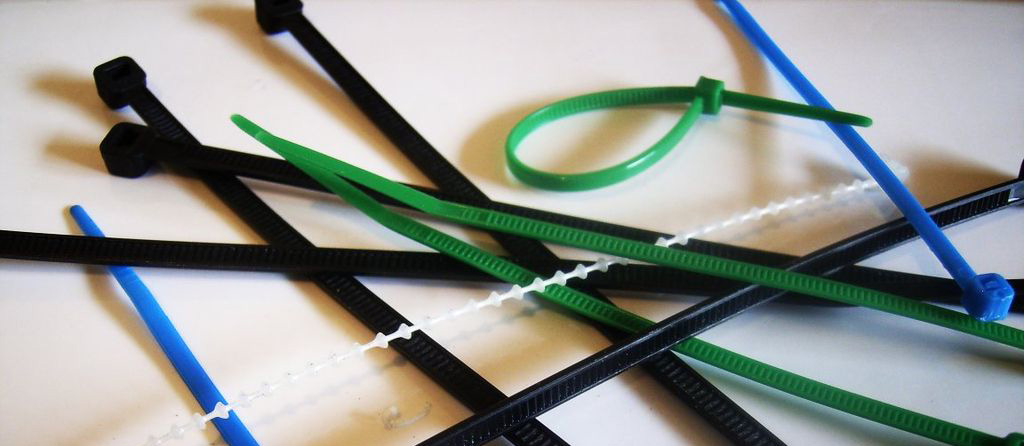
Recently, our engineers were challenged to provide a returning customer with an enlarged version of a belt we produced for them on another project. The belt was to be used to transport large groupings of zip ties. Because these zip ties would be larger than the products made in the previous system, the customer needed to scale up the size of the conveyor belt as well.
Zip Tie Production Challenges
The customer’s conveyor system needed to transport clusters of zip ties through a laser cutting process to be separated. The belt had to have a series of perforations to allow the laser to cut the zip ties without damaging the belt; after cutting, any unnecessary zip tie parts had to fall through to be discarded. This made proper positioning of the product an important factor.
Wider belts tend to be more sensitive to negative tracking forces. Stainless steel belts are virtually non-stretchable and do not yield under tension, which can make belt tracking more challenging.
Wide Metal Belts Are Easily Customized for Your Application
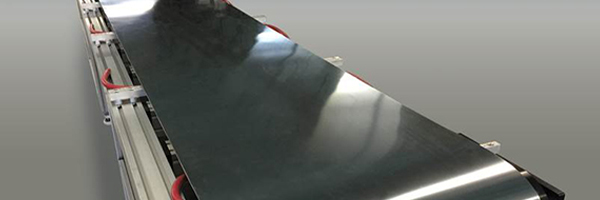
Our engineers provided the customer with a stainless steel conveyor belt that was 30 inches wide and 0.381 mm thick. While most manufacturers can only produce wide metal belts with a thickness of 1 mm or greater, Belt Technologies has the capability to produce wide metal belts with thicknesses ranging as low as 0.076 mm and up. Using a thinner material makes it possible to reduce the system pulley diameter, thereby saving space, reducing inertia, minimizing cost, and achieving a smaller overall system footprint.
Using our in-house laser perforation services, our engineers added long, rectangular perforation slots to this particular belt. The slots created spaces where the laser could cut through the zip ties without damaging the belt. They also created room for the discarded zip tie materials to fall through.
An optical positioning system that includes additional perforations along the edges of the belt helps to ensure proper indexing of the belt. Our engineers helped the customer determine the proper placement for the perforations to ensure the integrity of the belt.
The customer successfully installed the new belt in the existing system and was very satisfied with the results. To find out more about how we can customize wide metal conveyor belts for your automation application, contact us today.
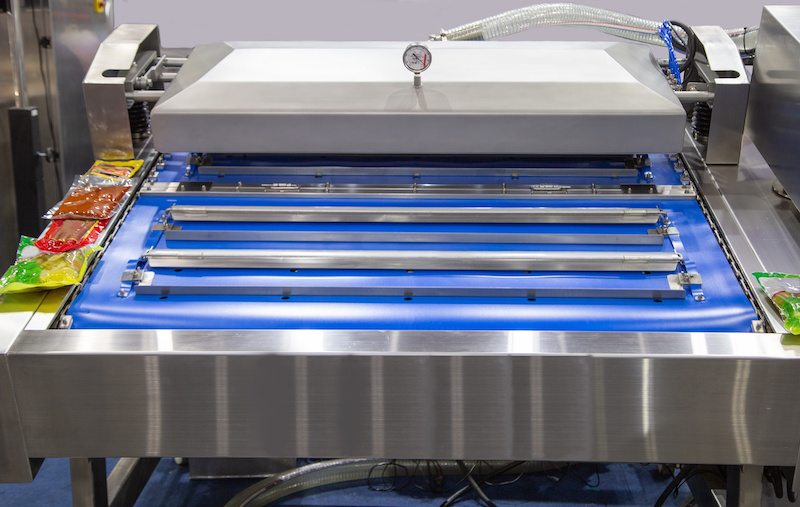
Stainless steel conveyor belt systems are ideal for the cooking, freezing, and handling of edible products. They are versatile and can easily be customized for any automated food processing system with exceptional results.
Metal conveyor belts do not outgas and do not require lubrication, which means there is no risk to the flavor or quality of the foods being processed. Unlike other conveyor materials, like wire mesh, fabric, or rubber, metal belts will not deteriorate or generate particulates that could contaminate food products.
Endless metal belts have a flat, nonporous surface and will not absorb bacteria. Conveyor systems from Belt Technologies are easy to sanitize between uses. They are resistant to chemical corrosion and can be sanitized with almost any standard cleaning method.
Metal belts can easily transition between hot and cold applications. They last longer and are more reliable than plastic conveyor belts in extreme temperatures. Stainless steel belts are excellent for cooking and handling raw materials because of their high thermal conductivity. Food is cooked thoroughly and evenly thanks to the quick, even transference of heat.


 Metal belt systems improve cycle times, reduce costs for automated assembly lines


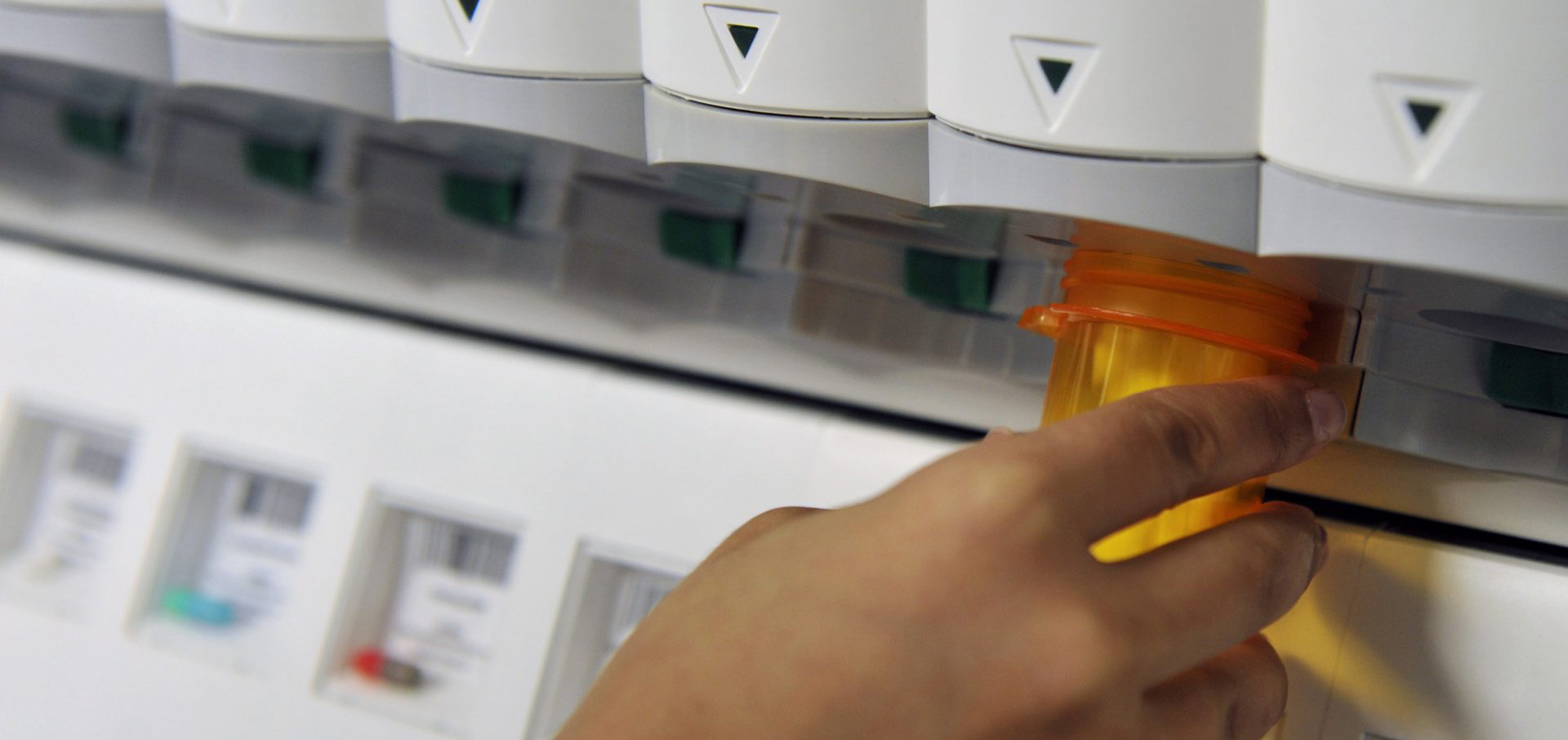
 Belt Technologies has the capability to produce custom stainless steel belts for a variety of unique applications beyond conveyor belt systems. One such application includes an automated pill dispenser cabinet for a large, medical device OEM. The dispenser for these projects is designed with a series of drawers that house medications for secure storage. To ensure the prescription pills cannot be dispensed without proper authorization, each drawer is built with a unique metal belt made with specialized window perforations. These window perforations limit access to the medications in the drawer. Only the necessary dosage is reachable through the window.