Belt Technologies Logo

Stainless Steel Conveyor Belt with Custom Product Handling Attachments for Electrical Connector Component Manufacturing

A customer recently approached Belt Technologies seeking a solution to their product handling challenge. The customer produces electrical components including sensors, fiber optics, power systems, cable assemblies, and electrical connectors. They were working on expanding their electrical connector manufacturing operations and required a precise and repeatable way to safely transport the small components.

Stainless Steel Is Ideal for the Unique Challenges of Electronics Manufacturing
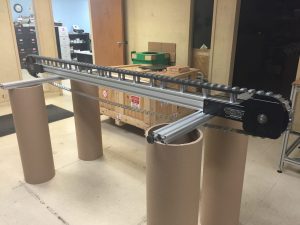
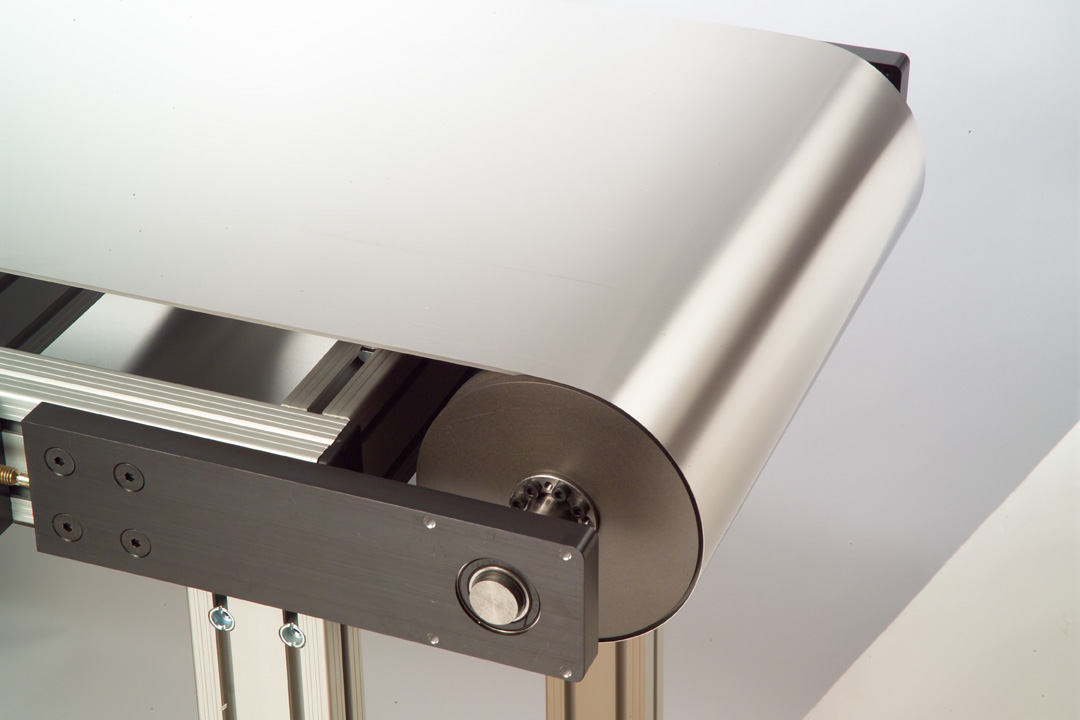
conveyor belt for electrical connector manufacturing

Many electrical components are manufactured in static-free, vacuum environments designed to protect delicate circuitry from potential contamination. Stainless steel is the ideal conveyor belt material for these applications because it does not require lubrication and does not generate particulates.

This particular application did not have such stringent environmental operating requirements. However, the system needed to be incredibly precise. The product needed to be positioned accurately throughout the manufacturing process to be properly aligned with specialized sensors; the sensors would help assemble the electrical connectors. This made indexing and precision a top priority in the conveyor system design.

Custom Attachments Guarantee Safe and Precise Product Handling

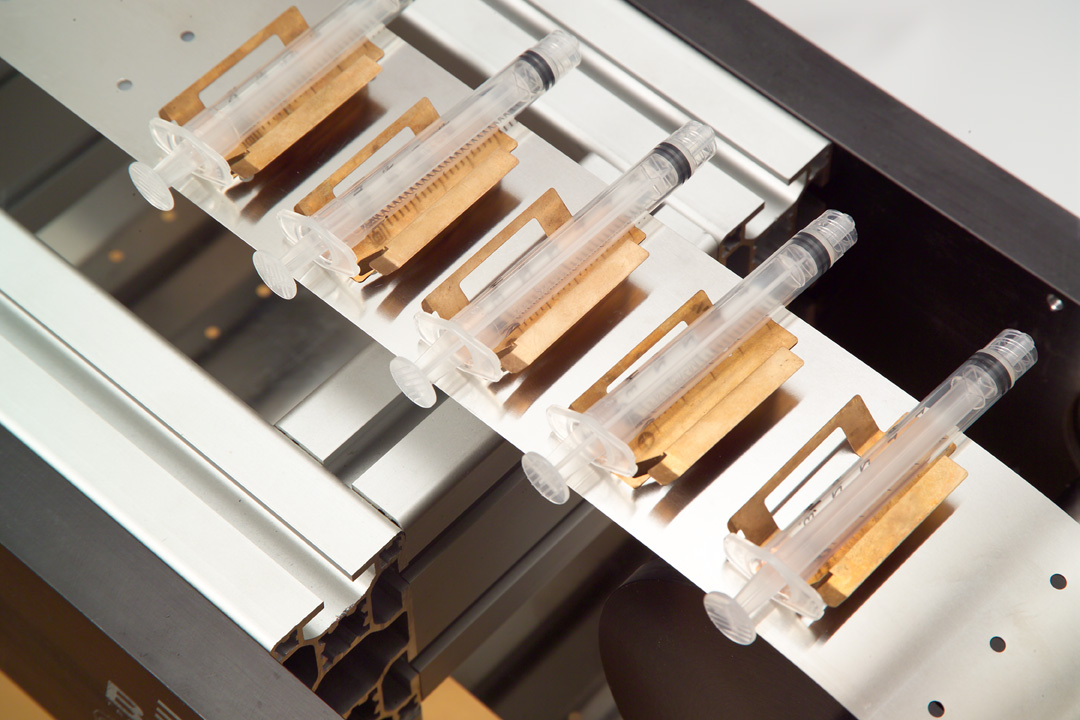
Our engineers worked closely with the customer’s engineering department. They thoroughly reviewed the client’s initial drawings and functional models and translated them into working equipment. The project began with motors and nesting provided by the customer. Our team worked with the customer’s engineers to design an appropriate frame and conveyor belt made of sturdy, 301 FH stainless steel that would function as intended with the provided components. The belt was fitted with custom attachments to ensure precise positioning of the electrical connector components as they are transported. The new conveyor system was assembled and installed without incident and has been performing exceptionally well. Watch the video below to see the new conveyor systems in action:

https://belttechnologiesinc.wistia.com/medias/z2qlcxuxi1?embedType=async&videoFoam=true&videoWidth=640

Belt Technologies engineers have the ability to work with you to provide manufacturing feedback and design input that will ensure your conveyor system provides optimal product throughput and quality. We have the knowledge and skill to create custom conveyor systems perfectly designed to suit your unique automation application. Contact the experts at Belt Technologies today to learn more.
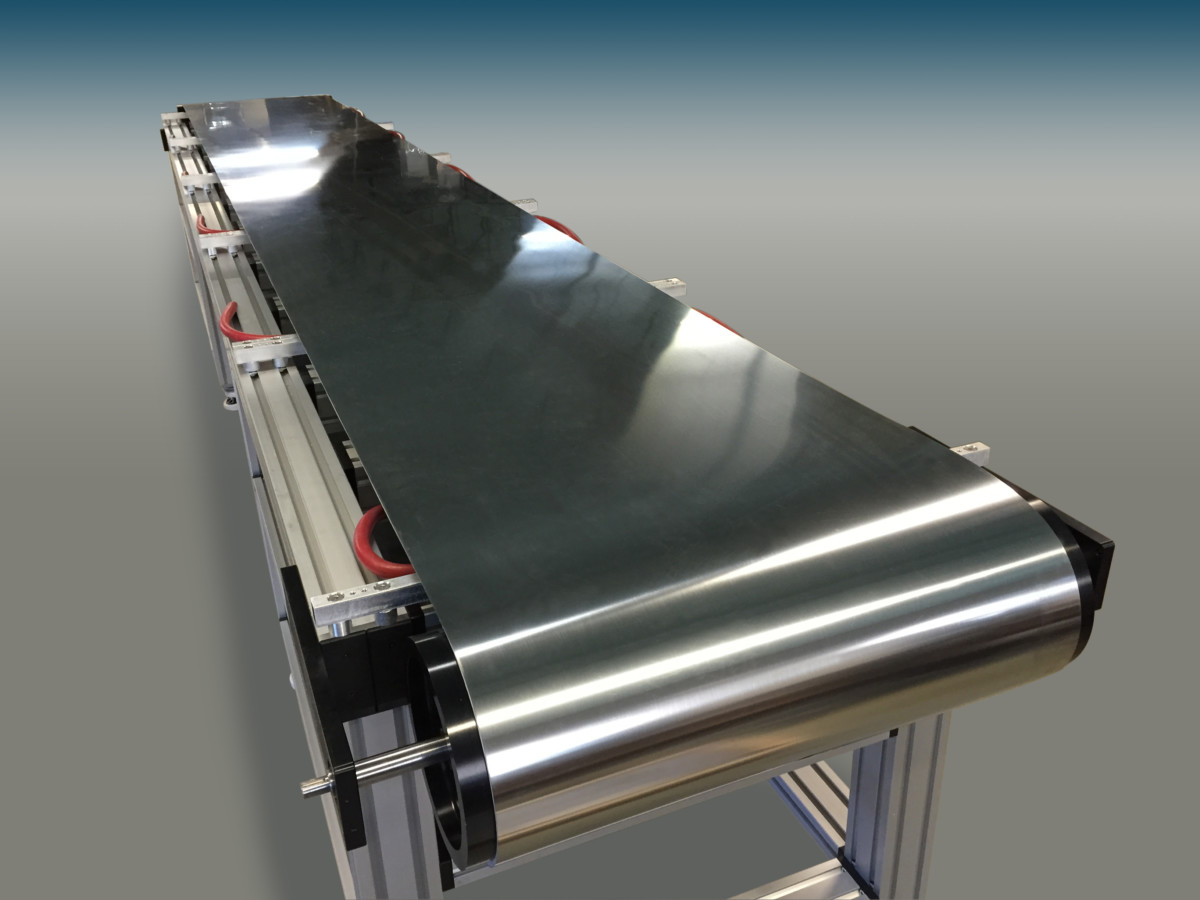
Replacement Conveyor Belts and Drive Tapes for Industrial Spray Paint Machine

A distributor approached Belt Technologies seeking replacement parts for an automated spray machine used in industrial paint applications. These large machines generally use as many as ten different metal belts for various tasks. Up to seven of the belts operate in tandem to create a large bed on which a large part or component can be placed and moved by manipulating the belts. Additional belts and drive tapes move a rotating spray head carousel that distributes paint, polyurethane sealant, or other coatings evenly over the entire surface of the part.

Difficulty Finding Replacement Parts for Discontinued Spray Paint Equipment

Unfortunately, the OEM that originally sold the industrial spray paint equipment went out of business a few years ago, but the distributor continues to receive inquiries about where to find replacement belts for this machine. While the automated industrial spray machine is no longer in production, it is still a very popular model currently in use at many paint shops. However, replacement parts can be difficult to come by.

Multiple Belts Operating in Tandem Transport Large Industrial Machinery

Metal belts are ideal for this application since they are easy to clean and can be individually replaced. A metal belt will also perform more reliably when a mix of new and old belts are running simultaneously. If the new belts were made of a more stretchable materialsuch as rubber or plasticuneven tension would exist between each of the belts, resulting in tracking difficulties. Our engineers were able to reproduce the stainless steel belts used by the original equipment and provide reliable replacements.

Custom Metal Belt and Metal Drive Tape Replacement Parts

Metal drive tapes were also ideal replacement parts for the spray head carousel, which needed precise positioning. This carousel would move through a series of configurations that would ensure even distribution of the paints as they were applied to the part. Stainless steel drive tapes by Belt Technologies have a high strength-to-weight ratio and are virtually non-stretchable. Our engineers were able to replicate the existing drive tapes used by the spray head and provide high-quality replacements.

The distributor was happy to find a supplier familiar with the demands of this application. They have since turned to Belt Technologies for replacement belts and drive tapes on a regular basis to ensure these machines run reliably for years to come. For more information about stainless steel conveyor belts and drive tapes, contact the experts at Belt Technologies today.

High-Speed Stainless Steel Indexing Belt for Lithium Battery Manufacturing

A machine-building firm recently approached Belt Technologies with a project to design and produce a highly specialized automated conveyor system. The customer, who had many years of engineering experience, had been tasked with developing new capital equipment for an OEM producing lithium batteries for the international market.

Difficult Operating Conditions Present Unique Challenges

The automated conveyor system was to be designed to transport battery components through processing. It would carry 8” x 10” calendered paper cardslined with a thin metallic lithium foilthrough a series of stages, each of which presented a unique challenge.

Maintaining Positional Accuracy and Precision

The first challenge was precision. The calendered cards had to be precisely indexed at each stage of production. The indexing belt was to be run at one foot per second, which is a high rate of speed for a precision application. Stainless steel was an excellent material choice for this application because it is virtually non-stretchable and is highly accurate. Timing and indexing belts by Belt Technologies can be fabricated with a very high pitch accuracy of ±0.0005 inches station to station.

Delicate Material Handling

The second challenge was handling. To maintain positional accuracy, the delicate cards needed to be kept reliably in place on the belt. At the end of the lithium battery manufacturing system, there was to be a cold roller that exerts upward of 100 pounds of force. While belt attachments can sometimes be used to hold products in position, they would interfere with the cold roller in this particular application. To avoid this interference, keep the positioning of the cards as accurate as possible, and prevent movement on the belt, we decided to hold the products in place with vacuum suction.

The stainless steel belts for this system were chemically perforated with customized patterns specified by the customer; these perforations created the exact amount of suction required to hold the cards in place as they moved through processing.

Potentially Caustic Environment and Temperature Changes

The third challenge was the environment. Lithium battery production takes place in a “dry room,” which is an area with specialized dehumidifying systems that maintain ambient humidity between 1% and 10%. When exposed to moisture, lithium reacts to create a highly corrosive chemical byproduct that presents a danger to both the equipment and machine operators. In addition, a section of the processing line included chilled rollers, which could cause condensation if any moisture is introduced to the system.

Stainless steel does not require lubrication and does not generate particulates, making it an ideal material choice for this application. It is also highly resistant to corrosion and extremes in temperature. Should any moisture contamination occur, a stainless steel conveyor belt would be the most likely option to resist the resulting corrosive chemicals from the product.

Belt Engineers Provide Solutions to Any Automation Challenge

Belt Technologies engineers were able to provide the customer a high-quality, automated conveyor system with a perforated, stainless steel indexing belt to keep each calendered paper card reliably in place. The high corrosion resistance, accuracy, and clean operation of stainless steel made this process an automatic success. For more information about stainless steel conveyor belts for your automated application, contact the experts at Belt Technologies today.


Wide Stainless Steel Belt for Complex Automated Assembly Equipment

Recently, a major automation OEM producing capital equipment for high-tech industries approached Belt Technologies in need of a custom perforated stainless steel conveyor belt for an automated pharmaceutical assembly system.

The client specializes in complex automation; their reputation is built on the reliability and efficiency of the custom equipment they deliver to their customers. This customer had previously worked with Belt Technologies on several projects, including drive tapes for a robotic arm and a flat, horizontal conveyor belt for a visual inspection system. They knew from previous experience that the engineers at Belt Technologies would be the perfect match to help solve their design challenges.

Stainless Steel Is Ideal for Clean Room Environments

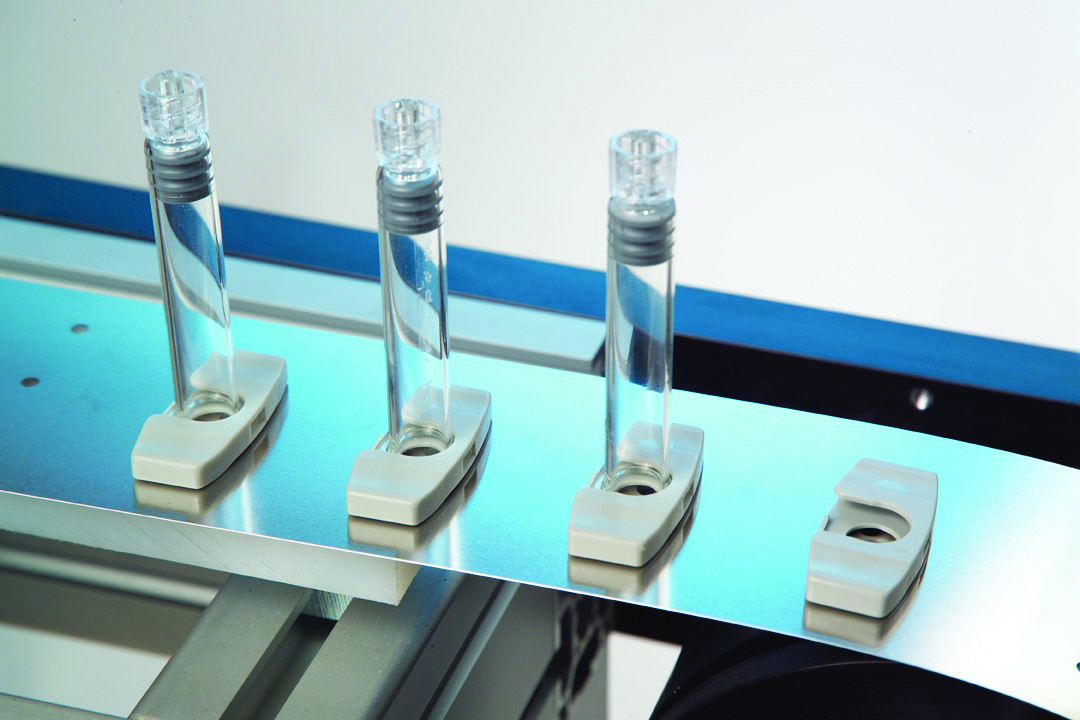
This automated system was to be used in the production of disposable medical materials. The belt utilized precise perforations to transport small plastic cups through the system so they could be filled with single-use medical material. Once filled, the belt was to carry to cups through a sealing station, where tamper-evident foil lids would be applied via a heated adhesive process. The entire process would be conducted in a clean room environment in compliance with medical device regulations.

Automated Assembly of Single-Use Medical Supplies Requires Precision Indexing

The main challenge of the customer’s design was precision. The cups needed to be precisely indexed during the filling, sealing, and inspection stages of production. The design specified that the cups would travel on a precision perforated belt that links to three modular assembly units. The belt would have to correctly align at each station. Because the system goes through hundreds of cycles a day, repeatable and accurate positioning would be critical to its success.

Stainless steel conveyor belts are ideal for medical and pharmaceutical manufacturing applications. Studies show that microbes and bacteria are less likely to attach to the smooth, impermeable surface of stainless steel than they are to other belt materials such as plastic and neoprene. Because stainless steel has a high resistance to heat and corrosion, it can be sanitized via a variety of cleaning methods, including high-pressure wash, high-pressure steam, and cleansing chemicals. In addition, stainless steel conveyor belts do not generate particulates and do not require lubrication, making them the best option for clean room applications.

Our expert engineers recommended a wide, stainless steel belt. Our engineers added laser-cut perforations to catch the cups as they are drop-fed from a chute and arranged in a grid formation across the belt. Once the cups pass through the three stages of filling, sealing, and quality inspection, a set of pistons below the belt ejects any cups deemed unsatisfactory. The remaining cups get sent to a second conveyor belt and are queued for tracking.

As automation professionals, the customer’s in-house engineers already had a good idea of what they wanted. The customer needed a metal belt to ensure cleanliness and precise perforations and indexing. They turned to the experts at Belt Technologies for recommendations on holding the cups in place, though they had also considered a vertical carousel with specialized attachments as an alternative method. The final design was selected because it could process a higher volume of disposable cups per cycle and would be a more energy-efficient design.

If your automated assembly application would benefit from the precision and reliable operation of stainless steel conveyor belts, contact the experts at Belt Technologies today.

Stainless Steel Drive Tapes Achieve Precise Motion Control in Pharmaceutical Manufacturing and Vaccine Production Applications

A global leader in the design and manufacturing of automated machines contacted Belt Technologies seeking a solution for its vaccine production equipment. The company needed a set of drive tapes strong enough to lift a heavy metal door and resilient enough to resist the corrosive effects of the chemicals used in the vaccine production process.

Precise, Reliable, Sanitary Operation with Stainless Steel Drive Tapes

The client’s equipment design included a 180-pound metal door to seal the chamber in which vaccines are processed. To lift the door and allow vaccines to pass through, two drive tapes are threaded over a pair of 4” diameter pulleys with two 90-pound counterweights on each side. The machine would only be operated in low cycles, possibly only for 3–4 hours per day with several days of inactivity in between.

The drive tapes would need to be able to bend around the 4” diameter pulleys while also resisting the heavy weight of the door and its counterweights. Stainless steel is highly durable and non-stretchable, making it the perfect material choice for this application.

Importance of Stainless Steel in Pharmaceutical Manufacturing Applications

The vaccine production equipment application also required clean room conditions in order to prevent contamination; chemicals such as hydrogen peroxide and chlorine are often used in the vaccine production process. To prevent any of the equipment from corroding and potentially contaminating the product, all elements needed to be made of corrosion-resistant stainless steel. Stainless steel also presented the advantages of not requiring lubrication and not generating particulates, making it ideal for applications where maintaining a clean environment is paramount.

To further optimize the customer’s equipment for clean room conditions, Belt Technologies engineers designed a custom, laser-cut drive tape with specialized slots that made the drive tapes and pulleys easier to clean. The slots allow the cleaning fluid to drain more completely, preventing the buildup of bacteria in crevices or corners; they also make it easier to clean the surface of the pulley.

Collaboration Results in Custom Stainless Steel Belt Solution for Vaccine Production

Our engineers worked with the customer’s design team to identify production constraints and develop a working solution. Although larger-diameter pulleys would put less strain on the drive tapes and prolong their lifespan, the design could only support the smaller, 4”-diameter pulleys. The team at Belt Technologies worked to ensure that the drive tapes would have the strength and resilience to operate reliably. Since their installation, the customer has reported that the system accomplishes the task well and fits perfectly into the existing equipment and pulleys.

Would your automated equipment design benefit from the reliable strength and resilience of stainless steel drive tapes? We have the knowledge and experience to create custom solutions for virtually any automated application. Contact the experts at Belt Technologies today.

Engineering Perforated Metal Conveyor Belts for Automated Frozen Pizza Production

Perforated Metal Conveyor Belts Are Ideal for Automated Food Production

The unique properties of metal conveyor belts make them ideal for the food processing industry. Their versatility makes them easily adaptable to any number of food industry production processes. Unlike conventional belt materials, stainless steel metal belts do not outgas; this means they have no adverse effect on product flavor. Metal conveyor belts do not require lubrication or generate particulates that would otherwise jeopardize edible product quality. They are also resistant to corrosion and can be easily sanitized—either chemically or with intense steam.

The most beneficial quality of stainless steel conveyor belts in the food industry is their resistance to extreme temperatures, which makes them ideal for food production processes that require the cooking or freezing of raw product. Their ability to easily conduct energy in the form of heat means food is cooked thoroughly and evenly. With metal belt conveyor systems, automated food processing facilities can achieve maximum production speed and accuracy without sacrificing safety or flavor.


Manufacturing Issues Cause Delays in Automated Cooking Processes

A producer of prepackaged frozen pizzas recently contacted Belt Technologies with a problem. They had been using an automated cooking process with metal conveyor belts from Belt Technologies. The belts were fabricated at our facilities and then sent to a machine builder, chosen by the client. The third-party machine shop perforated the belts and then installed them into the larger, pizza-producing system.

The belts were welded by Belt Technologies at a 75-degree angle for extra strength. The perforations added by the machine builder were made along the edge of the belt at a diameter of 3.1mm and a pitch of 51mm. Once completed and installed, the belts were used to transport pizzas through the cooking process, where they were subjected to high temperatures of 240 degrees Celsius.

Unfortunately, the belts were cupping along their entire length and failing at the weld joints. The client came to the experts at Belt Technologies to ask: What could be causing this?

Proper Perforation Techniques Make the All the Difference

Our engineers were able to resolve both the warping issues and the failures at the weld joints. They found that the damage was being caused by incorrect perforation techniques used by the third-party machine-perforated metal beltsbuilding shop.

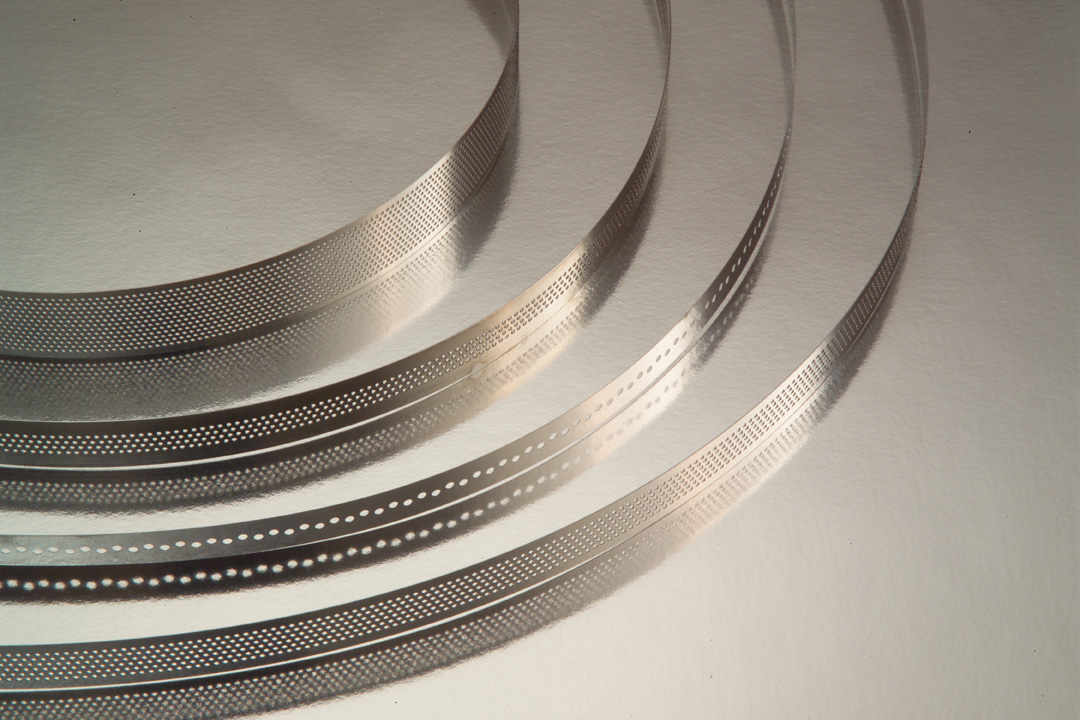
Many mechanized perforation techniqueslike those used by the outside machine shopare high-impact and can cause unnecessary stress to the belt. When using these techniques, a series of particular, precise measures must be taken to prevent the belt from “sticking out” or cracking along the perforations. In instances where this outcome is likely, Belt Technologies uses a variety of proprietary perforation methods that include mechanized, as well as chemical etching and laser technology. These latter approaches rely on intense heat or a chemical reaction to make each perforation; this helps preserve the integrity of the belt.

At Belt Technologies, we advocate using the right fabrication techniques and materials for each application. This is why each metal belt conveyor system we design is custom-made specifically for your application. Call or request a quote today!

Metal Conveyor Belt for Gel Capsule Production

A leading producer of fluid-filled gel capsules for a variety of pharmaceutical and food processing applications recently contacted Belt Technologies seeking a metal conveyor belt. The belt was to be used in the automated production of menthol gel capsules used in certain brands of cigarettes. The company’s manufacturing process required the capsules to be transported securely through an imaging system for quality inspection.

Challenging Design: Conveying Gel Capsules for Inspection

The system design called for a conveyor belt with perforations that could hold each individual menthol capsule as it is sent through a quality imaging system. In this system, defective capsules (those that are incorrectly size, have fluid leaks, etc.), are sucked out of the belt and disposed of. All production would be performed in a clean room environment to prevent contamination. Due to the small size of each capsule and the required degree of accuracy, the belt would need to have reliable tracking in order to ensure precise movement through the imaging system.

Stainless Steel Conveyors Are Sanitary and Precise

Our metal conveyor belts are highly sanitary, thanks to the unique properties of stainless steel. Studies have shown that microbes and bacteria do not adhere to the smooth surface of stainless steel as readily as plastic or other belt materials. It is highly resistant to corrosion and other forms of damage, minimizing the risk of particulates or other contaminants affecting product quality. This makes them ideal for medical and pharmaceutical applications. Because they demonstrate near-zero backlash and are non-stretchable, stainless steel conveyor belts are also highly accurate.

Automated Conveyor Solutions for Medical and Clean Room Applications

Our engineers worked directly with this customer to create a stainless steel conveyor belt that met all the needs of their application. We used 17-7 CH 900 stainless steel for its superior strength, which would prevent cupping and maximize the lifespan of the belt. We also designed and implemented a custom perforation pattern with a tight dimensional tolerance of +/0.05 mm to precisely hold the delicate gel capsules. To ensure the capsules would move through the imaging system with maximum precision, we added forced V-guide tracking. The belt was also given a dark coating to make it easier for the imaging equipment to take accurate measurements of each gel capsule.

The customer has installed the new conveyor belts and is more than satisfied with the performance results. We are developing a new set of belts for other production lines in the same company; these will be built to transport capsules of varying sizes.
For custom conveyor solutions for your medical or pharmaceutical application, contact the experts at Belt Technologies today.

Stainless Steel Retaining Belt for Low-Head Hydroelectric Turbine

An OEM producing low-head, hydroelectric turbines approached Belt Technologies, Inc. seeking production of a high-precision retaining belt. The company was referred to us by a manufacturer who produces similar equipment and who is familiar with the quality of our stainless steel conveyor belts, timing belts, and drive tapes. The hydroelectric turbine OEM’s design called for a retaining belt that could hold a series of magnets and then spin around the power-generation coil. They sought a smooth, seamless metal belt able to operate while in contact with water without warping or deteriorating.

Resilient Stainless Steel Will Not Corrode or Rust in Hydraulic Applications

To produce electricity, the OEM continuously rotates a series of magnets around a power-generation coil. These turbines are designed to operate underwater, and therefore, every component needed to be resistant to corrosion.

Stainless steel is highly durable. It has the ability to withstand sustained exposure to extreme environments, such as continuous friction, without warping or breaking. It is also highly resistant to corrosion, making it ideal for applications that require long-term exposure to corrosive materials or environments. In an application where the metal is exposed to water for the duration of its operation, stainless steel is an excellent choice, as it will not deteriorate or rust.

Seamless Laser Welding Techniques Are Durable and Precise

Accuracy was the most important factor our engineers had to consider when producing the metal retaining belt. The belt was designed to fit over a particular housing and hold all of the magnets in place. The dimensions were highly precise and had to be +/ 0.010 on the length after welding. Our high-quality, proprietary laser welding methods were an important asset to this project. Using these methods, our engineers were able to meet the customer’s exact specifications for the diameter and thickness of the retaining belt. The final product had a strong weld that would not break under tension.

Custom Solutions from the World’s Best Metal Belt Experts

The customer is currently manufacturing prototypes of their product, so it was especially important that our team provide a high-quality, accurate part that would help validate their design and successfully prove their concept. Our team provided them with a seamless precision retaining belt made of 301 hard stainless steel that will not corrode underwater.

The team at Belt Technologies, Inc. has the knowledge and experience to provide custom metal belt solutions for a wide range of applications. Contact us today and find out how stainless steel belts can help you today.

Medical Tubing Manufacturer Automated Production Process with Vertical Metal Conveyor Belt from Belt Technologies, Inc.

Belt Technologies, Inc. regularly attends technology trade shows throughout North America and Europe. At these conferences, our team meets with OEMs to discuss potential partnerships and ways by which we can better serve our customers. After learning more about the many benefits and possible configurations for our stainless steel conveyor belt systems, one medical equipment OEM opted to contact us and inquire about the possibility of automating its labor-intensive medical tubing production process.

https://belttechnologiesinc.wistia.com/medias/g4db1noq18?embedType=async&videoFoam=true&videoWidth=640

Automating a Manual Production Process

The tubing for this medical equipment OEM had to be made in specific shapes. The previous manufacturing process was much more manual, requiring workers to hang the tubes on the belt in the perfect position before sending them through a heated processing sequence. This method of production was slow and very vulnerable to mistakes, malfunctions, and defects. The medical OEM was seeking an automated solution that would make the process more efficient by speeding up production and increasing product quality.

Unique Design Elements for Specialized Applications

Customers choose Belt Technologies, Inc. because we have the ability to design and manufacture metal conveyor belt systems completely customized for the unique needs of each application. This particular application required highly specialized elements that would automate production and sort and place the medical tubing before reaching the oven.

The conveyor we designed is oriented vertically in a carousel style. Instead of hanging the tubing in position by hand, the new metal belt is perforated with holes of varying size that can easily accommodate different sizes of tubing. Robotic arms now reach down to pick up and place the tubing into the correct holes.

Metal Conveyors Achieve a Higher Rate of Production

Our team worked with the client over time to perfect the perforation pattern, timing, and configuration of the new stainless steel conveyor system. With the new conveyor system in place, the medical OEM has experienced higher product throughput and more consistent product quality.

To find out how stainless steel conveyor belts can make your production process more reliable and efficient, contact the experts at Belt Technologies, Inc. today.


Metal Conveyor Belt for a Vapor Deposition Process in High Vacuum

Belt Technologies, Inc. has been contacted by several customers specializing in manufacturing advanced vacuum deposition equipment. The machinery they develop is typically used to deposit micrometer- to nanometer-thin, functional coatings on materials such as glass, metal strips, wafers, and polymer films. These materials are typically used in products like solar panels, architectural glass, and smartphone displays.

Designing a Conveyor Belt for Micrometer and Nanometer Vapor Deposition

For this particular application, the customers usually seek a series of belts, pulleys, and timing elements. The belts are to be run in pairs, carrying a product to a high-vacuum chamber for a vapor deposition process.

Vapor deposition is a precise process used to coat products with a layer of material. These coatings are often extremely thin; the vapor deposition process can be used to deposit the material atom-by-atom or molecule-by-molecule. It is typically used for coating exceptionally sensitive materials and equipment. To be successful, the vapor deposition process requires a high-vacuum environment with zero risk of contamination.

No Room for Error: Stainless Steel Is Clean, Precise and Reliable

Once the material reaches the vacuum chamber and the chamber is closed, there is no room for adjustment if the belt tracks off course or the material shifts in transit. Therefore, it is necessary that the motion profile of the belt be reliably precise. The belts also have to be exceptionally clean in order to prevent contamination. Anything that could potentially cause a delay in production, such as belt realignment, maintenance, or decontamination would cost up to several thousand dollars an hour in lost production time.

Stainless steel is an ideal material choice for applications requiring cleanliness and accuracy. Metal belts made of stainless steel do not require lubrication, do not outgas, and do not generate particulates. They are excellent for clean room applications and high-vacuum environments. To ensure the product would be transported safely and would not slip on the belt, our team added attachments to the belt design.

Timing Elements Ensure Accurate, Repeatable Results

The customer’s equipment design requires a timing element to keep production running smoothly. Our team provides the client with metal conveyor belts fitted with custom attachments to keep the product in place; we also use timing pulleys to provide maximum accuracy. The timing pulleys are configured with specially designed evacuation holes around each timing element. This prevents air from getting trapped behind the timing ball and helps to avoid any interruption to the vacuum conditions inside the chamber.

The engineers at Belt Technologies, Inc. have the knowledge and capability to provide custom stainless steel conveyor belt solutions for virtually any application. Contact us today and find out how metal belts can improve your automated conveyor system.