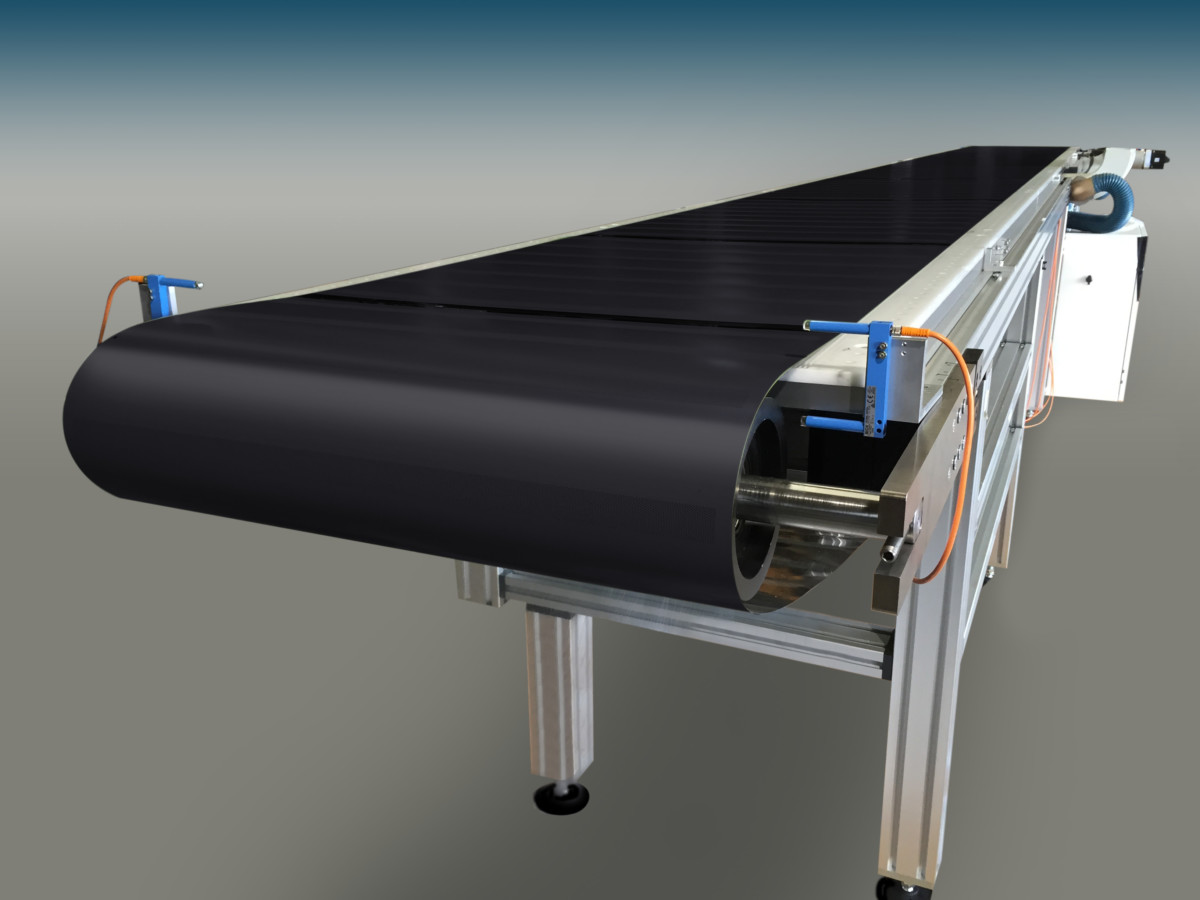
An OEM producing capital equipment for the beverage industry was referred to Belt Technologies to solve a problem with their bottle cap printing conveyor. The unreliability of their system was causing the labels to print incorrectly on bottle caps being transported by the belt, driving them to seek out a new conveyor belt that would transport the bottle caps through the printing process with a higher degree of accuracy.
Original Belt Warps under High Heat and Blurs Bottle Cap Labels
To print the labels, the bottle caps were passed through a heated area then returned to an ambient temperature. The original conveyor belt used by the OEM was made of a material that could not tolerate these high temperatures. Exposure to the irregular heat source caused the belt to warp, which created uneven tracking and alignment.
The warping of the original belt led to inaccurate positioning of the bottle caps. The OEM was not satisfied with the printing results. Label text was blurred, missing, or placed incorrectly due to the inaccurate product handling of the belt. This caused unnecessary expense in the form of product loss for the OEM.
Invar Offers High Heat Resistance
To maximize the belt’s ability to withstand high temperatures, Belt Technologies’ engineers suggested a replacement belt made of Invar, an alloy with a very high resistance to heat that would maintain its shape under thermal stress.
The thermal expansion coefficient for Invar, generically referred to as “FeNi36” (or “64FeNi” in the US) is very low. Its name comes from the word invariable, in reference to the metal’s lack of expansion or contraction in the face of extreme temperatures. Uneven heat from the bottle cap printing process would not cause the Invar conveyor belt to warp.
New Perforated Conveyor Belt Provides Maximum Accuracy
Printing clear, legible labels on such small surface areas requires ultimate precision and positioning accuracy. Lateral linearity, or the maximum allowable deviation of actual performance in relation to a straight line, is important in applications where positioning is key. Generally speaking, stainless steel conveyor belts have superior accuracy and repeatability, however when extremely high temperatures are involved low thermal expansion coefficient alloys like Invar may be necessary.
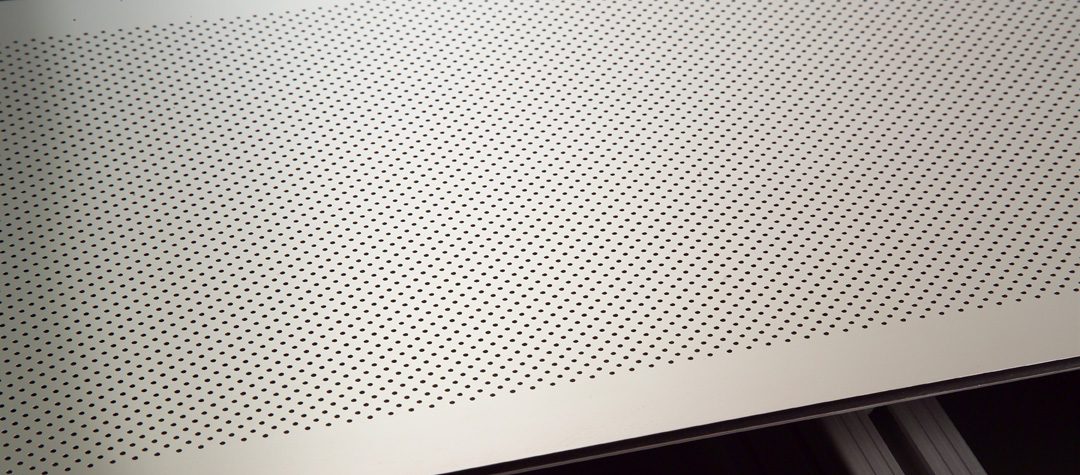
A center line perforation was added to the belt in order to apply a vacuum that would hold the small bottle caps in place and further ensure their positional accuracy on the conveyor belt. With an improved, heat-resistant material and a design upgrade, the OEM was able to improve the clarity and quality of its bottle cap printing equipment.
Is your conveyor system lacking the accuracy and repeatability you require to produce a perfect product? Contact the experts at Belt Technologies today!
A producer of solar cells recently approached Belt Technologies seeking an innovative engineering design for a new solar stringer machine. Solar stringer machines are used to solder solar cells into modules, which then become part of larger solar panels for applications such as installation on rooftops, roadways, and more. Typically, these machines are designed with multiple narrow belts that convey the solar cells being welded. This multi-belt design limits the size of the modules the machine is able to produce. The customer was seeking a more versatile design that would be able to accommodate solar cell modules of varying configurations.
A Wider Belt Design Accommodates Busbars of Various Sizes for Flexible Production
The most common design for this type of machine uses several narrow belts to transport individual busbars. Typical solar cell modules include three busbars. Solar stringer machines are designed with three narrow, coated belts to transport the busbars. However, as solar technology has evolved, cell designs have begun to include up to four or five busbars; the customer wanted a solar stringer machine that could produce solar modules with the full range of busbar configurations. Our engineers took on the challenge and designed a wide, metal conveyor belt that made the machine more flexible and better able to accommodate varying numbers of busbars.
Low-Expansion Stainless Steel Easily Withstands High Soldering Temperatures
Solar cell producers weld cells together by blasting hot air over the weld at a temperature of 390°C (734°F). To make sure the belt could withstand the high temperatures necessary to solder the solar cells in place, Belt engineers selected stainless steel alloy 17CH900—a special, low-expansion grade metal. Extreme temperature changes can cause other belts to expand, contract, and become uneven; the 17CH900 low-expansion alloy can better withstand these shifts. This is particularly important, as uneven expansion can complicate belt tracking and shorten the lifespan of a conveyor belt.
Specialized Design Features and GATORCOAT® Ensure Ease of Operation
In addition to the low-expansion stainless steel alloy, engineers utilized Belt Technologies’ GATORCOAT® coating, a proprietary surface treatment which demonstrates superior release qualities following exposure to the high temperatures of the welding process. GATORCOAT® has ten times the friction resistance of other Teflon coatings and will help ensure that the solar cells are transported quickly and smoothly.
Vacuum perforations were also included in the belt design. Combined with the low friction of the GATORCOAT® coating, these perforations allow for gentle, high-speed transportation and automation of the cell welding process.
The belt was delivered and installed successfully. The customer is tremendously satisfied with the results and has acknowledged that Belt engineers have provided better technical input and advice than local competitors.
Looking for an innovative automation solution to keep your production line ahead of the competition? Contact Belt Technologies today!
Belt Technologies was recently contacted by a producer of commercial offset inkjet printers for help designing and manufacturing a thin, stainless steel print belt. The belt needed to have small perforations that could create an air-separated vacuum; this vacuum would control the movement of paper sheets through the printing press. The inkjet printer was designed for use by large, commercial companies to print books, pamphlets, and magazines on demand—which meant repeatable accuracy was a high priority.
Paper Moves Faster and Easier with Vacuum Technology
The inkjet printer was designed for use by large, commercial companies to print books, pamphlets, and magazines on demand.
BTI engineers needed to provide a superior printing surface to ensure the smooth, high-speed transport of paper through the machine. The customer’s design called for a thin belt with the dimensions 430 x 0.1 x 3500mm. After experimentation, the thickness was changed to 0.15mm for greater stability and easier handling. The stainless steel print belts were then perforated with thousands of small vacuum holes, each with a diameter of 0.6mm.
Belt Technologies engineers worked with the customer to experiment with vacuum perforation patterns until an acceptable distribution of perforations was determined. The perforations were made using a special cutting procedure with a visual imaging camera. To increase the positional accuracy of paper being transported on the belt, encoder holes were added for straight, optical tracking.
Special Application Considerations for Surface Texture
To ensure the smooth movement of paper through the printer—and to minimize the risk of paper jams—the metal printing belt needed to be extremely smooth and have as few welds as possible. Belt Technologies provided the client with a one-weld belt. Our engineers experimented with the weld angle until they achieved perfect flatness with proprietary inspection procedures and equipment that had been developed in-house.
For this application, the surface texture of the stainless steel print belt would be incredibly important. If the surface of the belt was too smooth or too rough, paper transport would be disrupted and the printer would not function as designed. We have worked extensively with our suppliers to produce steel of the correct roughness.
Collaboration for Optimal Results
We were able to use the knowledge and experience gained from other metal belt applications to provide advice about the appropriate thickness of the belt. We were also able to find cost-effective ways to adapt the printing belt design for the client’s specific requirements. Our engineers worked directly with the client’s technical department from the beginning and made several reciprocal visits to exchange relevant information in person. At Belt Technologies, our goal is to provide you with automation solutions that work; communication is a valued part of that process.
Do you have a unique or challenging automation project that would benefit from the repeatable accuracy of stainless steel conveyor belts? Contact the experts at Belt Technologies, Inc. today!
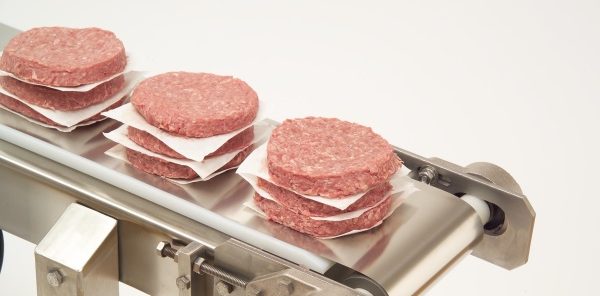
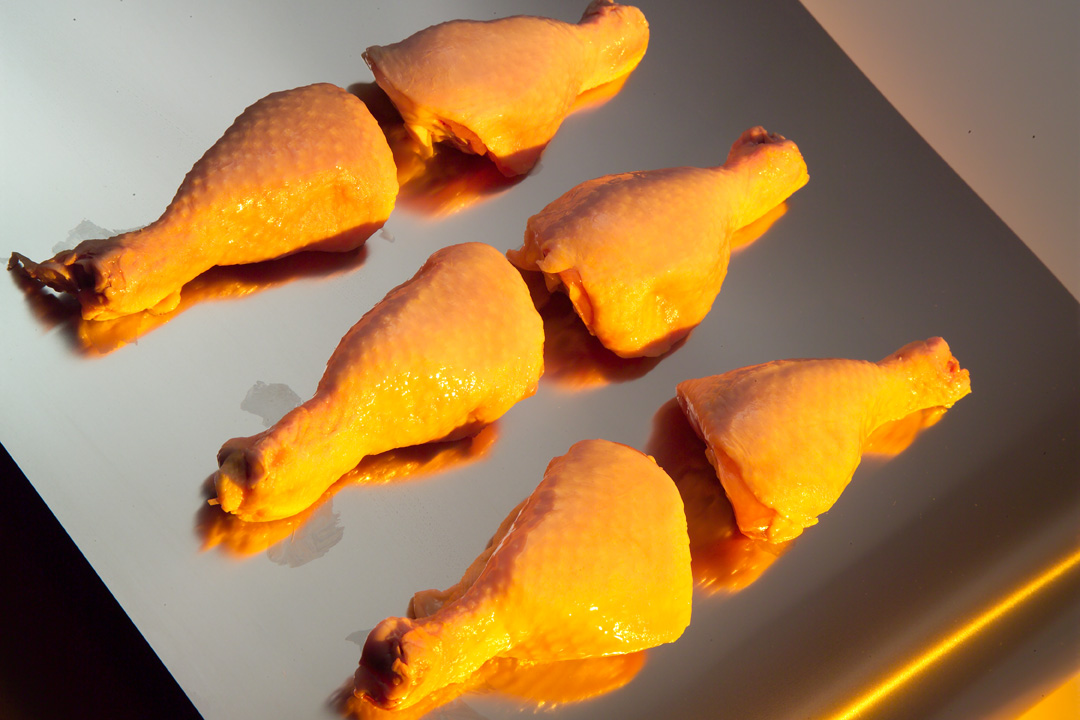
A machine-maker for the food industry recently contacted Belt Technologies, Inc. with a custom conveyor belt request. The machine-maker produces conveyor systems that transport and cook meat—primarily bacon—using a specialized induction heating method.
The Advantage of Thermally Conductive Stainless Steel Conveyor Belts
Induction heating requires less energy than other heating methods, which gives it the advantage of being more eco-friendly. It is an instantaneous cooking method, which means the oven heats and cools very rapidly. This allows food processing facilities to improve throughput time and reduce the amount of production downtime. However, induction’s quick heat exchange can be difficult for most conveyor belt materials to withstand.
Stainless steel metal belts have a high resistance to extreme changes in temperature, making them ideal for this type of application. For this project, we chose 177CH900 stainless steel as the belt material. This particular grade of steel is very compatible with the induction heating system, as it is able to withstand temperatures up to 425 degrees Celsius. It has a lower thermal expansion coefficient, which allows the belt to maintain its shape. Additionally, the iron content of the steel works as an induction coil, ensuring an even transfer of heat.
Custom-Designed Food Process Automation System Engineered for Success
The customer’s automated meat cooking system required belts that were exceedingly wide, measuring 838 millimeters, or roughly 33 inches. The belt also needed to be thin. Competing metal belt manufacturers had a minimum thickness of 1 mm with a corresponding pulley diameter of 800 mm. Belt Technologies, however, is able to produce metal conveyor belts between 0.3 and 0.5 mm with smaller pulleys, typically 188 mm to 312 mm. This allowed the machine to have a smaller footprint with a shorter, thinner belt to save on cost.
Food-Grade, FDA-Approved GATORCOAT® Brings Home the Bacon
For added durability, we applied GATORCOAT® to the outer diameter of the belt. GATORCOAT® has ten times the abrasion resistance of other PTFE coatings and is FDA-approved for use in the food processing industry. Although the size of the belt made applying the coating more difficult, our engineers were ready to meet the challenge.
The client now has durable, stainless steel metal conveyor belts for use in their induction heating system for meat processing. With metal conveyor belts from Belt Technologies, the final product will be perfectly cooked with just the right amount of crispy goodness.
Does your conveyor system present a challenge that other metal conveyor belt manufacturers simply can’t handle? The engineers at Belt Technologies are ready to accept the task. Call or request a quote today!
A producer of PVC plastic recently approached Belt Technologies with a problem. They had been beta testing belt materials for their conveyor system and had not yet found a solution that would work. They needed a conveyor belt that could transport hot PVC plastic without leaving any marks on the surface of the plastic as it cooled. The silicone belt they had been testing was not working due to a seam in the belt that left a mark on the product when it cooled.
A Special Application: Extruding PVC Plastic
The customer was searching for a belt that would not leave impressions on the product they were extruding. The customer needed to extrude PVC plastic that was 1/2” wide and 1/8” thick onto a belt and then allow it to remain on the belt while cooling. The PVC plastic would be extruded at temperatures of 350°F to 400°F, so the belt needed to withstand these high temperatures.
Stainless steel metal conveyor belts have a high resistance to temperature, which make them a great choice for this type of application. Most importantly, the smooth surface of an endless metal belt allows hot plastic to cool without leaving any impressions in the PVC, thus preventing unnecessary damage to the product.
Choose Endless Metal Belts for a Smooth Product Finish
Endless metal belts deliver the ideal combination of precision, strength, and versatility. We manufacture metal belts by welding stainless steel into endless belts. Our welds are incredibly strong and can be weld-finished for better blending. Achieving flawless results when welding thin stainless steel belts is our specialty. With the endless metal belt from Belt Technologies, the customer was able to achieve the smooth product results they desired while maximizing product output and speed.
Optimum Results with Custom Coatings for Your Application
This customer wanted to prevent the hot plastic from adhering to the belt as it cooled, so we added a Teflon coating to the Belt. Belt Technologies offers various Teflon coatings with benefits including food-grade qualification, abrasion resistance, and chemical resistance. For this customer, we chose a Teflon with good release characteristics to make sure the product would not stick to the belt.
Belt Technologies has the ability to design and manufacture custom metal conveyor belts for virtually any application. Surface coatings and surface treatments help expand the potential uses for stainless steel metal belts. BTI provides several options, including Teflon, silicone, polyurethane, and more.
Looking to increase the efficiency of your conveyor system and get better product results every time? Call or request a quote today!
Belt Technologies engineers have the knowledge and experience to not only design and build brand-new, custom conveyor systems, but also to retrofit existing conveyor systems to take advantage of the unique properties of stainless steel metal belts. When a customer contacts us with a problem regarding their existing systems, we are more than ready to examine their specific needs and provide a solution.
Product Manufacturing Requires Specialty Belts
A customer recently contacted Belt Technologies for a solution to a product-handling issue. They produced high-performance plastics and resins, which were being extruded onto a conveyor belt at high temperatures and allowed to cool as they were transported. The original conveyor belts were mesh metal belts; these were able to handle the high temperatures of the extruded plastic material but would leave markings on the plastic strands as the material cooled. The customer needed a new conveyor belt that could withstand elevated and varied temperatures without leaving any markings on the finished products.
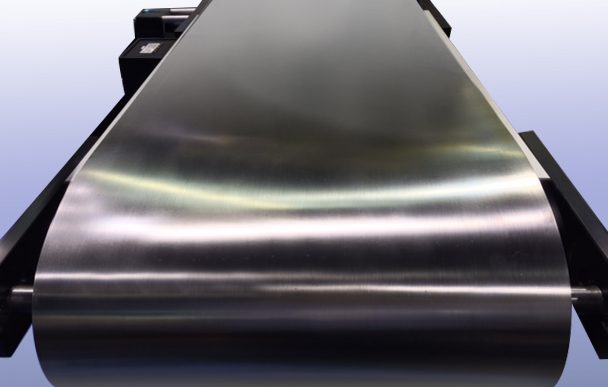
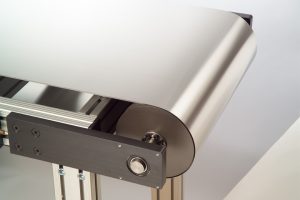
Our flat metal conveyor belts are made from a single sheet of high-end stainless steel.
Mesh or Flat Metal Belts: Which Do I Need?
The smooth finish of flat metal conveyor belts ensures there are no unwanted marks or dents on finished products.
Flat metal belts are durable and easy to clean. Their resistance to high heat makes them a great choice for applications using elevated temperatures. Unlike mesh metal belts, our flat metal conveyor belts are made from a single sheet of high-end stainless steel. Endless metal conveyor belts from Belt Technologies have a flat, even surface, which makes them ideal for applications that need a smooth product finish.
Mesh belts are another form of metal conveyor belt often used in high-heat applications. They are made of links, or metal weaves that allow the passage of fluids or air. While popular, the challenges and shortcomings of mesh belts can be detrimental to a production line. Hundreds or even thousands of links mean hundreds of difficult-to-clean recesses, making mesh belts a haven for contamination. Any misalignment of a mesh belt can result in damage to individual wires and links, making the risk for belt failure or damage to product significantly higher and increasing the potential for downtime. As demonstrated in this specific instance, the textured surface of a mesh belt can also result in damaged product that must be reworked or scrapped altogether. An upgrade to an endless, solid metal belt can eliminate many of the expensive risks associated with mesh belted conveyors.
Avoid Complete System Replacement with Affordable Retrofit Solutions from BTI
Belt engineers worked with the customer to design a new, flat metal conveyor belt that would easily integrate into the existing conveyor system. The new belt was made with 301 full hard-tempered stainless steel able to withstand the high temperatures required for the operation. The flat surface will not leave any marks on the extruded plastic as it cools.
With a retrofit solution from Belt Technologies, the customer was able to avoid the cost of replacing the entire system and can now achieve the smooth product results they needed. Is your existing conveyor system letting you down? Call or request a quote today and let our experts help find a solution!
Safe, Fast Food Processing with Stainless Steel Drive Tapes
When specialized equipment began replacing short-order cooks, the fast-food industry reached an important turning point. Since then, the list of possible applications for automated systems and machines has expanded to include grills, ovens, fryers, soft-serve dispensers, drink makers, and more. These systems don’t just maintain consistent speed throughout an entire shift—they keep the quality of the food consistent, too. Just as in industrial-scale food-processing plants, these machines must be easy to clean and able to endure long periods of running time in high and low temperatures.
Metal Drive Belt System Engineering, Made to Order
Recently, a major US original equipment manufacturer (OEM) for the fast-food industry was approached by their top customer with a design challenge. The client was seeking to add automation to a cooking process to achieve three objectives:
Remove the manual decisions that create opportunity for errors in the critical function of the cooking process.
Enable end users to set all cooking parameters with a “one-touch” button.
Maintain quality and consistency in the cooked product while reducing staff training, maintenance, and repair costs.
Achieving these goals would allow the restaurant to expand its menu without adding unnecessary equipment, labor, or maintenance costs, while improving the quality and appearance of their products.
In developing design options for the new commercial grill system, the equipment manufacturer employed an in-house multifunctional team for design engineering, manufacturing engineering, field service, and marketing. This team was responsible for engineering the grill, building the prototypes, modifying the designs, and writing the performance reports. Part of the testing phase included a simulated quick-service “restaurant” in which food could be cooked as though it were an actual customer kitchen.
A critical component of the design was the positioning of two cooking platens, one on top of the other. By actuating a precise movement, a programmable, repeatable distance can be set between the two platens. The end user envisioned positioning the upper platen within 0.002” of a number of various stop positions above the lower platen. This positioning would allow the user to program a critical feature of the cooking process for various products without complex operator involvement. Three techniques were considered: cables, inclined planes, and steel belts. When the team realized they needed design assistance, the project engineer contacted Belt Technologies, Inc.
Stainless Steel Drive Belt Solutions, Served Fast
In a food-processing environment, stainless steel offers cleanliness and exceptional performance, particularly in extremely hot temperatures. As an added benefit, the steel provides a low-mass belt that performs well without lubrication.
Steel drive tape—a derivative of endless steel belts—was envisioned. Drive tapes are ideal in applications where rotary motion must be converted to linear motion. Similar drive tapes are used in robotic arm actuators, carriage positioning systems, and mirror positioning systems for military and satellite use. For durability, the drive tape is most often fitted with reinforced end tabs, thus ensuring a firm and secure contact is maintained where the tape is terminated. Specifically, the use of steel drive tapes in this application could provide near-zero backlash, no stretch, and the repeatability desired by the customer.
According to the equipment manufacturer, the steel drive tapes were a “clear winner” early in the design phase. In comparison to inclined planes, the drive tapes were less complex in design and offered a significant advantage in space and weight. The team remarked that the incorporation of the steel drive tape made for a “very intuitive design,” offering multiple benefits over cables in manufacturing simplicity and field service. Due to the non-stretch nature of the steel drive tape, consistent, predictable results in the performance of the grill were possible. The final design incorporates the steel drive tape, terminated to both the upper cooking platen and a drive pulley. The drive assembly moves the upper platen to the required precise position by means of a single button on the operator control panel.
Food Processing Automation Systems, Grilled to Perfection
Implementation of the design proved to be challenging. Although the initial performance of the prototype drive tapes was encouraging, improvements to the design were needed to achieve optimum life cycles. According to Rich Lunden, Belt Technologies’ Manufacturing Manager, the change resulted in lower bending stress with ample strength to carry the load of the cooking platen.
Lunden states, “We like to see a significant ratio of pulley diameter to drive tape thickness. With the original design, we would have needed a pulley diameter that would have exceeded the available space. By changing the belt thickness, we kept the pulley diameter within the customer’s design requirements and achieved the life cycle we were all looking for.”
A slight modification to the location of the pulleys in relation to the termination point of the drive tape was the final correction. The redesigned system was tested to three million cycles, after which a review by an independent metallurgist showed no signs of fatigue.
For further testing, the grill manufacturer monitored a statistically meaningful number of the installed grills and inspected core components for wear. The stainless steel drive tapes have shown no measurable stretch after repeated use, and the metallurgical analysis shows no change in the structure of the belt from installation through usage.
The company considers the project an absolute success, with the grill receiving “approved and released” status from their customer. They said, “the steel belts allowed us to achieve results that were not possible with other alternatives.”
This site is registered on wpml.org as a development site. Switch to a production site key to remove this banner.


 To print the labels, the bottle caps were passed through a heated area then returned to an ambient temperature. The original conveyor belt used by the OEM was made of a material that could not tolerate these high temperatures. Exposure to the irregular heat source caused the belt to warp, which created uneven tracking and alignment.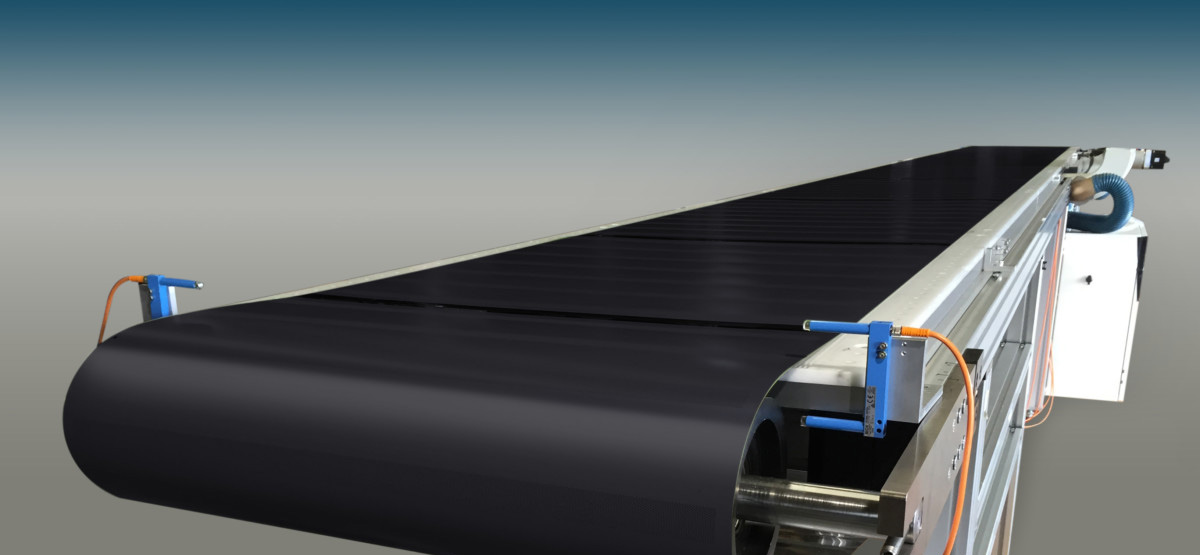

 Induction heating requires less energy than other heating methods, which gives it the advantage of being more eco-friendly. It is an instantaneous cooking method, which means the oven heats and cools very rapidly. This allows food processing facilities to improve throughput time and reduce the amount of production downtime. However, induction’s quick heat exchange can be difficult for most conveyor belt materials to withstand.
 For added durability, we applied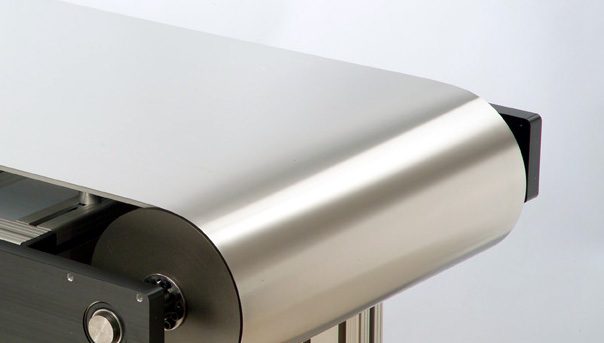
 A producer of PVC plastic recently approached Belt Technologies with a problem. They had been beta testing belt materials for their conveyor system and had not yet found a solution that would work. They needed a conveyor belt that could transport hot