Belt Technologies, Inc. regularly attends technology trade shows throughout North America and Europe. At these conferences, our team meets with OEMs to discuss potential partnerships and ways by which we can better serve our customers. After learning more about the many benefits and possible configurations for our stainless steel conveyor belt systems, one medical equipment OEM opted to contact us and inquire about the possibility of automating its labor-intensive medical tubing production process.
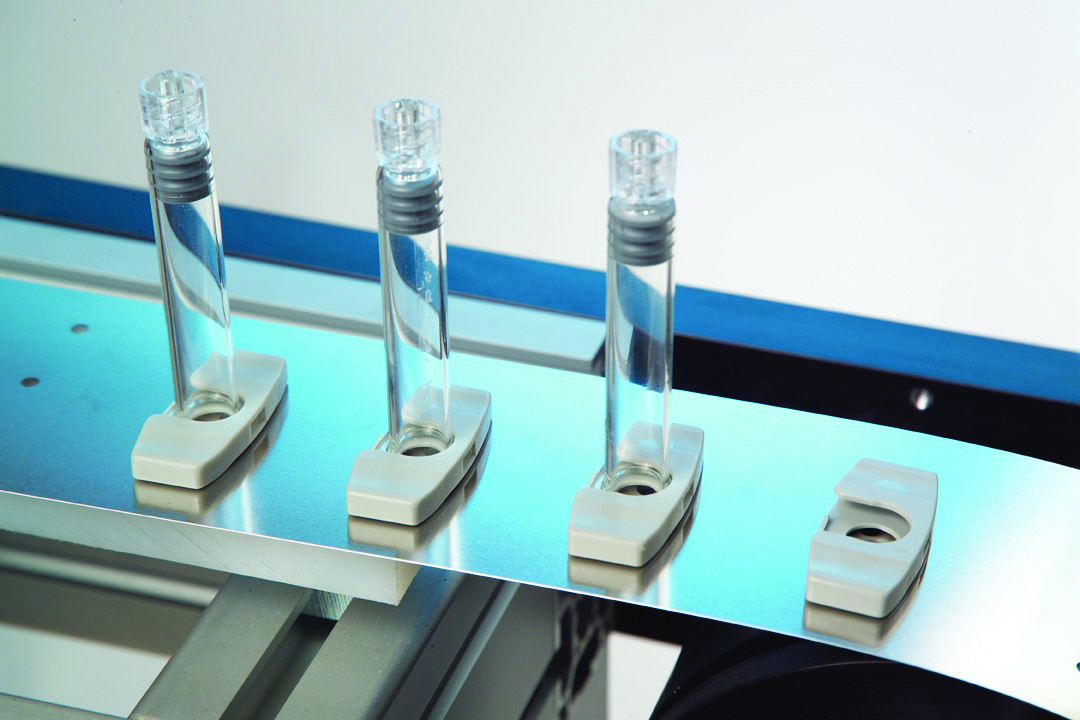
The tubing for this medical equipment OEM had to be made in specific shapes. The previous manufacturing process was much more manual, requiring workers to hang the tubes on the belt in the perfect position before sending them through a heated processing sequence. This method of production was slow and very vulnerable to mistakes, malfunctions, and defects. The medical OEM was seeking an automated solution that would make the process more efficient by speeding up production and increasing product quality.
Unique Design Elements for Specialized Applications
Customers choose Belt Technologies, Inc. because we have the ability to design and manufacture metal conveyor belt systems completely customized for the unique needs of each application. This particular application required highly specialized elements that would automate production and sort and place the medical tubing before reaching the oven.
The conveyor we designed is oriented vertically in a carousel style. Instead of hanging the tubing in position by hand, the new metal belt is perforated with holes of varying size that can easily accommodate different sizes of tubing. Robotic arms now reach down to pick up and place the tubing into the correct holes.
Metal Conveyors Achieve a Higher Rate of Production
Our team worked with the client over time to perfect the perforation pattern, timing, and configuration of the new stainless steel conveyor system. With the new conveyor system in place, the medical OEM has experienced higher product throughput and more consistent product quality.
[et_pb_section fb_built=”1″ _builder_version=”4.9.7″ _module_preset=”default”][et_pb_row _builder_version=”4.9.7″ _module_preset=”default”][et_pb_column _builder_version=”4.9.7″ _module_preset=”default” type=”4_4″][et_pb_text _builder_version=”4.9.7″ _module_preset=”default” hover_enabled=”0″ sticky_enabled=”0″]A customer producing food safety testing kits contacted Belt Technologies, Inc. for a solution to a slow, inefficient assembly system. They were seeking engineering and design support to help transition from manual to automated production. In addition, the original conveyor system used a mesh metal belt to convey the product through a heating process and it frequently transferred heat unevenly, making product results unreliable.[/et_pb_text][et_pb_text _builder_version=”4.9.7″ _module_preset=”default” hover_enabled=”0″ sticky_enabled=”0″ admin_label=”video”]
Manual Assembly Processes Are Slow, Inconsistent, and Inefficient
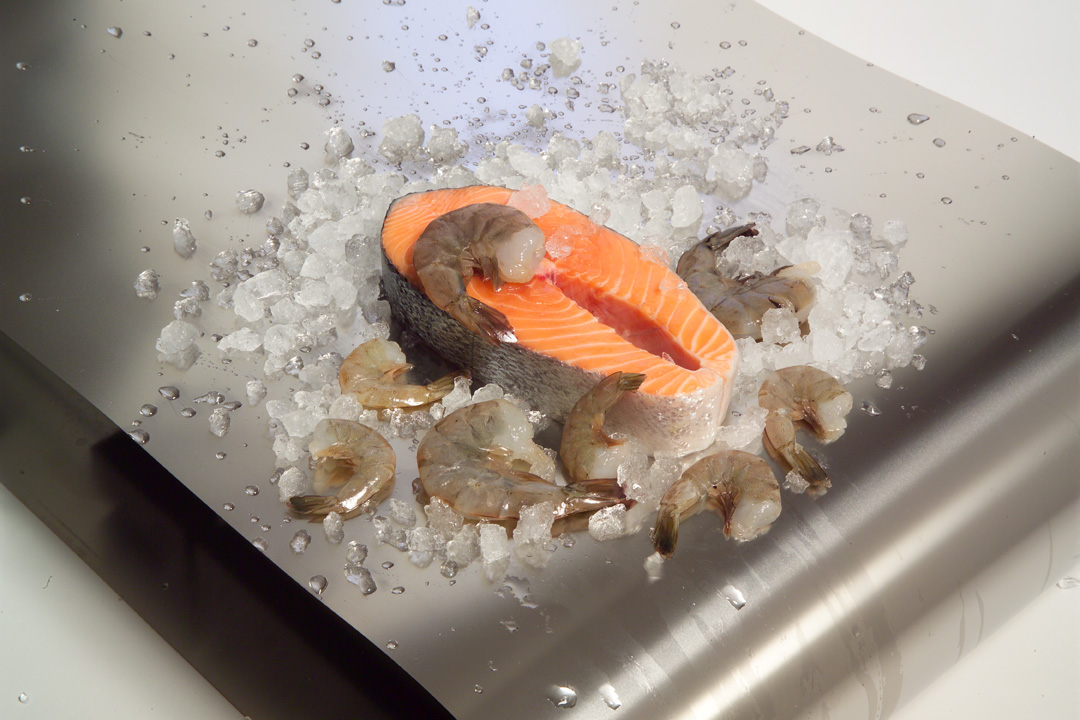
Making the food safety test kits involved filling disposable packages with a liquid testing medium, curing the trays on a heated conveyor system, and finally packaging them in sealed blister packs—all in a clean room environment.
Formerly, the line workers filled the test kits by hand and then manually placed them on the conveyor, where they travelled on a mesh wire belt over a heating element. The mesh belt did not transfer heat evenly, which had a detrimental effect on product quality and consistency. If the kit did not cure properly during the heating process, it could incur unexpected costs for lost product and time.
Designing and Building New Metal Belt Conveyor System for Full Automation
Belt Technologies suggested replacing the wire mesh belt with a conveyor made of 301 full hard stainless steel, which would result in a stronger, flatter belt surface. 301 full hard stainless steel would be able to withstand the high temperatures of the heating process; also, the superior thermal conductivity of solid stainless steel would provide better heat distribution.
The customer made a prototype model of the new conveyor system featuring a solid, endless metal belt to replace the mesh belt for improved heat transfer and reliability. Belt Technologies supplied the belts for this model. The first order for the proof of concept was for a belt, pulleys, and roll holders. The customer built their own conveyor using these components. Once the prototype had successfully proven the concept, they turned to Belt Technologies to produce a full-scale conveyor system (approximately 20 feet long). The customer provided their own heating platens for the system and Belt Technologies integrated these components into the conveyor system.
The conveyor belt for this system runs through an acrylic glass tunnel during the heating process, so it was important that the belt stayed on track. If the belt were to run off track and unnoticed through several cycles, it could potentially damage the entire system. This could be avoided with constant monitoring and adjustment, but would be a challenge and could require hiring and training new employees. Based on the suggestions of Belt Technologies engineers, they chose to force track the belt with a silicone v-guide system. Silicone is a good choice for v-guide material as it is able to withstand high-temperature environments. Forced tracking provides a long-term value by eliminating the need for manual tracking adjustments, unnecessary maintenance downtime, or additional training-related costs.
New Automated Stainless Steel Conveyor Increases Product Throughput & Quality
In addition to correcting the uneven heat transfer, the customer wanted to further automate the system by adding robotic arms to fill and place the test kits. A perforated drive tape was selected to actuate precise robotic arm movement and allowed them to fill and cure at triple the rate they achieved with hand filling and placement.
This conveyor system was easily integrated with the existing automated packaging equipment. While the test kits originally had to be hand-checked for quality (to guarantee proper curing) and then manually transferred to packaging, the kits can now seamlessly move from filling to heat curing to heat-sealing in blister packs, and then finally to packaging, for shipment.
The first conveyor was such a success, the customer was able to expand production and ordered several additional units. [/et_pb_text][/et_pb_column][/et_pb_row][/et_pb_section]
This site is registered on wpml.org as a development site. Switch to a production site key to remove this banner.