Extreme Temperature
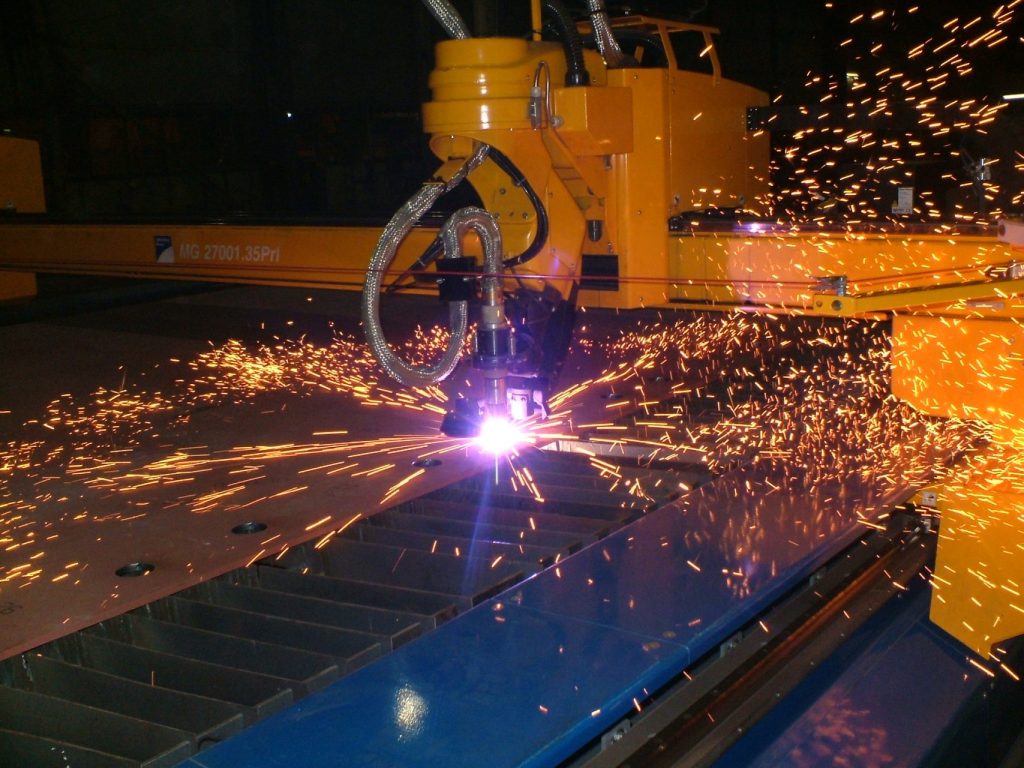
Extreme heat and extreme cold are no match for PureSteel® stainless steel belts and conveyor systems. The tough conditions and range of temperatures our belts can withstand—from -100° F to +1600° F—have long made us the preferred solution for any industry that manufactures in difficult temperature environments.
Why? Any other belt material simply cannot withstand such variable temperature conditions without suffering belt damage or distortion.
We offer several alloys that resist distortion and perform well in applications with elevated temperatures. For instance, Invar will remain flat when operating in environments up to 400°F, compared to 300 series stainless steel which can start to see distortion at temperatures below 400°F. This makes our offerings the perfect solution in ovens or freezers. What’s more, Inconel 625 and 718 can operate in environments with temperatures up to 1,600°F.
Precise/Smooth Motion
When working in extreme environments, with a complex product or with small, fragile parts, you require precise/smooth motion. Our metal belts and conveyor system afford customers:
- Smooth movement
- Precise motion
- Positional accuracy
Design Considerations
Several design elements contribute to smooth and precise motion control. Motor and gearbox sizing and coupling/bearing choices are important with all belt types. We take all of these factors into account in our fabrication process.
The major advantage with PureSteel® metal belts is the choice of alloys they are manufactured from. The alloys are stainless steel with a high modulus of elasticity. This is the foundation to ensure very precise placement of timing features for accurate part placement.
This makes them a solid choice for any automated assembly operation or precision indexing application.
Zero Backlash
Belt Technologies offers unique steel belt designs which will guarantee zero slip and absolute precision, particularly to robot builders and robotics applications.
Backlash occurs due to the clearance between the timing features of the belt and pulley system. Clearance is always required to ensure smooth belt motion but creates backlash when the belt system is reversed.
An automation system that requires both forward and reversing motion can be designed for zero backlash if the linear distance is restricted to less than half the circumference of the driving pulley. In this situation, a two-belt system can achieve true zero backlash for highly accurate positioning.
Our unique steel belt designs can be precision-tailored to the smallest space and harshest environment, allowing development of application solutions in many fields. Running in pairs or with inventive design ideas, these zero backlash drives can be used anywhere tight tolerances exist for back and forth placement.
Anti-Static
Static charges can damage sensitive electrical components. The steel belt will dissipate any static charges as long as the system is properly grounded.
Causes
A static charge typically results from two surfaces making contact and rubbing against each other. A charge imbalance occurs as electrons move between the two objects and build up on the object that acts as an insulator.
Our Solution for Electronics and More
In industries like robotics and electronics, static electricity can prove detrimental. Luckily, Belt Technologies offers a no-static solution: PureSteel® metal belts. In short, there is no static build up with our metal belts. In fact, metal belts discharge static electricity which can be a critical factor in electronics manufacturing.
Special Surface Flatness
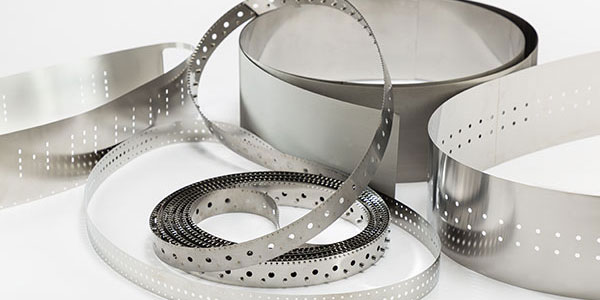
The materials used in our metal belts are all tempered to achieve high strength properties. The primary alloy used in the majority of our applications is 300-series stainless steel, which is austenitic and cold-rolled to improve its yield and tensile properties. With cold rolling, concerns arise over material flatness and straightness, especially when materials are rolled to achieve tensile strengths above 280,000 psi. Because material shape is critical to most steel belt applications, Belt Technologies has developed material sources to guarantee that straightness and flatness are within precise tolerances, ensuring application success.
Industries that Benefit from Metal Belt Surface Flatness
The dimensional tolerance and degree of flatness of our belts benefit industries where smooth, reliable movements are required. For instance:
- Casting of thin films: we have applications in the electronic industry that cast thin ceramic films onto the belt surface. We can achieve a flatness of ≤ 0.007”, which provides our customers with consistent product quality.
- The printing industry: longitudinal and lateral positional accuracy is critical in inkjet printing. Blurry or misaligned colors result in images where ink droplets are incorrectly placed on the printed media. The belt’s straightness is tightly controlled to achieve optimal print quality.
Interested in learning more about how PureSteel® stainless steel belts and conveyor systems can help optimize your system? Reach out to an engineer today.