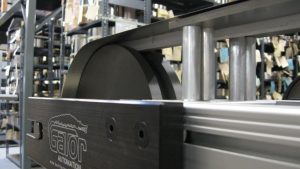
Proper belt installation and removal safeguards automated conveyor systems against accidental damage, enables accurate belt tracking, and helps to extend the life of the belt by reducing unnecessary wear or friction. This step-by-step tutorial will demonstrate the correct method to install and replace a solid, endless metal belt for your conveyor system.
Belt Technologiesのエンジニアは、設置のセットアップを補助するとともに、ベルトの寿命を延長するソリューションを検討するためにお客様の施設を訪れました。 当社のエンジニアがシステム作動を観察したところ、ベルト上の冶具とシステム脚部のクリアランスが不足していることに気づきました。 冶具はプーリー付近を移動する際、脚部と接触していました。 誤った設置から生じたマイナーな整列問題と反復接触が弦振動を起こし、これがストレスになりベルトのパーフォレーションに添って破断を生じ、究極的に故障に至りました。
Belt tracking is accomplished by increasing or decreasing the tension on one edge of the belt in relation to the other edge. It is a process similar to tensioning the belt during installation. If the tension on one side of the belt is too high, the belt will begin tracking off the pulley toward the side with lower tension. Ignoring these tracking issues will shorten the overall lifespan of the belt. Belt Technologies has a variety of strategies available to counteract negative tracking stresses and keep your metal conveyor belt system in alignment.
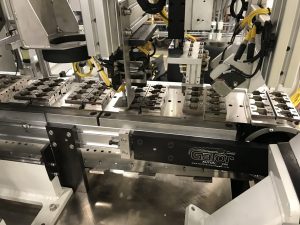 当初、Belt Technologiesは組み立て中に電気コネクターを固定する独自のネスト型付属品をサポートするカスタムのステンレススチールコンベヤベルトを製作しました。 ベルトはその後他の業者に送られ、カスタム冶具が取り付けられました。 個々の冶具にはかなりの重量があり、各冶具が1.45ポンド(約658グラム)の重量があり、合計48個ありました。 プーリーの寸法のため、相対的に薄いベルトでした。 しかしステンレススチールの高い比強度のため、寿命初期の段階で冶具の重量によりベルトが故障することはありません。