Belt Technologies Logo

Precision Indexing with Stainless Steel Conveyor Belts in Freezing Operating Environments

sample testing equipment

Belt Technologies has years of experience designing and producing custom conveyor systems for automated pharmaceutical equipment and medical manufacturing applications. Recently, a client approached us with a challenge. Their goal was to improve upon and modernize the design of a machine they have been producing for nearly a decade. 

Achieve Maximum Accuracy and Efficiency for Medical Applications

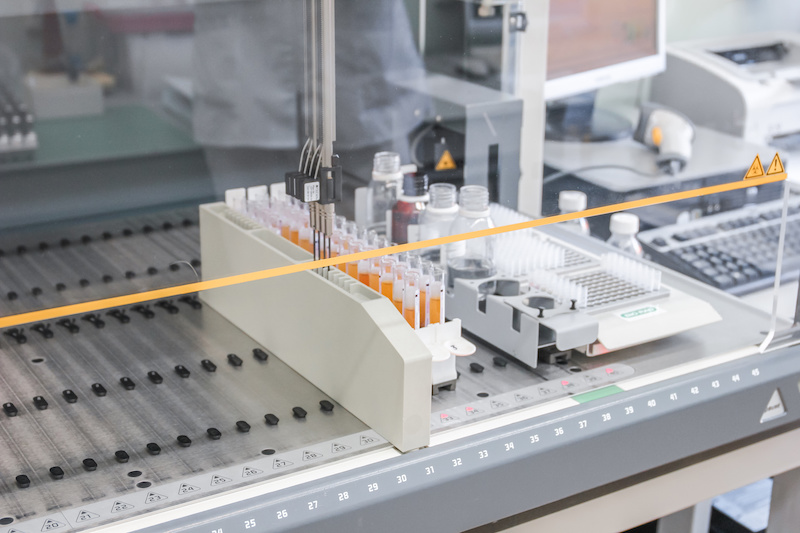
The equipment being updated was designed to sample vials as they are conveyed through the system for testing. In the original design, the vials were held in a tray system as they are moved through the machine. A needle is then lowered into each vial to take a sample for testing. The equipment was intended to allow producers of food, pharmaceuticals, chemical compounds, and more, to take samples of the materials being produced and perform quality testing directly on the production floor— instead of sending product samples to outside service providers for testing.

The customer wanted to increase the efficiency of the system and double product yield in a single batch. To do this, they needed to improve the positional accuracy of the vials as they were conveyed through the system. They recognized that a metal belt would be the best belt material option as the ambient temperature of the operating environment is kept below freezing. 
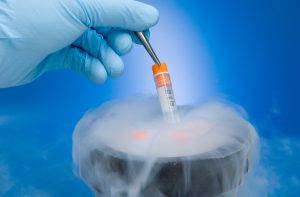
biological sample being removed from liquid nitrogen

Belt Technologies has provided metal belts for a variety of applications in freezing temperatures, including cryogenic processes. Stainless steel has a high resistance to extreme temperatures, and can easily handle refrigerated operating environments. Metal belts are also highly accurate and repeatable, providing precise positioning of the vials with virtually no slippage.

Additionally, solid metal conveyor belts do not outgas or require lubrication, so there is no risk of contamination to the sensitive products being conveyed. They also will not fray or generate particulates that could contaminate medical products and potentially skew testing results. The flat, nonporous surface of stainless steel does not absorb bacteria and is easy to clean with virtually any cleaning method required, making it the ideal choice for this application. 

Custom Solutions Guarantee Optimal Processing Results

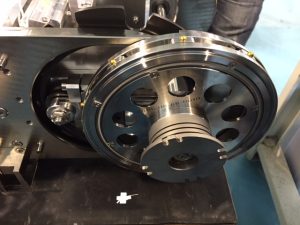
After working with the client to finalize their design, Belt Technologies provided the customer with a seamless belt made of 301 full hardened steel. It features custom vial holder attachments that are firmly attached to the metal belt.  We also added a custom perforation pattern in the belt for tracking and precision indexing. With the metal belt, secure attachments and timing features, the new equipment will be able to sample vials at a faster rate of speed without risking product quality or testing accuracy. 

For more information about custom stainless steel conveyor belts for medical and pharmaceutical applications, contact the experts at Belt Technologies, today. 
Troubleshooting Tensioning Issues in Dual Conveyor Belt System

At Belt Technologies, we are dedicated to the success of your system. Our engineers are always willing to aid customers who may experience issues with their metal conveyor belt systems, including traveling onsite to customer locations to observe issues in the field and work with your team to find actionable solutions. Recently, a customer contacted us to get help figuring out why the metal belts in their dual belt conveyor system were routinely wearing out.

Trouble with Excessive Wear in Parallel Conveyors

An OEM in the medical manufacturing industry was having trouble with a pair of metal belts aligned side by side in a system designed to transport tooling for dental aligners through a packaging process. Unfortunately, the flanges on the belts and some of the timing attachments on the belts were cracking and wearing down much faster than the design specified. They called Belt Technologies to see if the experts on our team could help them achieve a longer lifespan for their conveyor belts. 

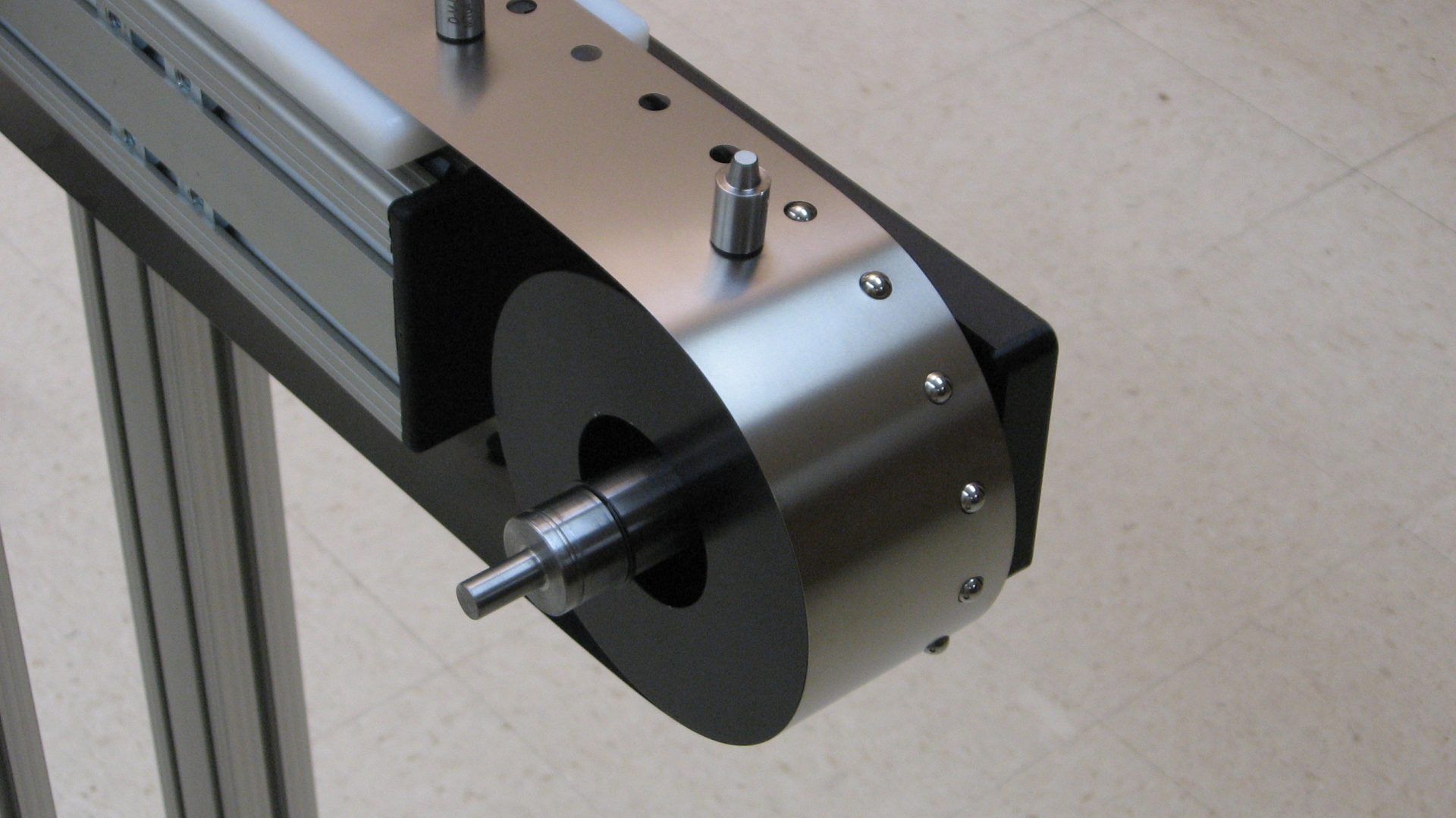
For this system, the belts were arranged in parallel on a common drive shaft with independent tensioning on the idler side.  Both pulleys included relief grooves in the face for clearance of a screw head for fixed attachments on the belt. To keep the tracking of the two belts in sync, the drive pulley was a specially designed timing pulley. The idler pulley included flanges, which also kept the belts in alignment to ensure proper product positioning. The customer initially suspected the flanges of causing the excessive wear, as they were visibly damaged over time while the belts were in use.

When Installing a Metal Belt, Proper Tensioning is Key

Technical support traveled to the customer site to assist in the troubleshooting. Our team spoke to their maintenance and engineering staff and observed the equipment in operation. After examining the system in use, our engineers were able to determine that the flanges were not the cause of the wear and tear. 

delta pulley belt tracking

The customer was installing the belt with a very high tension that created excessive friction between the belt and pulley. As a result, the belt was not realigning with the timing pins on the drive pulley. Consequently, the timing holes cracked when the belt was forced over the timing pins by the sizeable frictional load. Once the belt was forced out of position with the timing teeth, the flanges on the pulley were damaged by the edge of the belt. Belt engineers worked with the on-site staff to develop a repeatable method to tension the belt within the correct range and to train them on how to correctly install and tension the belt.

When installing a stainless steel conveyor belt, proper tensioning is key to ensuring optimal performance and the longevity of the system. Adjusting the tension varies based on the belt type. For more information, or if you suspect your conveyor is experiencing belt tension issues, contact the experts at Belt Technologies today.

Medical Adhesive Curing with Stainless Steel Conveyor

Our engineering team recently took on a project for a medical manufacturing application. The customer would be assembling an automated conveyor system for the production of medical adhesive. They were seeking a conveyor belt material that would be able to transport the thin plastic film through the adhesive-curing process.

Heat Curing Adhesive onto Plastic Film

To produce the medical adhesive, a thin plastic film is laid on the conveyor belt. It is then sprayed with an even coat of adhesive material. The coated plastic is then transported through a heating process to cure the adhesive.

The client required a conveyor belt with limited deviation in thickness and the ability to transport the plastic film quickly and accurately. Because this was a medical application, the belt needed to be extremely clean to operate in order to prevent particulates or foreign particles from adhering to or contaminating the adhesive. Curing the adhesive to the plastic film requires the belt material to be able to withstand temperatures around 200°F continuously.

Highly Hygienic Stainless Steel Is Perfect for Medical Applications

Stainless steel is an ideal choice for medical and pharmaceutical applications due to its unique physical properties. The smooth, impermeable surface of a stainless steel conveyor belt is highly resistant to bacteria and it does not require lubrication to operate. Additionally, metal conveyor belts do not outgas or generate particulates, which minimizes any risk of contamination to medical products being transported. A high resistance to corrosion enables stainless steel belts to withstand virtually any cleaning method, including high-pressure wash, chemical cleansers, and high-pressure steam.

The properties of stainless steel also include a high resistance to temperature extremes. While there are many different grades of stainless steel—each able to withstand a specific range of temperaturesnearly all varieties are capable of operating in the temperatures specified by this customer.

Achieve Smooth, Reliable Operations with Metal Belt Conveyors

Belt Technologies engineers provided the customer with a solid, stainless steel conveyor belt with no deviation in thickness that would provide accurate, repeatable results. The clean, sanitary surface of the belt and the high temperature resistance of stainless steel ensures the medical adhesive will be able to cure quickly and cleanly with very little risk of contamination.

For custom metal conveyor belt solutions to automation challenges, contact the experts at Belt Technologies, Inc.