Belt Technologies Logo

Stainless Steel Conveyor Belt for Plasma Treatment Process

A global provider of plasma treatment services for OEMs in a variety of industries—including power generation, consumer goods, and medical device production—recently contacted Belt Technologies for a conveyor belt solution. Their team was seeking a conveyor belt with a longer lifespan than the rubber belt they were originally using to move products through the plasma treatment process.

Rubber Conveyor Belts Fail in High Temperature Environments

In this particular application, thin copper components were being transported through a plasma treatment process on a toothed, rubber belt. However, the plasma treatment requires high temperatures, sometimes up to 400°C. The belt runs through a tunnel carrying a lead frame, where the products are plasma treated. Once complete, the products and belt are washed with cold water to return them to room temperature.

Extreme fluctuations in temperatures and exposure to high heat has a detrimental effect on rubber. The toothed, rubber conveyor belts would warp and break after a minimal number of cycles. The cost of replacing them, and the downtime required to make the switch each time the belts wore down, was creating an unnecessary drop in productivity.

Heat-Treated Stainless Steel Lasts Longer Under Challenging Conditions

Stainless steel has a low thermal expansion coefficient, which gives it the ability to resist extreme temperatures without warping or breaking. The customer knew they would need to switch to a metal conveyor belt to withstand the heat of the plasma treatment process but was seeking advice on the best material type for their application. Aside from a high temperature resistance, the new belt would need to be highly accurate and provide smooth, linear movement.

Trust the Experts at Belt Technologies for Custom Conveyor Belt Design Solutions

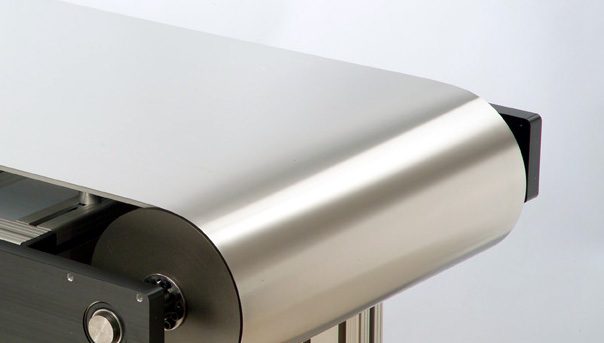
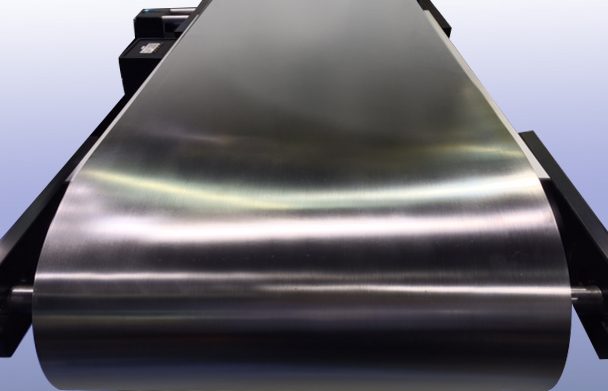
Our engineers recommended a simple solution of five solid stainless steel belts running in parallel. The belts are made from heat-treated steel (17-7CH-900), which is able to withstand temperatures as high as 425°C. The new conveyors have been in service for several months with no reported issues. With less downtime spent on replacing burnt out rubber belts, the customer is able to maximize product throughput and save money on maintenance. They are very satisfied with the smooth performance of the new stainless steel conveyors.

For customized, automated metal conveyor belt system solutions, contact the experts at Belt Technologies, Inc.
Metal Conveyor Belt for Automated Disentangling Device

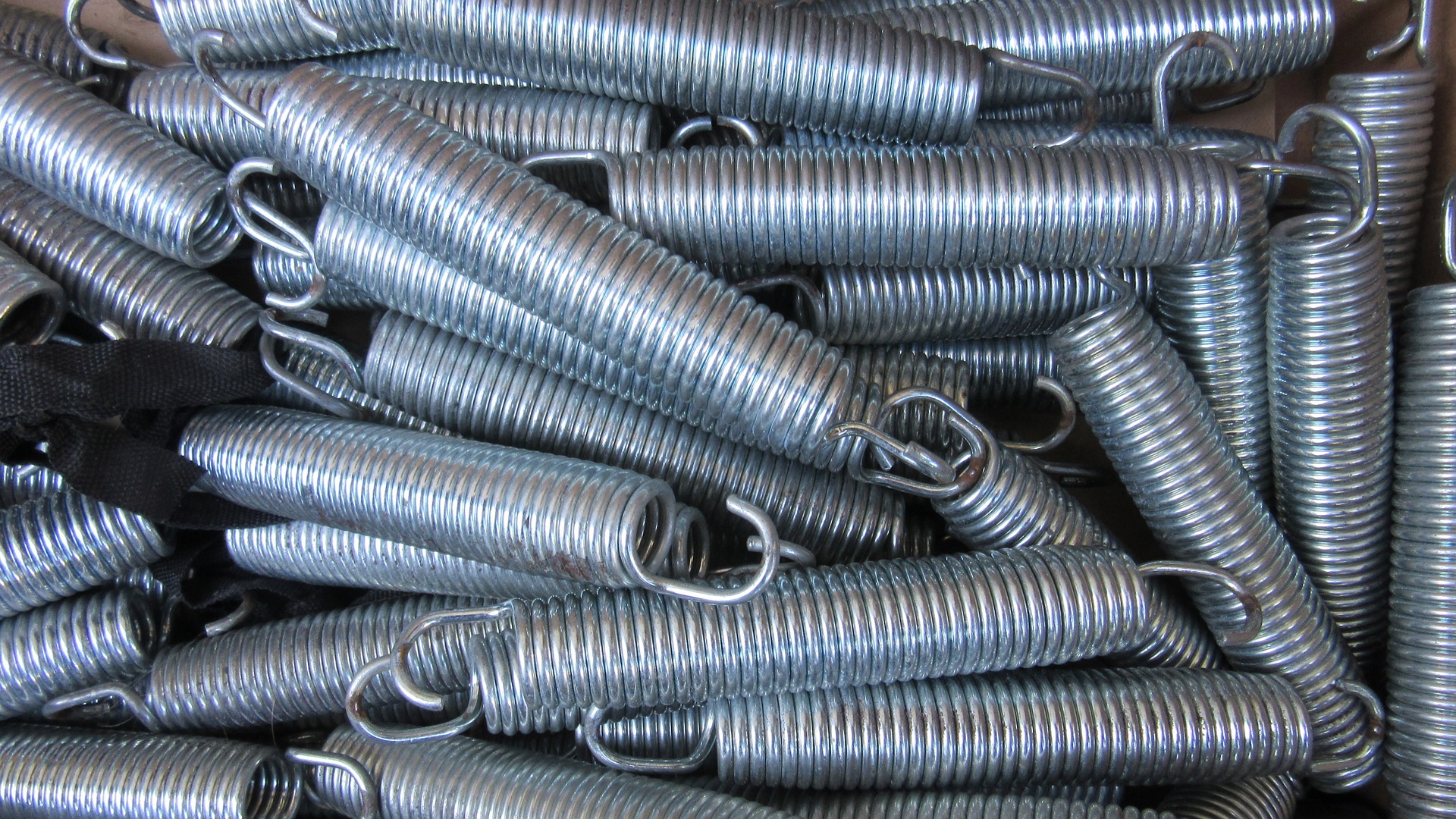
A producer of medical inhalers recently contacted Belt Technologies for help developing a solution for a manufacturing issue. The inhalers include in their design a small spring that releases a dose of the medication when actuated. The inhalers are produced in large quantities, which means the springs must be shipped in bulk. Separating the springs for automated manufacturing is exceedingly difficult. Although they had an automated disentangling device specifically for this purpose, their main priority was to increase the ease and effectiveness of routine maintenance within clean room environments.

Specialized Design Makes Maintenance and Sanitization Quicker and Easier

Belt Technologies engineers work with customers to design custom conveyor solutions that will suit their production needs with optimal results. Our team worked with the client to create a stainless steel conveyor for their automated disentangling equipment that would be easy to remove for cleaning and replacement. Past equipment was difficult to maintain, adding costly production delays whenever the belt needed to be sanitized or replaced. The new design by Belt Technologies features a special side cover and interface, which enables technicians to easily disassemble and exchange the conveyor belt within minutes.

Stainless Steel Is Ideal for Medical Equipment Manufacturing and Clean Rooms

Our stainless steel belt conveyors are the optimal material choice for automated medical manufacturing systems. The smooth surface of stainless steel is highly resistant to microbes and bacteria. These belts do not require lubrication and do not generate particulates, making them an ideal fit for clean rooms and sterile environments. In addition, because of their impressive resistance to corrosion, stainless steel is easily sanitized via a wide range of cleaning methods, including strong chemicals and high-pressure steam, if necessary.

Custom Conveyor Belt Solutions

The client is now able to perform routine sanitation and maintenance on the automated disentangling equipment with minimal delays, increasing overall product throughput and quality.

Every automated system and manufacturing operation has unique goals and priorities for a production line. At Belt Technologies, Inc., fulfilling your production needs is our priority. If your automated system could use an upgrade, contact the stainless steel experts today.

Perforated Metal Conveyor Belts for Transporting Glass Through a Vacuum Deposition Process

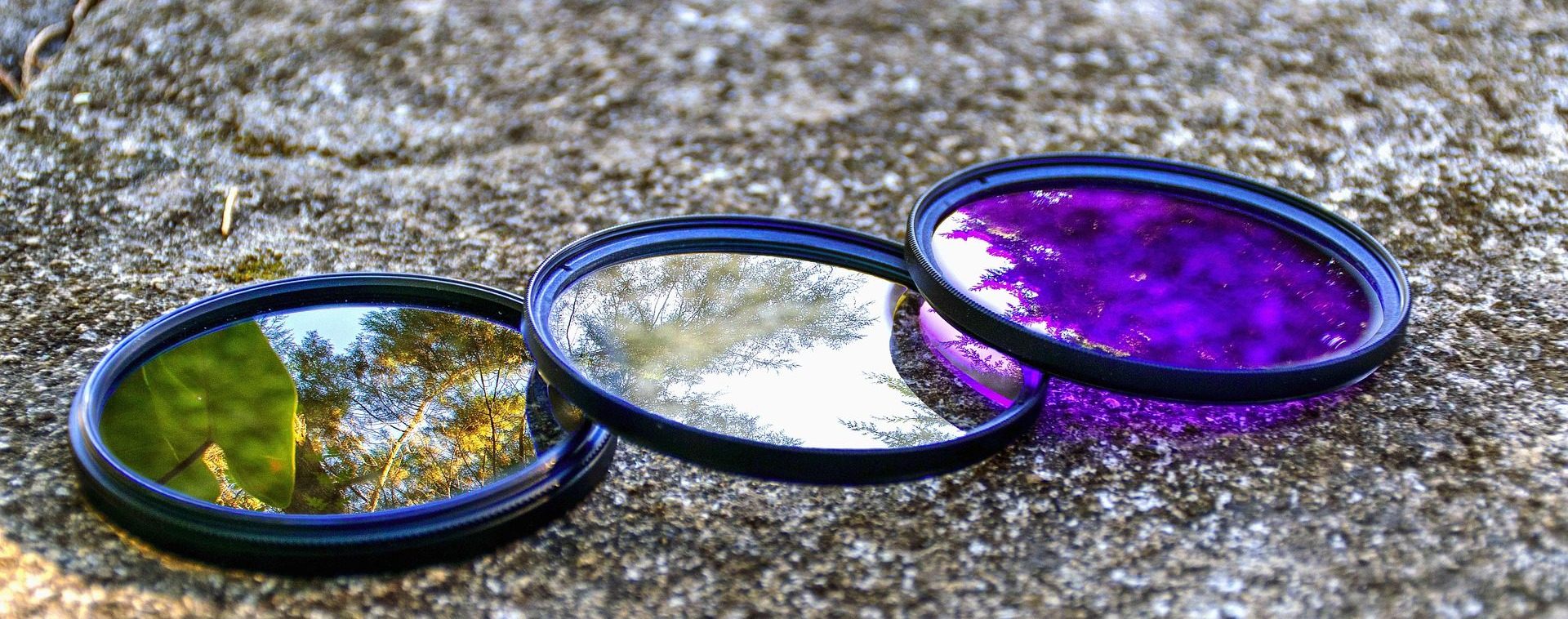
Belt Technologies, Inc. was recently contacted by a producer of high-end optical glass filters. The customer was replacing an older automated system with an entirely new machine; it needed to upgrade its conveyor belts and timing pulleys to transport the glass lenses through a vacuum deposition process.

Coating Glass via Vapor Deposition Requires a Controlled Environment

Vacuum deposition encompasses a variety of processes that are used to deposit layers of a material onto a surface, atom-by-atom or molecule-by-molecule. This coating method is typically used for sensitive equipment such as optical lenses, solar cells, and semiconductor devices. The item being coated is transported through a vacuum that is set below atmospheric pressure to prevent contamination and produce an even coating as thin as one atom.

Stainless Steel Conveyor Belts Do Not Outgas or Generate Particulates

The customer would have designed and built the automated system in-house but required a conveyor belt and timing pulleys to convey the glass lenses through the vacuum space without contamination. Vacuum deposition is a highly sensitive process, as it deals with atoms of a coating material in a very sterile environment. Stainless steel does not outgas or generate particulates, making it the optimal material on which to transport optical lenses during deposition.

Metal Conveyor Belts Designed for Your Application

Belt Technologies worked with the customer’s engineering team to create a set of metal conveyor belts that could safely transport the glass lenses. Belt also manufactured timing and idler pulleys to provide smooth, even movement of the belts. Sales engineers were available to provide expert design feedback during the process, such as pulley diameters and components for tensioning and tracking. The customer was highly satisfied with the final design and the results have been very positive.

At Belt Technologies, our priority is ensuring your automated system performs above and beyond your expectations. We are able to provide metal belts to your exact specifications, as well as provide expert design feedback that will ensure your custom metal conveyor belt will provide optimal product throughput. Contact us today and find out how metal belts can improve your automated system design.

Seamless Results for a Producer of PVC Plastic with Endless Metal Conveyor Belts

endless metal conveyor beltsA producer of PVC plastic recently approached Belt Technologies with a problem. They had been beta testing belt materials for their conveyor system and had not yet found a solution that would work. They needed a conveyor belt that could transport hot PVC plastic without leaving any marks on the surface of the plastic as it cooled. The silicone belt they had been testing was not working due to a seam in the belt that left a mark on the product when it cooled.

A Special Application: Extruding PVC Plastic

The customer was searching for a belt that would not leave impressions on the product they were extruding. The customer needed to extrude PVC plastic that was 1/2wide and 1/8thick onto a belt and then allow it to remain on the belt while cooling. The PVC plastic would be extruded at temperatures of 350°F to 400°F, so the belt needed to withstand these high temperatures.

Stainless steel metal conveyor belts have a high resistance to temperature, which make them a great choice for this type of application. Most importantly, the smooth surface of an endless metal belt allows hot plastic to cool without leaving any impressions in the PVC, thus preventing unnecessary damage to the product.

Choose Endless Metal Belts for a Smooth Product Finish

Endless metal belts deliver the ideal combination of precision, strength, and versatility. We manufacture metal belts by welding stainless steel into endless belts. Our welds are incredibly strong and can be weld-finished for better blending. Achieving flawless results when welding thin stainless steel belts is our specialty. With the endless metal belt from Belt Technologies, the customer was able to achieve the smooth product results they desired while maximizing product output and speed.

Optimum Results with Custom Coatings for Your Application

This customer wanted to prevent the hot plastic from adhering to the belt as it cooled, so we added a Teflon coating to the Belt. Belt Technologies offers various Teflon coatings with benefits including food-grade qualification, abrasion resistance, and chemical resistance. For this customer, we chose a Teflon with good release characteristics to make sure the product would not stick to the belt.

Belt Technologies has the ability to design and manufacture custom metal conveyor belts for virtually any application. Surface coatings and surface treatments help expand the potential uses for stainless steel metal belts. BTI provides several options, including Teflon, silicone, polyurethane, and more.

Looking to increase the efficiency of your conveyor system and get better product results every time? Call or request a quote today!